iCloud Backup Guide for iPhone and iPad Users

Creating a recent iCloud backup is essential when switching devices, updating to iOS 26, or restoring an iPhone/iPad. This ensures data and settings are safely stored. The post outlines steps for enabling automatic backups, managing iCloud storage, and resolving common backup queries, along with a reminder of evolving technology guidelines.

RAYMOND OGLESBY @RaymondOglesby2
December 9, 2025 – 4 minutes read time

You need a recent iCloud backup before you switch to a new iPhone, update to iOS 26, or restore your iPhone or iPad in case something happens to it.

It’s important to make an iCloud backup for your iPhone or iPad, because iCloud backups store all of your data and settings, and can be used to restore your device as needed. Let’s explore how to do an iCloud backup on your iPhone or iPad.

  • Back up your iPhone and iPadto iCloud to prevent loss of photos, contacts, and more.
  • Set iCloud backups to run automatically on your iPhone or iPad for peace of mind.

This post was performed on an iPhone 14 Pro running iOS 26.1. You need iOS 10 or later, plus iCloud storage.

Click here to learn how to update your iPhone to the latest iOS version.

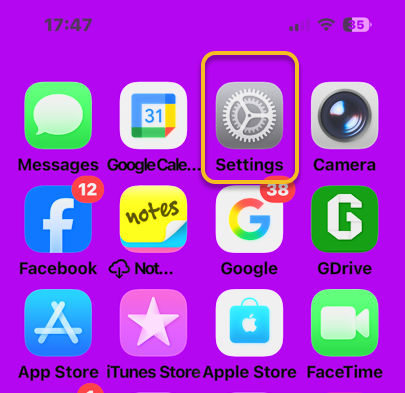
First, open the Settings app. Refer to the image below:
iPhone Backup 1
Accessing Settings

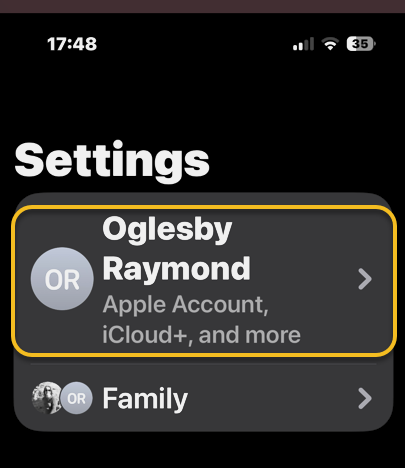
Next, tap on your Apple ID profile at the top. See the image below:
iPhone Backup 2
Accessing your Apple ID profile

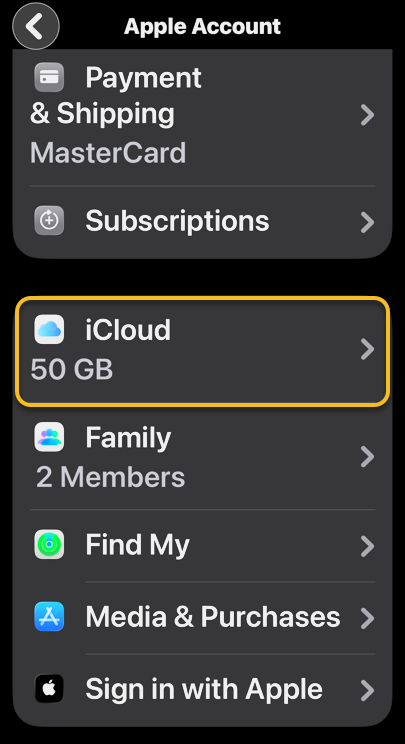
Now, tap iCloud. See the following image:
iPhone Backup 3
Accessing iCloud option

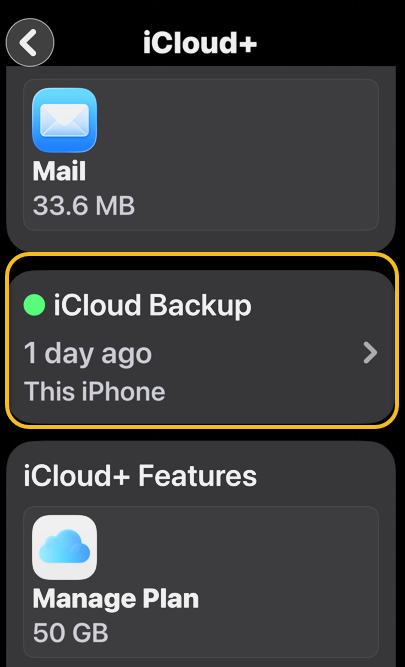
Next, scroll down and select iCloud Backup. Refer to the image below:
iPhone Backup 4
Accessing iCloud Backup option

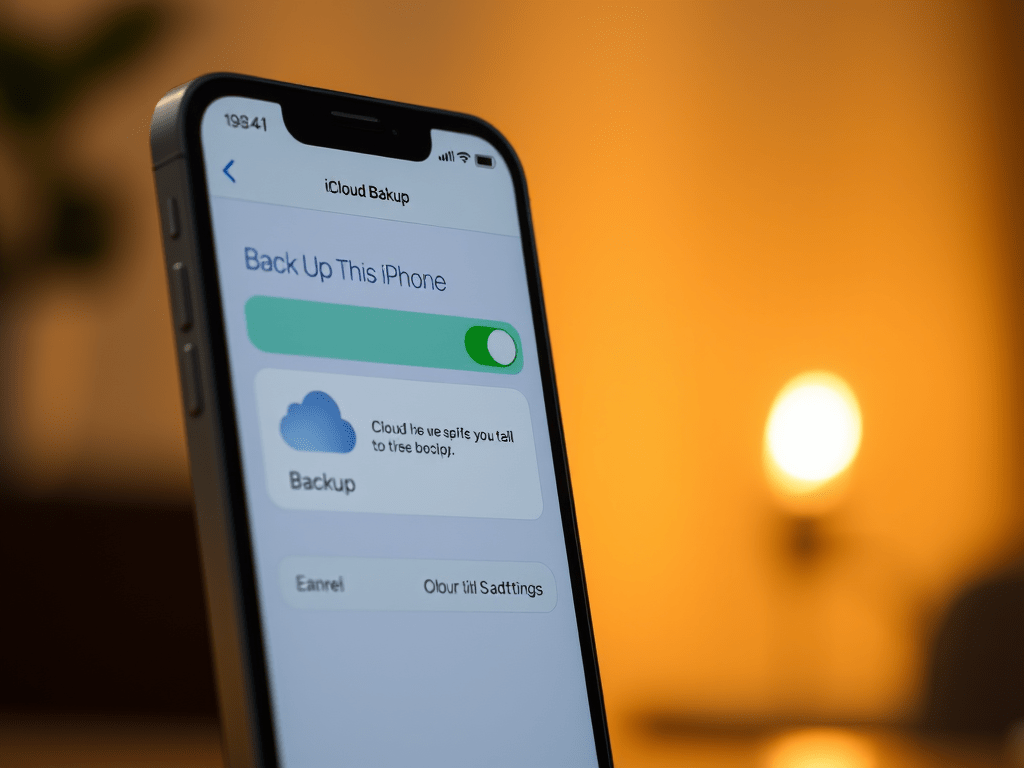
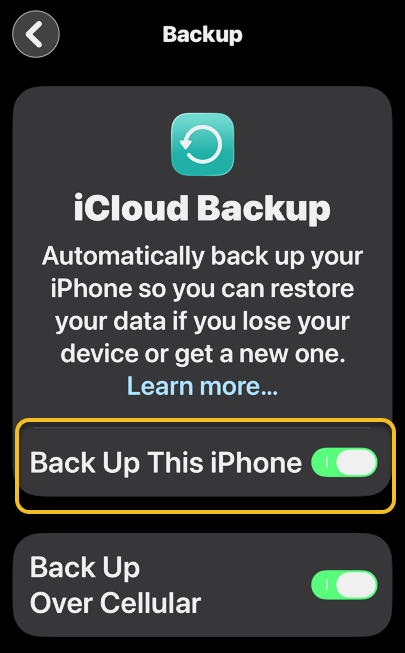
Now, if it’s not already enabled, tap the Back Up This iPhone toggle. The toggle will be green when enabled. See the image below:
iPhone Backup 5
Enable the Back Up this iPhone toggle

Next, you have not previously enabled iCloud Backup, you may receive a warning message that your device will no longer automatically back up when connected to your computer, but only if you had the computer backup feature enabled previously.

If this warning message pops up, tap OK. Enter your iCloud password if prompted.

Now, if your iPhone is not connected to Wi-Fi and you do not have cellular backups enabled, the Back Up Now option will be gray, and you will not be able to tap it.

If this occurs, connect to Wi-Fi or return to the iCloud Backup menu and toggle Back Up Over Cellular to ON. We only recommend Back Up Over Cellular if you are comfortable using a large amount of cellular data to perform backups. See the following image:
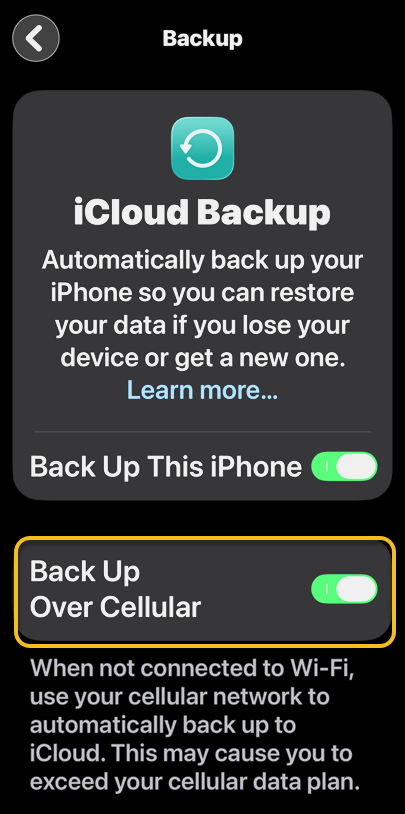
iPhone Backup 6
Enable Back Up over Cellular toggle

Next, tap Back Up Now to begin backing your iPhone up to iCloud. Refer to the image below:
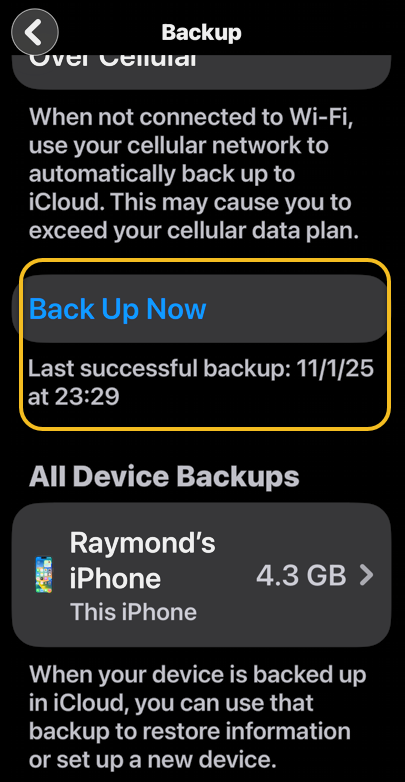
iPhone Backup 7
Selecting the Back Up Now option

With iCloud Backup turned on, your iPhone or iPad will automatically begin backing up when your device is plugged in, connected to a Wi-Fi network, or with Cellular Backup enabled, and locked. However, that will only happen if you have enough iCloud storage. See the image below:
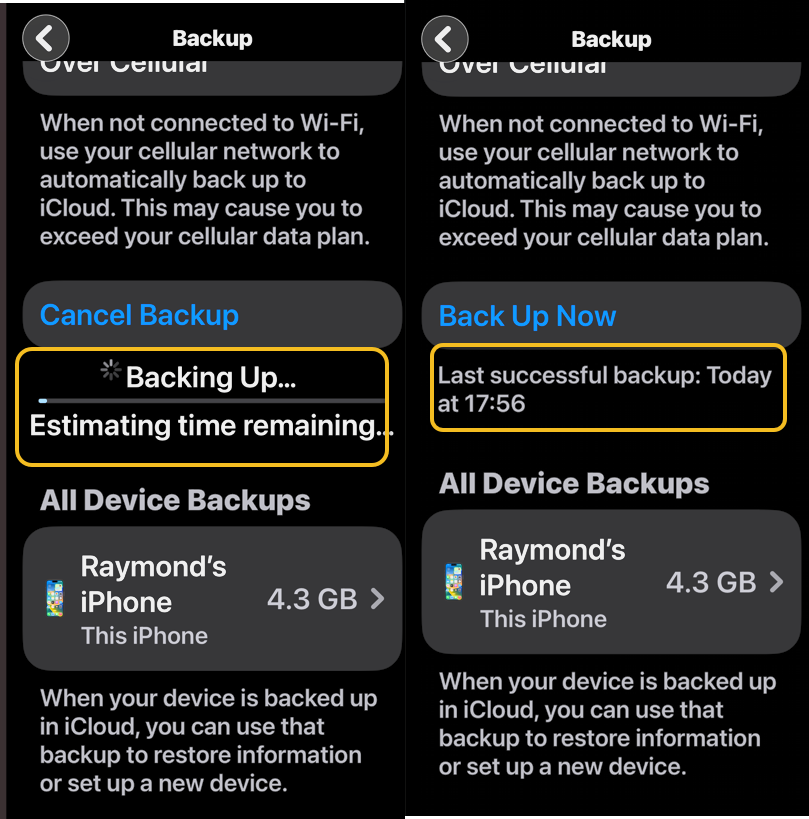
iPhone Backup 8
Messages about your backup
  • Why is my iCloud storage full?You may need to delete or offload photos, text messages, attachments, and more.
  • Should I delete old iPhone backups on iCloud? Deleting old iCloud backups will clear up storage, so if you need more iCloud storage, this is a good step to take!
  • How do I get more iCloud storage? You can purchase more iCloud storage from Apple for a very reasonable price. You can get 50 GB of storage for just .99 cents per month.

Technology is constantly evolving, and smartphone and desktop tech rarely remains static. Therefore, the information in this post is only accurate as of the date it was written. Blog posts that are older than six months may contain instructions that are no longer compatible with your device or operating system. We hope that the content from previous posts continues to function as intended. Thank you for reading TechSavvy.Life, where technology works for you.

“Technology should do the hard work so people can do the things that make them the happiest in life.”

 – Larry Page, Co-founder of Google

I Would Like to Hear From You

We value your feedback! Was this post helpful? Please share your comments with us. If you have a tech question related to your computer or smart device, feel free to reach out. Just send an email to contact@techsavvy.life, and be sure to include the device, app, and version you are using. To assist us further, you can also attach screenshots related to your inquiry.

That’s it. Please feel free to share this post! One way to share is via Twitter.

Just click the Tweet icon below. This will launch Twitter where you click its icon to post the Tweet.

Checkout TechSavvy.Life for blog posts on smartphones, PCs, and Macs! You may email us at contact@techsavvy.life for comments or questions.

Author’s eBook

The author’s Vietnam eBook on the “Battle for Tra Bong Vietnam: Events and Aftermath” can be accessed from a Kindle device or the Kindle App for a desktop or smartphone. The apps are free.
The author’s Vietnam eBook on the Battle for Tra Bong Vietnam: Events and Aftermath

How to Use the New Windows Backup Tool

The new Windows Backup tool allows users to back up specific folders, apps, settings, and credentials to OneDrive, enabling restoration on the same or different PCs. A Microsoft Account is required, while traditional desktop apps cannot be backed up. Users can manage their backups through the Windows Backup interface.

RAYMOND OGLESBY @RaymondOglesby2
April 15, 2025 – 5 minutes read time

The new Windows Backup tool will back up specific folders, apps, settings, and credentials to the cloud.Also, user data and files, including documents, pictures, music, and videos, are backed up. You can then restore all those items to the same PC or a new computer. To use this feature, you need a Microsoft Account (work and school accounts are not supported, and neither is a local account). You also need adequate storage space. OneDrive offers 5GB for free, but you may need to upgrade to one of the paid Microsoft 365 plans for more storage.

NOTE! The primary limitation of the Windows Backup tool is that it will back up only certain locations and items. For example, it will not back up and restore traditional desktop apps, such as Microsoft 365 (which is strange), so make sure you have the software and sources for all the programs you will need to reinstall.

  • Peace of mind knowing your PC is backed up.
  • If something goes wrong, you can restore your data.

A PC Desktop or Laptop running Windows 10 or 11. Screenshots are from Windows 11 Pro.

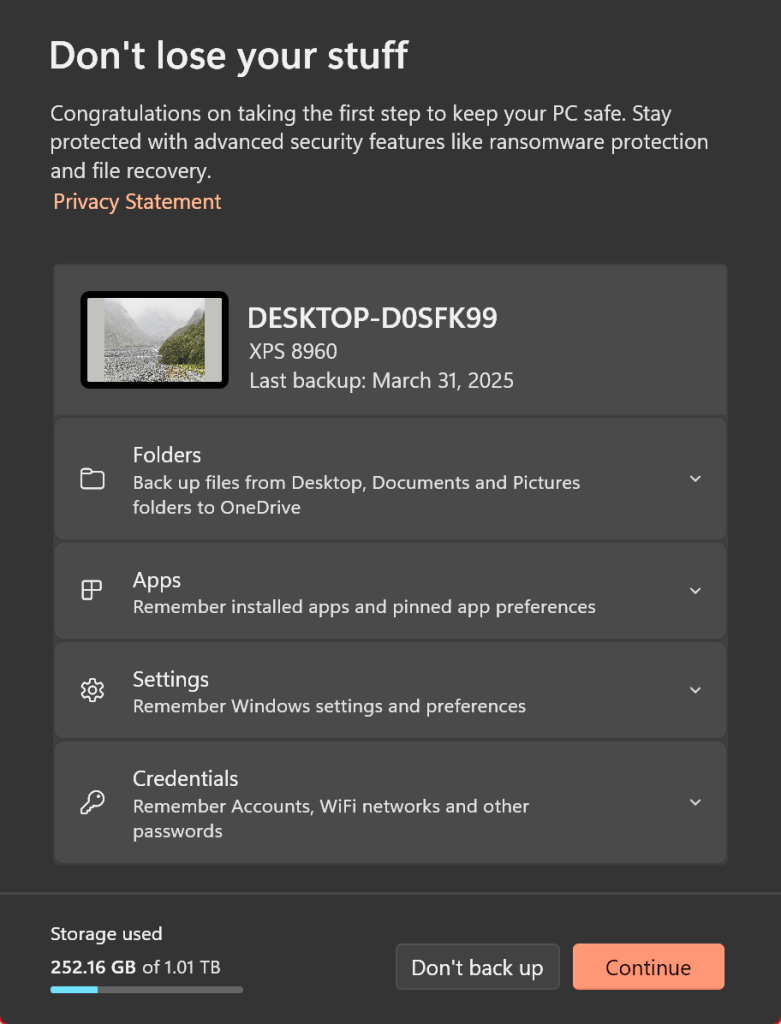
First, turn to the PC you want to back up. In Windows 10, click the Start button and select Windows Backup from the menu. In Windows 11, click the Start button, go to the All Apps screen, and then select Windows Backup. The Windows Backup Tool offers four different categories to configure—Folders, Apps, Settings, and Credentials. Refer to the image below:

Backup 1
Starting Windows Backup Tool

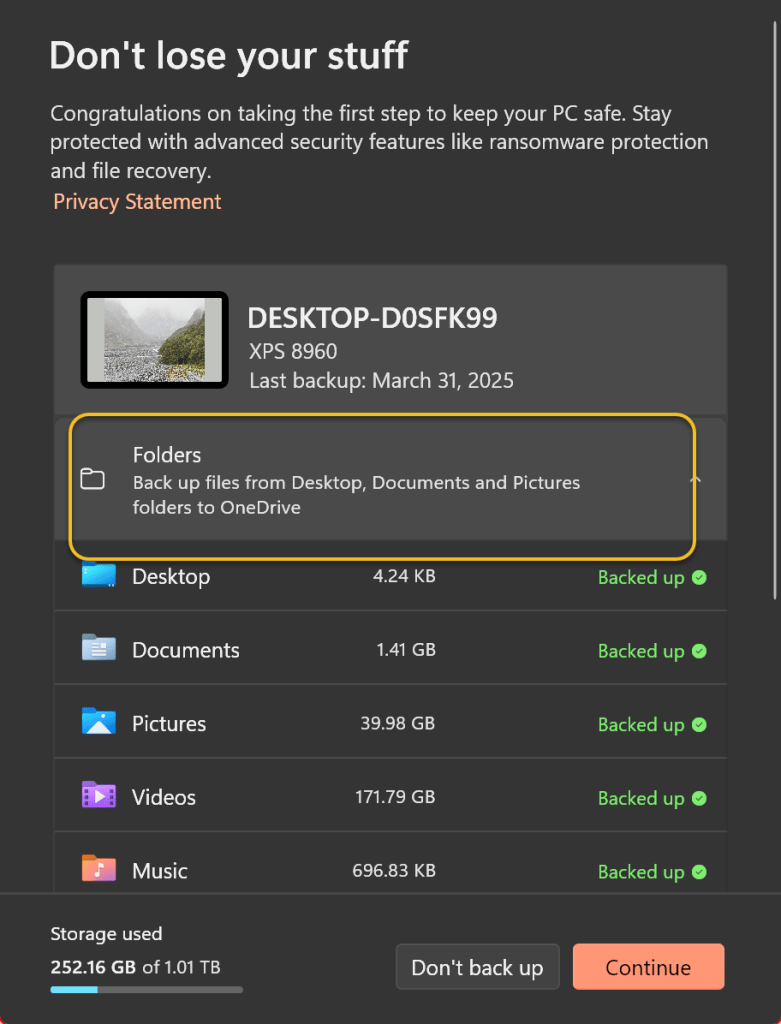
Now, click the down arrow next to Folders and enable the folders you wish to back up. If you have previously done a folder(s) backup, the last backup date will be shown and is enabled. You will be able to back up the Desktop, Documents, and Pictures folders. See the image below:

Backup 2
Selecting folders to backup

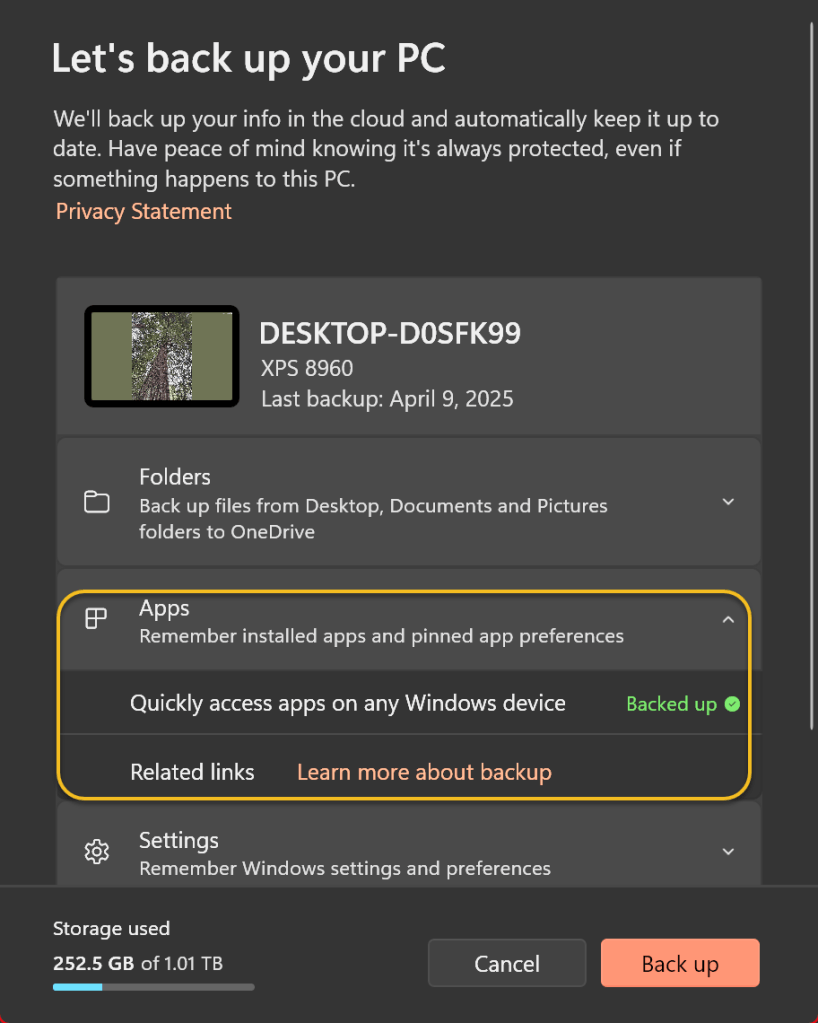
Next, click the down arrow next to Apps. Make sure Quickly access apps on any Windows device is turned on, as this will generate a list of installed apps so you can more easily recover them when you restore the backup. See the following image:

Backup 3
Selecting all Apps to backup

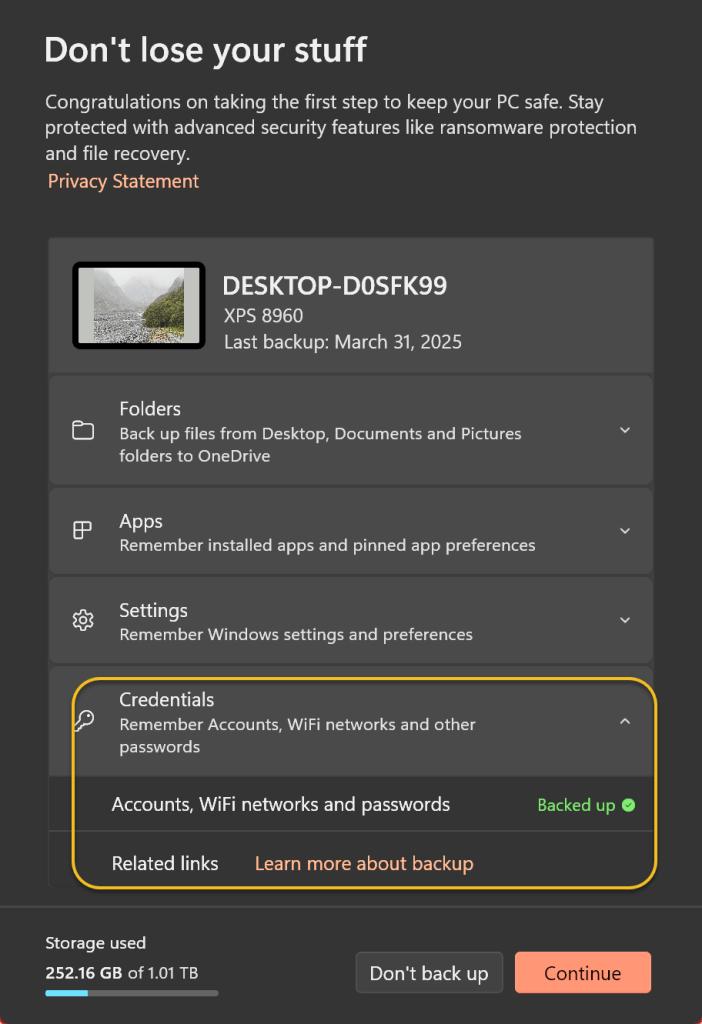
Now, click the down arrow next to Credentials and make sure the switch for Accounts, Wi-Fi networks and other passwords is turned on. Refer to the image below:

Backup 4
Selecting everything else to backup

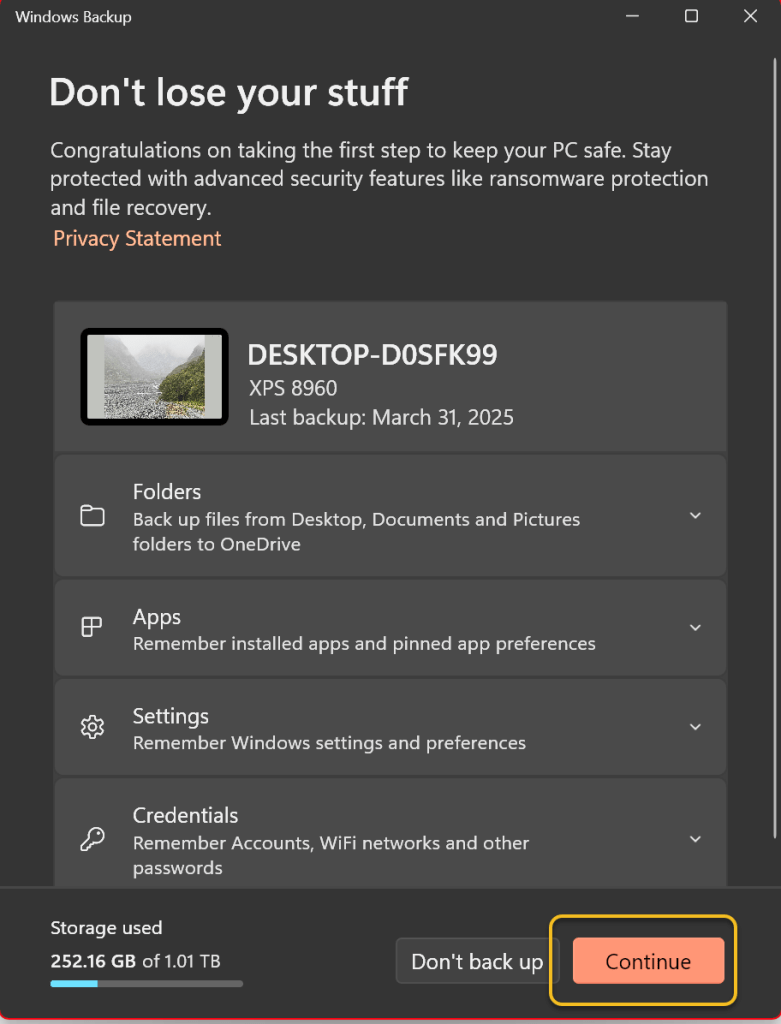
Next, when you are ready, click the Continue button. The items you selected are then backed up to your OneDrive storage. As the backup runs, you can minimize the Windows Backup app and work on other tasks. When the entire backup is finished, you will see that each of the four categories has been backed up. See the image below:

Backup 5
Clicking Continue to start the backup

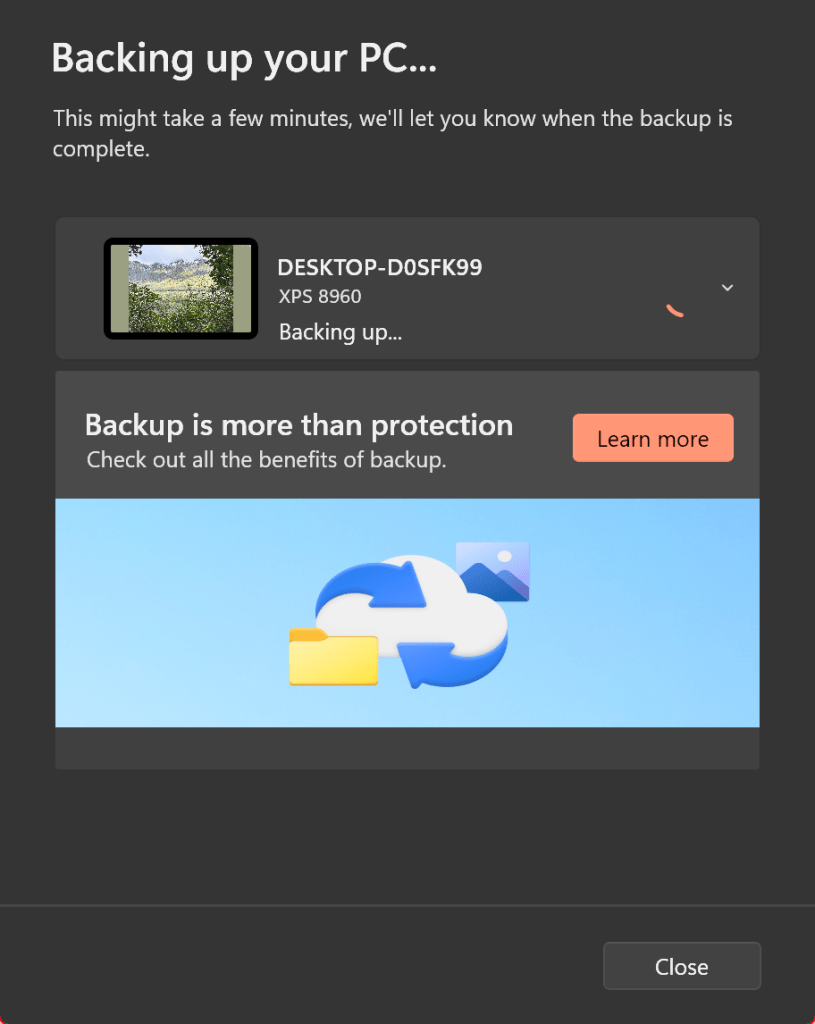
Now, you will receive a screen stating that your backup is in process. See the following image:

Backup 6
Your backup progress screen

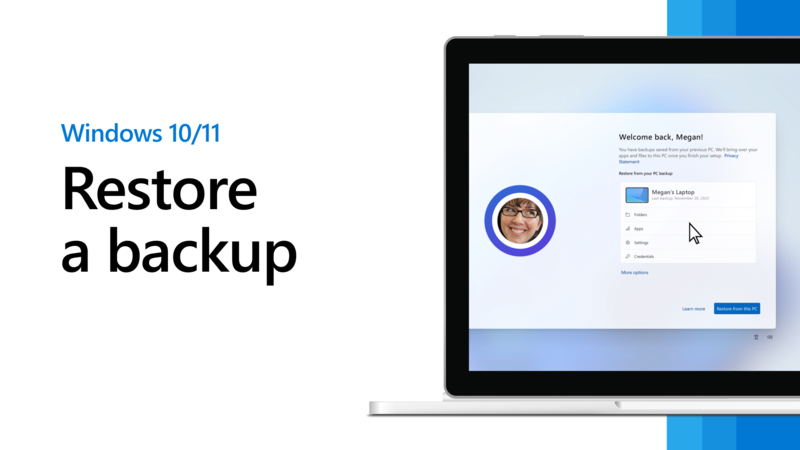
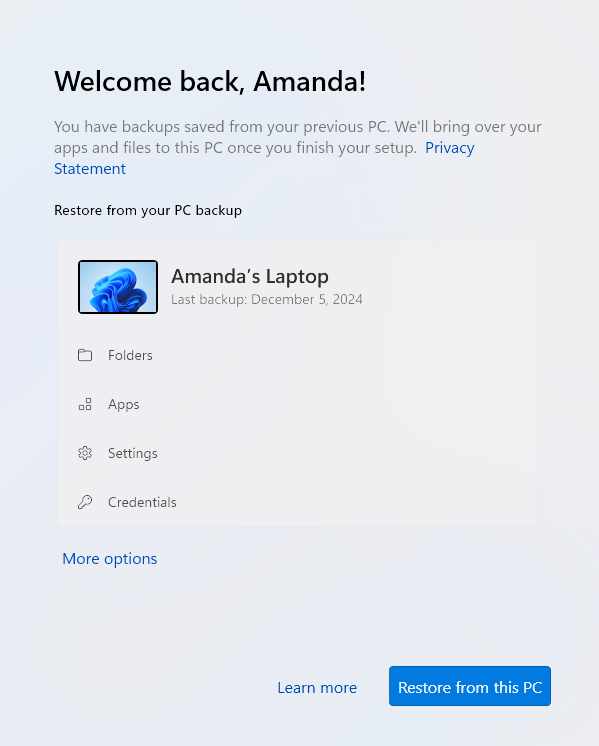
Now, if you reset Windows or switch to a new PC, you can restore your saved files during the setup process. You should see a screen welcoming you back and telling you that there are backups saved from the previous PC. Click the More options link. Refer to the image below:

Backup 0
Selecting to start a Restore from a backup

Next, select the name of the backup of your previous PC, and then click the Restore from this PC button. The items that you chose to back up are restored to your new computer. After this process is done, continue with the setup. When finished, sign in to your PC. See the image below:

Backup 8
Clicking Restore from this PC to begin the restore process

Now, click the Start menu, Settings screen, and File Explorer to see which apps and settings have been restored. Any program that needs to be reinstalled will display an arrow with the word Install on the icon. Click the app to either automatically reinstall it or open the Microsoft Store so you can download the program.

Disclaimer

Technology is constantly evolving, and smartphone and desktop tech rarely remains static. Therefore, the information in this post is only accurate as of the date it was written. Blog posts that are older than six months may contain instructions that are no longer compatible with your device or operating system. We hope that the content from previous posts continues to function as intended. Thank you for reading TechSavvy.Life, where technology works for you.

 “Good, bad, or indifferent, if you are not investing in new technology, you are going to be left behind.

— Philip Green

You are finished. Please feel free to share this post! One way to share is via Twitter.

Just click the Tweet icon below. This will launch Twitter where you click its icon to post the Tweet.

Checkout TechSavvy.Life for blog posts on smartphones, PCs, and Macs! You may email us at contact@techsavvy.life for comments or questions.

We value your feedback! Was this post helpful? Please share your comments with us. If you have a tech question related to your computer or smart device, feel free to reach out. Just send an email to contact@techsavvy.life, and be sure to include the device, app, and version you are using. To assist us further, you can also attach screenshots related to your inquiry.

AAuthor’s eBook

The author’s Vietnam eBook on the “Battle for Tra Bong Vietnam: Events and Aftermath” can be accessed from a Kindle device or the Kindle App for a desktop or smartphone. The apps are free.
The author’s Vietnam eBook on the Battle for Tra Bong Vietnam: Events and Aftermath