How to Scan a Document on iPhone and iPad

Scanners had their moment, but nowadays it’s not as necessary to own one. However, that does not mean you never need to scan a document or photo. Thankfully, you probably have some tools to do it without a scanner.

RAYMOND OGLESBY @RaymondOglesby2
September 5, 2023

This is for the iPhones and Tablets. Screenshots are from iPhone 14 Pro running iOS 16+

Scanners had their moment, but nowadays it’s not as necessary to own one. However, that does not mean you never need to scan a document or photo. Thankfully, you probably have some tools to do it without a scanner.

If you find yourself scanning a lot of documents and photos, it’s a good idea to invest in an actual scanner. Most people only need to scan a few things a year, so we will show you some good alternatives.

Scan Photos and Documents

A scanner is essentially just a camera that takes a photo of your document in a specific way. Well, you carry a camera with you every day, so why not use that as a scanner?

A smartphone camera is usually perfectly fine for getting the job done as a scanner. The results will not be as crisp and clear as an actual scanner, but it will get the point across. Here are some suggestions for taking photos of a document.

  • Lighting: Place the document on a flat surface with good lighting. Try to avoid casting a shadow on the document with your hand and phone.
  • Placement: Take the photo straight on to avoid any weird angles. This can be done directly above or at a right angle by propping up the document. Do whichever results in the best lighting with the fewest shadows.
  • Framing: Make sure to take the photo from far enough away so the entire document is in view. After you take the photo, crop it to the document so you do not see any of the surroundings.

The camera on your phone will suffice in many situations, but sometimes a more professional-looking scan is necessary. For that, you will want to turn to a document scanner app. You already have one installed on your iPhone, iPad, or Android phone.

Scan Using the Files App on iPhone

Phones and iPads have a built-in Document Scanner feature. This tool is not its own app, but you will find it both in Apple’s Files app and the Apple Notes app. Many websites suggest using the Notes app to scan a document, and that works fine; but you can also use the Files app, which is convenient if you just want to scan the document to a file.

To scan a document on an iPhone or iPad with the Files app, first, open the Files app and go to the location you want to save your scanned document to. For example, to keep it in your iCloud Drive, open the iCloud Drive location. To save it in your iPhone’s Downloads folder, open Downloads.

Next, tap the Menu button (it looks like a “”) at the top-right corner of the screen and tap Scan Documents to get started. Refer to the below image:

iPhone Scan 1
Selecting to scan from the Files app into the Downloads folder

Now, position the document in view of your iPhone or iPad’s camera and hold it still. Your device will automatically capture an image of the document, and you will see it flash on the screen. See the below image:

iPhone Scan 2
The scanned document in Files

Next, to scan a multi-page document, position the second page in view of your iPhone or iPad’s camera. Continue this process to capture as many pages as you like. When you are done, tap Save, and you will get a combined PDF file containing each page. See the following image:

iPhone Scan 3
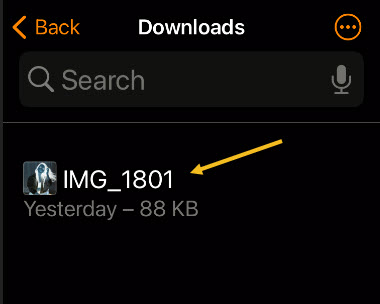
The scanned document is in the Downloads folder

Scan Using the Notes App on iPhone

You can also use the Notes app to scan documents. First, open the Notes app on your iPhone or iPad, open an existing note or create a new note, tap the camera icon, and tap Scan Documents. The Notes app will then save your scanned documents as notes rather than files Refer to the below image:

iPhone Scan 4
Selecting to scan from the Notes app

Next, your saved document is in the Notes app. See the below image:

iPhone Scan 5
The scanned document in Notes
Disclaimer

Technology is always changing and rarely is there static tech for smartphones and desktops. Thus, the contents of this post are only valid at the time of writing. Blog posts older than six months may have directions incompatible with your device or OS. Hopefully, older post content will continue to work as advertised. Thank you for reading TechSavvy.Life for Technology at Work For You.

Quote For the Day

Whatever you’re thinking, think bigger.

Tony Hsieh

Tweet Info

That’s it. Please feel free to share this post! One way to share is via Twitter.

Just click the Tweet icon below. This will launch Twitter where you click its icon to post the Tweet.

Checkout TechSavvy.Life for blog posts on smartphones, PCs, and Macs! You may email us at contact@techsavvy.life for comments or questions.

I Would Like to Hear From You

Please feel free to leave a comment. I would love to hear from you. Do you have a computer or smart device tech question? I will do my best to answer your inquiry. Just send an email to contact@techsavvy.life. Please mention the device, app, and version you are using. To help us out, you can send screenshots of your data related to your question.

Author’s E-Book

You can access the e-book from a Kindle device, the Kindle App for the desktop or smartphone, which is a free app.

The author’s Vietnam eBook on the Battle for Tra Bong Vietnam: Events and Aftermath

How to Attach Photos and Files to an Email on iPhone

Your iPhone’s Mail app makes it easy to add photos, videos, and other file types as attachments to your emails. We will show you how to add files from various sources to your emails on your iPhone.

RAYMOND OGLESBY @RaymondOglesby2
June 14, 2022

Your iPhone’s Mail app makes it easy to add photos, videos, and other file types as attachments to your emails. We will show you how to add files from various sources to your emails on your iPhone.

This is for the iPhone

Dilbert and Ethical
Copyright Scott Adams, Inc./Distributed by Universal Uclick for UFS

When you choose to attach a photo or video, Mail opens iPhone’s default Photos app to let you add your items. For other file types, Mail opens iCloud Drive from where you can choose and attach your files. You may also choose other cloud storage providers to attach your files.

Attach Photo or Video

First, launch Mail on your iPhone. Then, in Mail’s bottom right-hand corner, tap the Pencil icon to compose a new email. Refer to the below image:

Mail 1
Selecting to compose an email

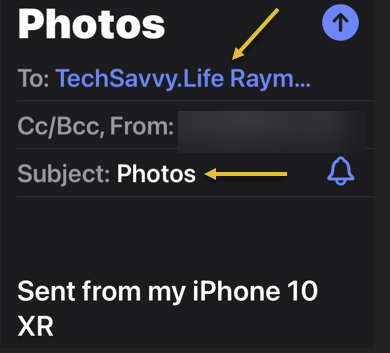
Next, you will see a New Message page. Here, tap the To field and enter the recipient’s email address, then tap the Subject and enter a subject for your email. See the below image:

Mail 2
Addressing the email

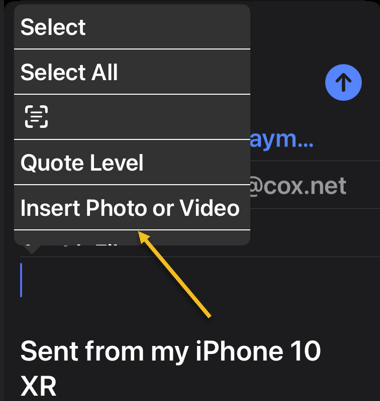
Now, to attach a photo or video to this email, tap and hold anywhere on the email’s body (the large text area). Then in the menu that opens, choose Insert Photo or Video. See the following image:

Mail 3
Selecting the Insert a Photo or Video option

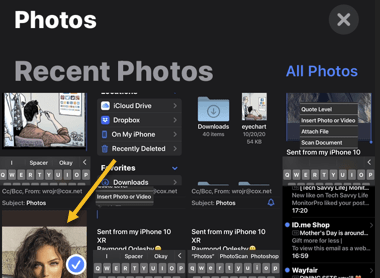
Next, Mail will open your iPhone’s Photos app where you can select the photo or video you want to add to your email. Tap an item when your item opens in full screen. Refer to the below image:

Mail 4
Selecting a photo

N0w, back on the New Message page, you will see your selected photo or video attached to your email. See the below image:

Mail 2
Your selected photo

Attach Other File Types

Next, to attach another file type, tap and hold on the email body and choose Attach File. See the following image:

Mail 6
Selecting Attach File option

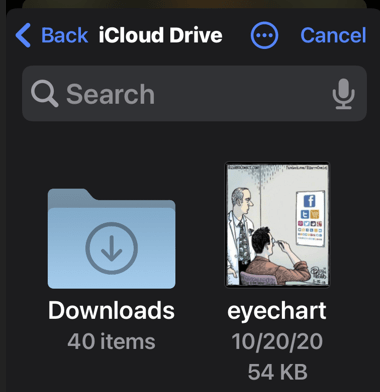
Now, your iCloud Drive page will open where you can select a file to add to your email. Refer to the below image:

Mail 7
Select a file from iCloud Drive

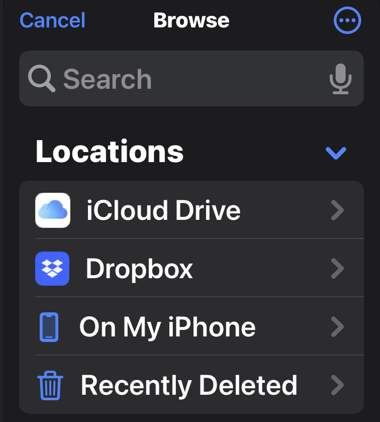
Next, to use another cloud storage, in the top-left-hand corner, tap Locations Select your cloud storage to pick your files. See the below image:

Mail 8
Selecting a Location to attach a file

Your files are now attached to your email, and you may send out your email as usual. The recipient will get your email with your attached content.

Quote For the Day

Defect-free software does not exist.

Wietse Venema

Tweet Info

That’s it. Please feel free to share this post! One way to share is via Twitter.

Just click the Tweet icon below. This will launch Twitter where you click its icon to post the Tweet.

Check out TechSavvy.Life for blog posts on smartphones, PCs, and Macs! You may email us at techsavvy.life for comments or questions.

I Would Like to Hear From You

Please feel free to leave a comment. I would love to hear from you. Do you have a computer or smart device tech question? I will do my best to answer your inquiry. Just send an email to contact@techsavvy.life. Please mention the device, app, and version you are using. To help us out, you can send screenshots of your data related to your question.

Author’s E-book

You can access the e-book from a Kindle device, the Kindle App for the desktop or smartphone, which is a free app.

The author’s Vietnam eBook on the Battle for Tra Bong Vietnam: Events and Aftermath

How to Locate Downloaded Files on iPhone or iPad

If you have downloaded files to your iPhone or iPad, accessing them might be confusing. There’s a special folder where iOS and iPadOS store downloads, and you can find it via the Files app.

RAYMOND OGLESBY @RaymondOglesby2
February 23, 2022

If you have downloaded files to your iPhone or iPad, accessing them might be confusing. There’s a special folder where iOS and iPadOS store downloads, and you can find it via the Files app. Let’s find out how to locate downloaded files.

This is for the iPhone and iPad. Screenshots are from iPhone XR

Dilbert and Honest
Copyright Scott Adams, Inc./Distributed by Universal Uclick for UFS

First, locate the Files app on your iPhone or iPad. The quickest way to do this is with Spotlight Search. Swipe one finger down from the middle of the Home screen, and then type Files. In the search results, then tap the Files icon. Refer to the below image:

Files 1
Locating the Files app

Next, select the Browse tab at the bottom. See the below image:

Files 2
Accessing the Browse tab

Now, tap On My iPhone or On My iPad, depending on which device you are using. The list under Locations will vary depending on which apps you have installed, but your device will always have an On My [Device] listing. See the following image:

Files 3
Selecting On My iPhone option

Next, you will see a list of folders which will vary depending on what apps you have installed. Generally, most people save files to the Downloads folder, so tap this folder. Refer to the below image:

Files 4
Selecting the Downloads folder

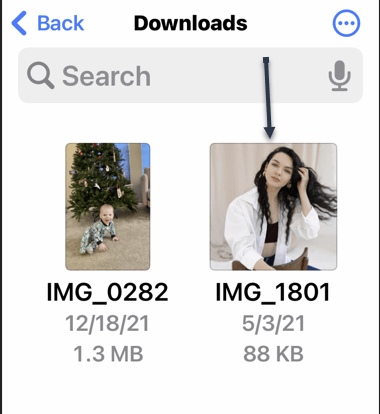
Now, you will see a list of all the files you have downloaded. During the download process, you can save a file to a folder other than Downloads. If you do not see the file you are looking for, tap the Back arrow at the upper left-hand corner, and then tap another folder. See the below image:

Files 5
Selecting a downloaded image

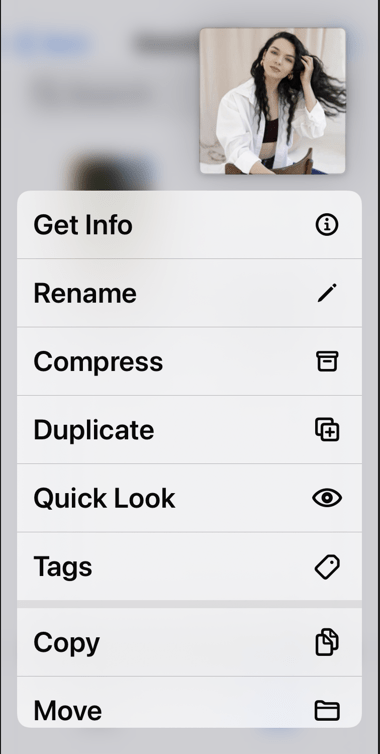
Next, once you locate the file you want, you can tap it to preview it, or tap and hold it to open a pop-up menu. Then, you can move, copy, or rename the file, along with other operations. See the following image:

Files 6
The image options

Quote For the Day

Beware of geeks bearing formulas.

Warren Buffett

That’s it. Please feel free to share this post! One way to share is via Twitter.

Just click the Tweet icon below. This will launch Twitter where you click its icon to post the Tweet.

Checkout TechSavvy.Life for blog posts on smartphones, PCs, and Macs! You may email us at contact@techsavvy.life for comments or questions.

I Would Like to Hear From You

Please feel free to leave a comment. I would love to hear from you. Do you have a computer or smart device tech question? I will do my best to answer your inquiry. Just send an email to contact@techsavvy.life. Please mention the device, app, and version you are using. To help us out, you can send screenshots of your data related to your question.

Author’s E-book

You can access the e-book from a Kindle device, the Kindle App for the desktop or smartphone, which is a free app.
The author’s Vietnam eBook on the Battle for Tra Bong Vietnam: Events and Aftermath

How to Copy an Image or Video From Files to Photos

If you have downloaded images or videos to your Files app on your iPhone or iPad, you might be wondering if you can copy them to your Photos library. The answer is yes.

If you have downloaded images or videos to your Files app on your iPhone or iPad, you might be wondering if you can copy them to your Photos library. The answer is yes. Let’s explore how this is done.

This is for the iPhone and iPad

Copyright Scott Adams, Inc./Distributed by Universal Uclick for UFS

First, open the Files app. Refer to below image:

Accessing the Files app

Now, navigate to the folder that contains the media files that you would like to copy to your Photos. In our example, we are using the Downloads folder on the iPhone, but the files could just as easily be copied from other folders in Files, such as Dropbox or your iCloud Drive. See below image:

Accessing the Downloads folder on my iPhone

If it’s a single photo or video, (like our example), tap on it to open up its detailed view.

If you want to select multiple files on an iPhone, tap the ellipsis button (three dots in a circle) in the upper-right corner of the screen and choose Select. (On an iPad, just tap Select). Then, place check marks on the items you want to copy to Photos. See following image:

Accessing a single image

Either way, once you have a single item opened or multiple items selected, tap the Share button. On the iPad, it’s in the upper-right corner of the screen. On the iPhone, it’s located in the lower left-hand corner. Refer to below image for the iPhone:

Accessing the Share button

On the Share pop-up list, tap Save Image or Save Video. If you selected multiple items, tap Save X Items, where X is the number of items you have selected. See below image:

Saving the single image to Photos

The next time you open your Photos app, you will see the images or videos you saved from Files.

This process works both ways. If you want to copy photos or images from Photos to Files, select them in the Photos app, tap Share, then select Save to Files.

Quote For the Day

Technology is a gift of God. After the gift of life it is perhaps the greatest of God’s gifts. It is the mother of civilizations, of arts and of sciences.

Freeman Dyson

That’s it. Please feel free to share this post! One way to share is via Twitter.

Just click the Tweet icon below. This will launch Twitter where you click its icon to post the Tweet.

Checkout TechSavvy.Life for blog posts on smartphones, PCs, and Macs! You may email us at contact@techsavvy.life for comments or questions.

I Would Like to Hear From You

Please feel free to leave a comment. I would love hearing from you. Do you have a computer or smart device tech question? I will do my best to answer your inquiry. Just send an email to contact@techsavvy.life. Please mention the device, app and version that you are using. To help us out, you can send screenshots of your data related to your question.

The author’s Vietnam eBook on the Battle for Tra Bong: Events and Aftermath