How to Delete Messages in Facebook Messenger

If you do not wish to keep a single or an entire chat in your Facebook Messenger, the company allows you to delete individual or all your messages at once.

RAYMOND OGLESBY @RaymondOglesby2
June 28, 2022

If you do not wish to keep a single or an entire chat in your Facebook Messenger, the company allows you to delete individual or all your messages at once. Let’s find out on your desktop and mobile.

Note! Your deleted messages can not be restored, so make sure you really want to get rid of your messages.

This is for devices using Facebook Messenger. Screenshots are from iPhone XR and Windows 10. Messenger’s latest version is 2022 so screenshots may be different from your device.

Dilbert and Simulation
Copyright Scott Adams, Inc./Distributed by Universal Uclick for UFS

You can remove, unsend, or delete messages or chats. This post gives you different methods on how to “back out” your messages or chats. This means you can “undo” mistakenly sent messages. For the Unsend, you have 10 minutes to retract the original message. The Remove feature deletes the message.

Delete Messages on the Desktop

If you are on a desktop computer like Windows, Mac, Linux, or Chromebook, use the Facebook website to delete individual or all messages from your account.

First, launch a web browser on your computer and access Facebook. Log in to your account on the site if you are not already logged in.

Next, in Facebook’s top right-hand corner, click the Messenger icon. Refer to the below image:

Messenger 1
Accessing Messenger

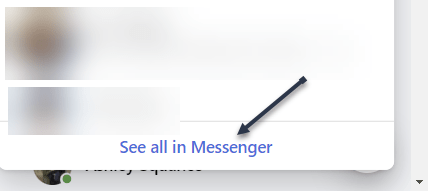
Now, in the Messenger panel, at the bottom, click See All in Messenger. See the below image:
Messenger 2
Selecting all messages

Next, in the Chats sidebar on the left, you will see all your conversations. Select the chat in which you want to delete messages.

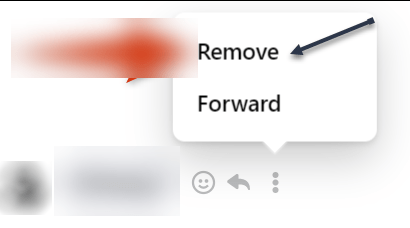
Now, on the right pane, find the individual message to delete. Then hover over that message, click the Menu icon (the three vertical dots), and choose Remove. See the following image:
Messenger 3
Remove a message in a chat

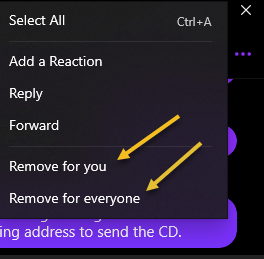
Next, depending on the message you select, click either Remove for you or Remove for everyone. Refer to the below image:
Messenger 4
Selecting your option

Now, if you have selected your own message, select Remove For You.

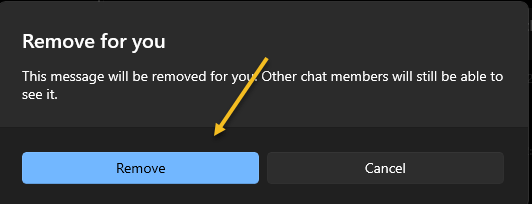
In the window’s bottom left-hand corner, click Remove and your message will be deleted. See the below image:
Messenger 5
Removing only for you

Next, if you have selected an everybody message, select Remove for everyone.

In the window’s bottom left-hand corner, click Remove and your message will be deleted. See the following image:
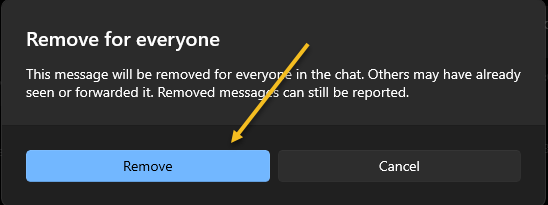
Messenger 5a
Removing for everyone

Now, if you would like to delete an entire conversation, then in the left sidebar, find that conversation. Then hover over that chat, click the Menu icon (the three vertical dots), and choose Delete Chat. Refer to the below image:
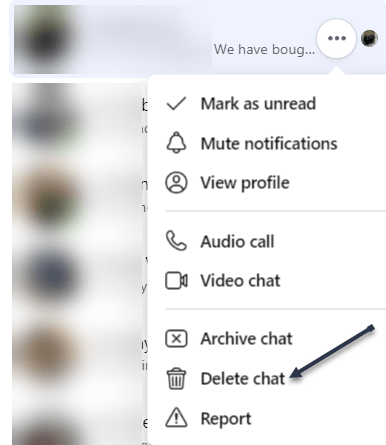
Messenger 6
Selecting to delete a chat

Next, in the prompt that opens, click Delete Chat. See the below image:
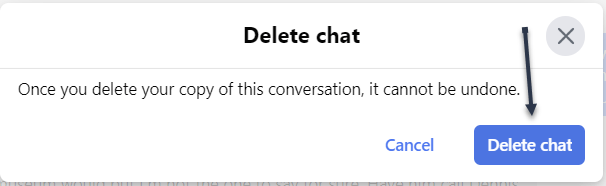
Messenger 7
Confirming to delete a chat

Now, Facebook will delete your selected chat on the desktop.

Delete Messages on Mobile

On your iPhone, iPad, or Android phone, make use of the Messenger app to delete your individual messages or entire chats.

First, launch the Facebook Messenger app.

Next, tap the conversation from which you want to remove messages.

Now, on the conversation page, tap and hold on to the message to remove. If you have selected the other party’s message, then in the menu that opens, select More > Remove. If you have selected your own message, then tap Remove. The message is deleted on your end, but the other party can still access it. See the following image:
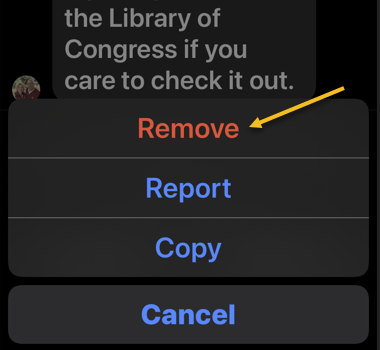
Messenger 8
Remove a message

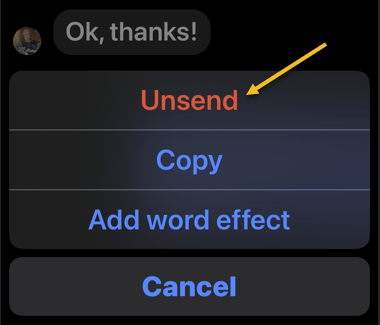
Next, To delete the message from everyone involved in the chat, choose Unsend. Refer to the below image:
Messenger 9
Unsend a message

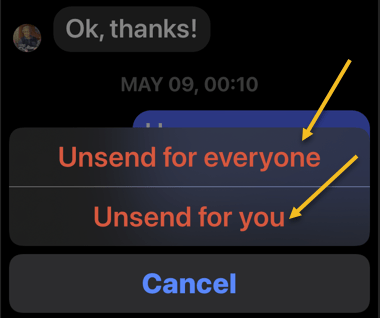
Now, you can choose Unsend for everyone or Unsend for you. See the below image:
Messenger 11
Selecting an option to Unsend

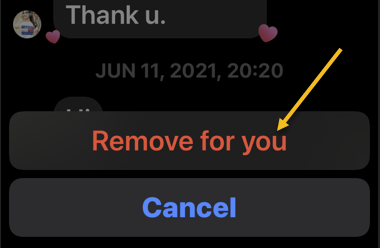
Next, to remove the message only from your own chat history, select Remove For You. See the following image:
Messenger 10
Selecting Remove for you option

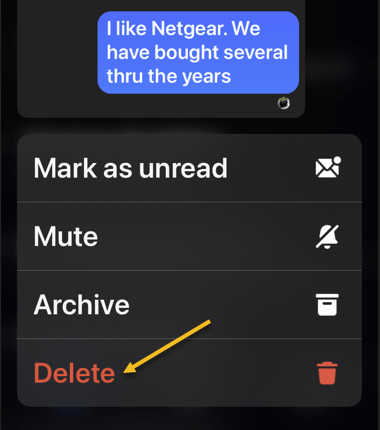
Now, you can also delete entire chats with someone. To do so, tap and hold on to the chat to delete. Then, in the menu that opens, select Delete. Refer to the below image:
Messenger 12
Delete a chat

Next, in the prompt that opens, tap Delete. See the below image:
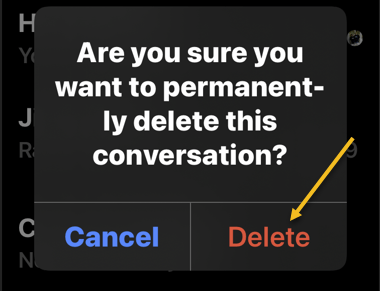
Messenger 13
Confirm the delete

Now, you have successfully deleted your messages from Facebook Messenger on mobile.

Quote For the Day

People are stunned to hear that one company has data files on 185 million Americans.

Ralph Nader

Tweet Info

You are finished. Please feel free to share this post! One way to share is via Twitter.

Just click the Tweet icon below. This will launch Twitter where you click its icon to post the Tweet.

Check out TechSavvy.Life for blog posts on smartphones, PCs, and Macs! You may email us at contact@techsavvy.life for comments or questions.

I Would Like to Hear From You

Please feel free to leave a comment. I would love to hear from you. Do you have a computer or smart device tech question? I will do my best to answer your inquiry. Just send an email to contact@techsavvy.life. Please mention the device, app, and version you are using. To help us out, you can send screenshots of your data related to your question.


Author’s E-book

You can access the e-book from a Kindle device, the Kindle App for the desktop or smartphone, which is a free app.
The author’s Vietnam eBook on the Battle for Tra Bong Vietnam: Events and Aftermath

How to Use Text to Speech Tools

Reading is great, but sometimes you want or need to listen. Let your computer or phone do the reading for you.

RAYMOND OGLESBY @RaymondOglesby2
June 23, 2022

Reading is great, but sometimes you want or need to listen. Let your computer or phone do the reading for you. Let’s explore some tools to do this.

This is for the mobile or desktop

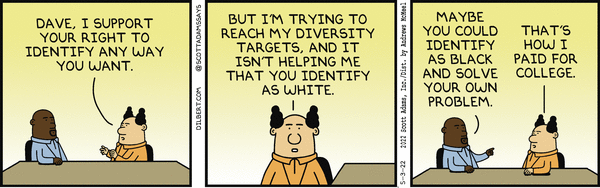
Dilbert and White
Copyright Scott Adams, Inc./Distributed by Universal Uclick for UFS

Some people struggle with reading text on a screen, or physically can not. Others might want their computer to read something to them aloud while they do something else. There are plenty of reasons to use a text-to-speech tool, also called a “screen reader”.

Although there are standalone text-to-speech apps, you probably do not need them. That’s because every operating system, and several well-known pieces of software, offer a text-to-speech feature, and they are all quite good.

Spoken Content for iPhone

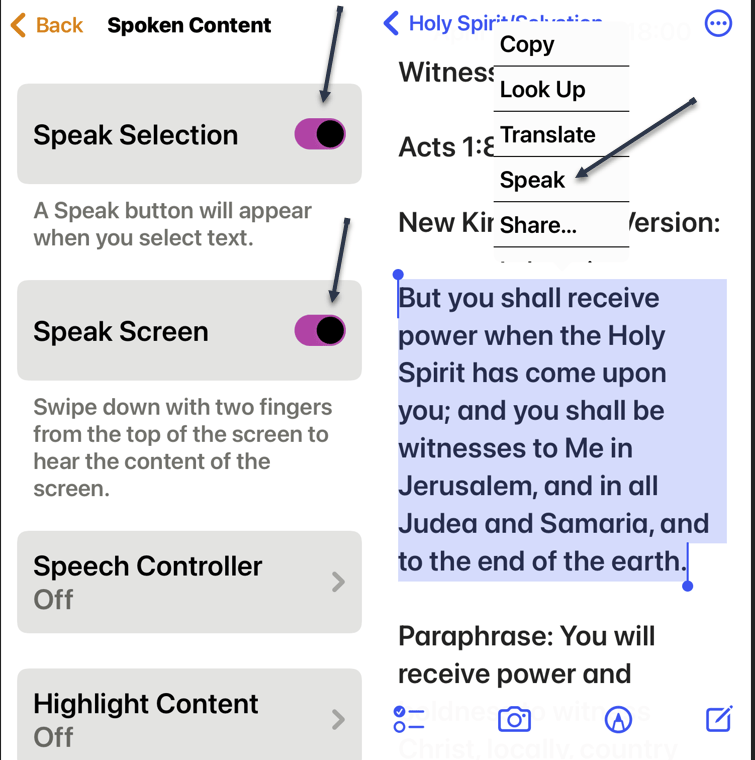
The iPhone’s text-to-speech feature is very easy to use. First, to turn it on, head to:

Settings > Accessibiltu > Spoken Content

and enable Speak Selection and Speak Screen. Once enabled, any text you highlight in any application will have a Speak option, which you tap to activate. We have highlighted some text from the Notes app to be read to us. Refer to the below image:

Spoken Content for iPhone

Read Aloud for Browsers

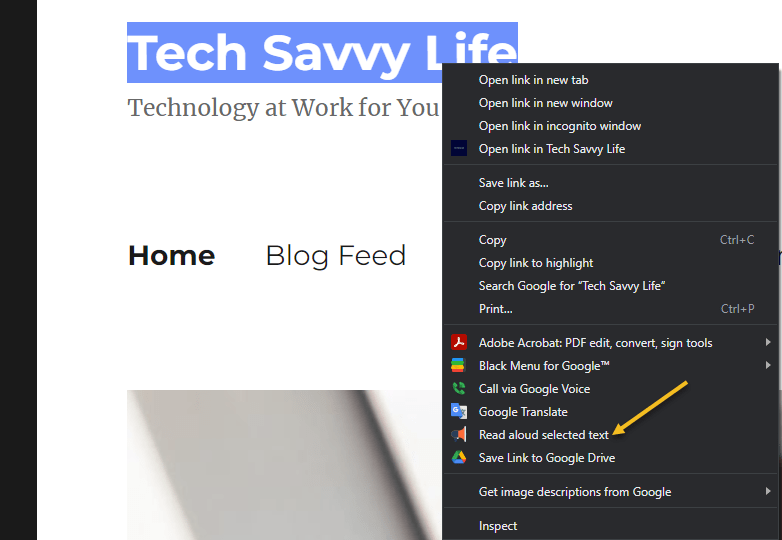
Read Aloud is an extension for Chrome, Firefox, and Edge that can read whatever website you currently have open. First, you will need to download the extension. After downloading, in Chrome, right-click on some highlighted text and choose the Read aloud selected text option. See the below image:

Text to Speech 3
Read Aloud for browsers

Immersive Reader for Office and Edge

Microsoft Office applications have a built-in text-to-speech feature but it’s a little hard to find. First, in any document, click the Immersive Reader tab. If you do not see it, search for it, and from then on it should appear in your interface permanently. Highlight some text, then right-click and select Read Aloud to hear your document read back to you with the corresponding word highlighted as it goes. Immersive Reader is perfect for copy editing and reviewing long documents. See the following image:

Text to Speech 3
Immersive Reader for Office

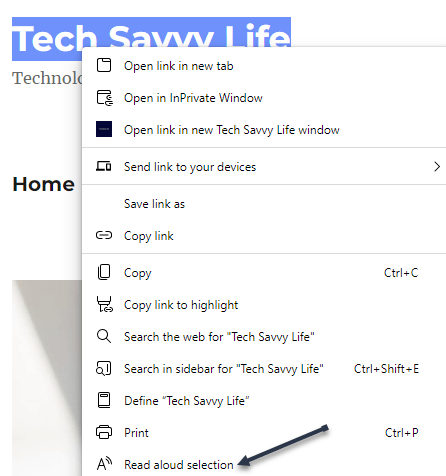
Microsoft Edge has this feature, too. Highlight some text, then right-click and select Real aloud selection. Refer to the below image:

Text to Speech 4
Immersive Reader for Edge

Natural Reader

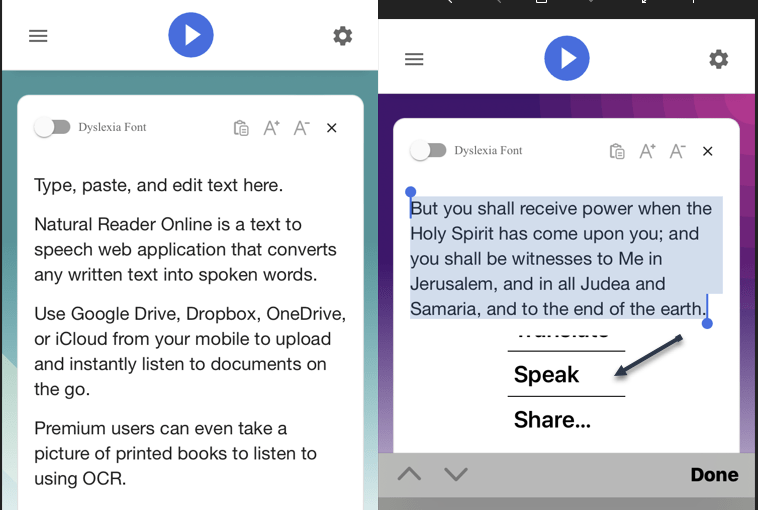
First, download the mobile version (ours is for the iPhone). Then head to

NaturalReaders.com/online (note the plural in the URL)

and paste some text, highlighting it to hear it read on a mobile device. See the below image:

Text to Speech 5
Natural Reader on mobile

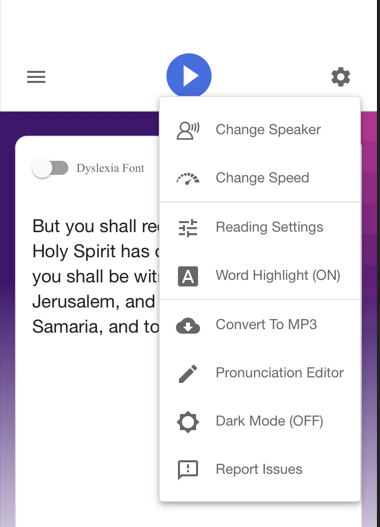
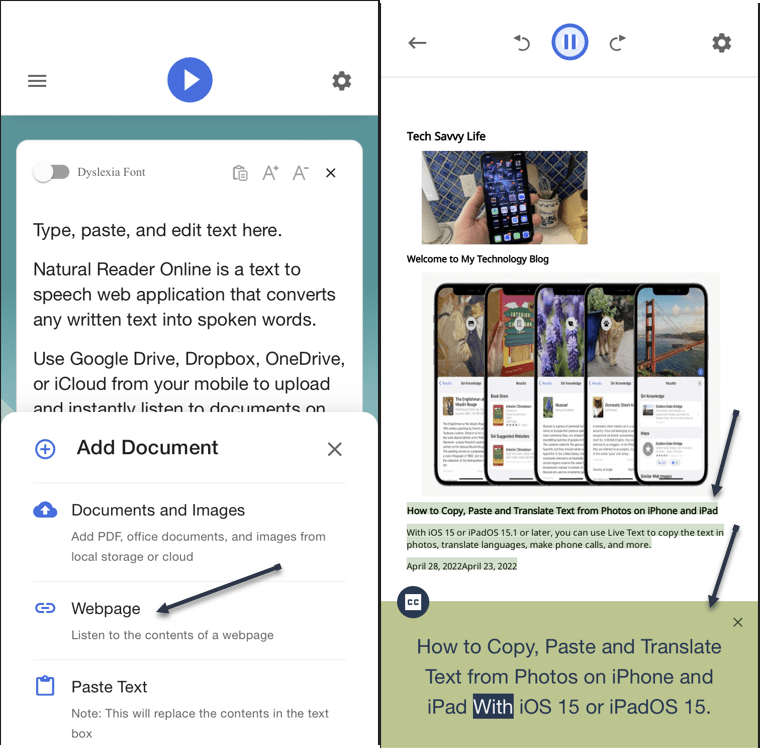
You can also drag documents into your browser window if you prefer. Natural Reader has a variety of voices, and you can control the speed of reading. Just click the Gear icon on the upper right-hand corner for options. See the following image:

Text to Speech 6
Natural Reader options

You can upgrade for features like a Chrome extension, OCR for scanned documents, higher quality voices, and the ability to create MP3 files; these features cost $9.99 a month. The paid version also supports uploading documents, including Microsoft Word, Apple’s Pages, and even image files with text on them. The free version is perfect for quick listening. Refer to the below image for an example of listening to a webpage:

Text to Speech 7
Natural Reader for web pages

Quote For the Day

Technology is so much fun but we can drown in our technology. The fog of information can drive out knowledge.

Daniel J Boorstin

Tweet Info

That’s it. Please feel free to share this post! One way to share is via Twitter.

Just click the Tweet icon below. This will launch Twitter where you click its icon to post the Tweet.

Check out TechSavvy.Life for blog posts on smartphones, PCs, and Macs! You may email us at contact@techsavvy.life for comments or questions.

I Would Like to Hear From You

Please feel free to leave a comment. I would love to hear from you. Do you have a computer or smart device tech question? I will do my best to answer your inquiry. Just send an email to contact@techsavvy.life. Please mention the device, app, and version you are using. To help us out, you can send screenshots of your data related to your question.

Author’s E-book

You can access the e-book from a Kindle device, the Kindle App for the desktop or smartphone, which is a free app.
The author’s Vietnam eBook on the Battle for Tra Bong Vietnam: Events and Aftermath

How to Turn Off/On Live Captions in Google Chrome

Are you not a big fan of Google Chrome’s Live Captions, which displays the text version of your media files? If so, it’s easy to turn this feature off/on both temporarily and permanently.

RAYMOND OGLESBY @RaymondOglesby2
June 16, 2022

Are you not a big fan of Google Chrome’s Live Captions, which displays the text version of your media files? If so, it’s easy to turn this feature off/on both temporarily and permanently. Let’s explore this feature.

This is for devices using Google Chrome. Screenshots are from Windows 10

Dilbert and Key
Copyright Scott Adams, Inc./Distributed by Universal Uclick for UFS

Temporary Disable Live Captions

You can turn off Chrome’s Live Captions for a specific playback session while keeping it enabled for all other sessions.

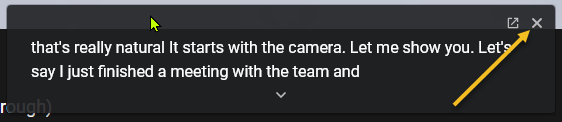
First, open a video containing a voice. The speaker’s voice will be displayed as Live Captions. To close this Live Captions, in the top right-hand corner of Chrome’s Live Captions box, click the “X” icon. Note! We are assuming the Live Captions option has been disabled (see below section). Refer to the below image:

Live Text 1
Live Caption being displayed

Live Captions will immediately disappear from your screen, and you can enjoy your media playback without any interruptions.

Permanently Stop Live Captions

If you do not wish to see live captions for any of your media playbacks in Chrome, turn the feature OFF permanently and it will not bother you anymore.

First, from Chrome’s top right-hand corner, select the three dots icon (the Menu icon). See the below image:

Live Text 2
Selecting the Menu icon

Next, in the Menu box, click Settings. See the following image:

Live Text 3
Selecting Settings

Now, on the Settings screen, from the left sidebar, select Advanced. Refer to the below image:

Live Text 4
Selecting Advanced

Next, in the expanded Advanced menu, click Accessibility. See the below image:

Live Text 5
Selecting Accessibility

Now, on the right, in the Accessibility pane, toggle the Live Caption option to OFF. See the following image:

Live Text 6
Disable Live Caption

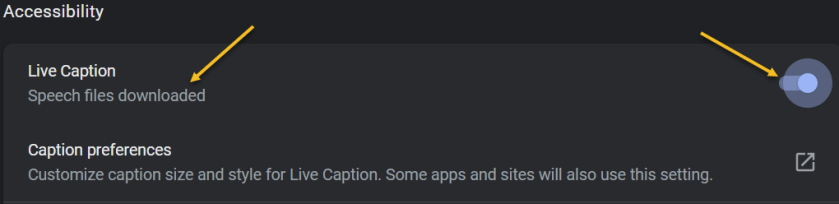
If you want to enable the option again, toggle the Live Caption option to ON. You may see the message “Speech files downloaded” below the Live Caption. Refer to the below image:

Live Text 7
Enable Live Caption

Going forward, Chrome will not display any captions for your media playbacks in the browser.

Quote For the Day

Technology is supposed to make our lives easier, allowing us to do things more quickly and efficiently. But too often it seems to make things harder, leaving us with fifty-button remote controls, digital cameras with hundreds of mysterious features and book-length manuals, and cars with dashboard systems worthy of the space shuttle.

James Surowiecki

Tweet Info

You are finished. Please feel free to share this post! One way to share is via Twitter.

Just click the Tweet icon below. This will launch Twitter where you click its icon to post the Tweet.

Check out TechSavvy.Life for blog posts on smartphones, PCs, and Macs! You may email us at contact@techsavvy.life for comments or questions.

I Would Like to Hear From You

Please feel free to leave a comment. I would love to hear from you. Do you have a computer or smart device tech question? I will do my best to answer your inquiry. Just send an email to contact@techsavvy.life. Please mention the device, app, and version you are using. To help us out, you can send screenshots of your data related to your question.

Author’s E-book

You can access the e-book from a Kindle device, the Kindle App for the desktop or smartphone, which is a free app.
The author’s Vietnam eBook on the Battle for Tra Bong Vietnam: Events and Aftermath

How to Use Profanity Check in Word

Microsoft Word has a ‘profanity’ check to warn you about rude, offensive, or swear words in some places. In others, the same word will not get any special marking. This feature is helpful in a work environment using Microsoft. We will explain how to set up and use Microsoft Word’s Profanity check, then show its limitations and traps.

RAYMOND OGLESBY @RaymondOglesby2
May 26, 2022

Microsoft Word has a ‘profanity’ check to warn you about rude, offensive, or swear words in some places. In others, the same word will not get any special marking. This feature can be helpful in a work environment that is using Microsoft. We will explain how to set up and use Microsoft Word’s Profanity Check, then show its limitations and traps.

This is for Microsoft Word 365, Outlook 365, and parts of Microsoft Office 365

Dilbert and Team
Copyright Scott Adams, Inc./Distributed by Universal Uclick for UFS

Note! We will be discreet in this article but the topic means there’s plenty of blurred text or Asterix.  Please do not proceed if you might be offended.

Word’s Profanity Check

Modern Word has an optional profanity check that’s supposed to warn about rude, offensive, obscene, or bad words. 

First, open Word and navigate to:

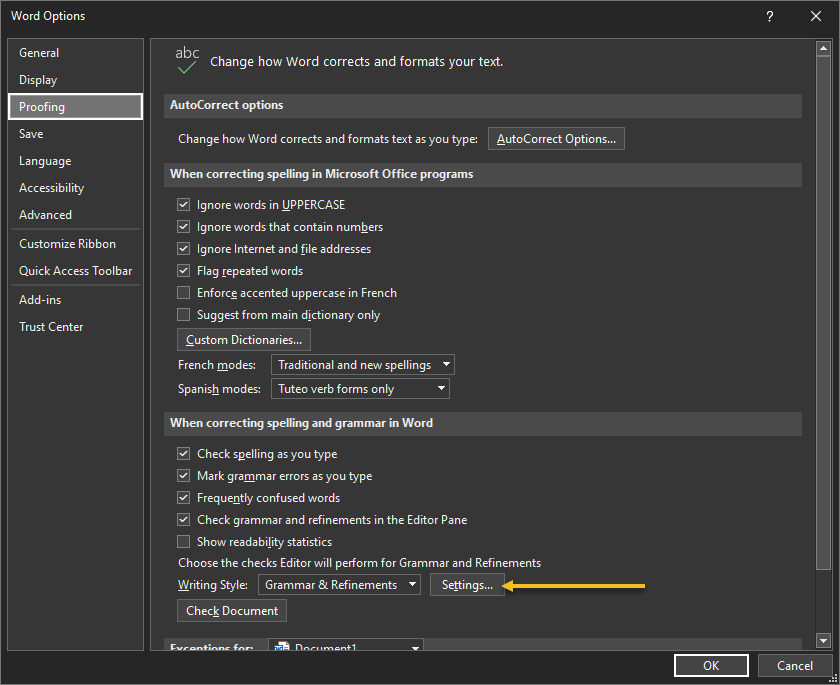
File > Options > Proofing > Grammar and refinements > Settings

Refer to the below image:

Profanity 1
Accessing Settings

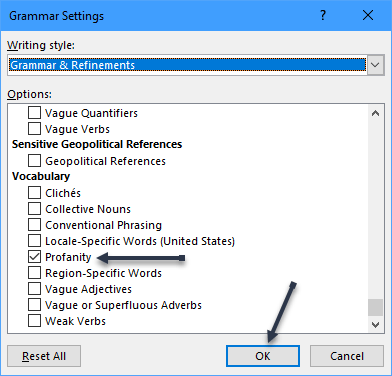
Next, scroll down to the bottom. Under Vocabulary look for the Profanity option, and checkmark it. When finished, click OK. Click OK again to exit. See the below image:

Profanity 2
Enabling Profanity option

How the Feature is Suppose to Work

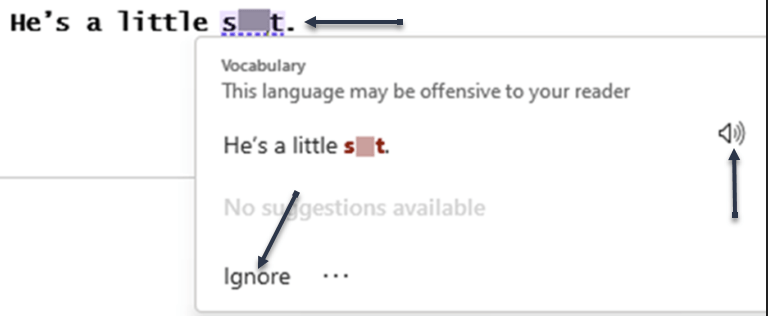
Now, when Word ‘sees’ a profane word, it adds a blue dotted line. Click on the word to see an explanation This language may be offensive to you. See the following image:

Profanity 3
Showing Profanity check

Next, choose Ignore to remove the dashes. Click the Speaker icon at the right to hear the word and sentence.

That’s how it’s supposed to work but there’s more to it in the real world.

How the Feature Really Works or Not

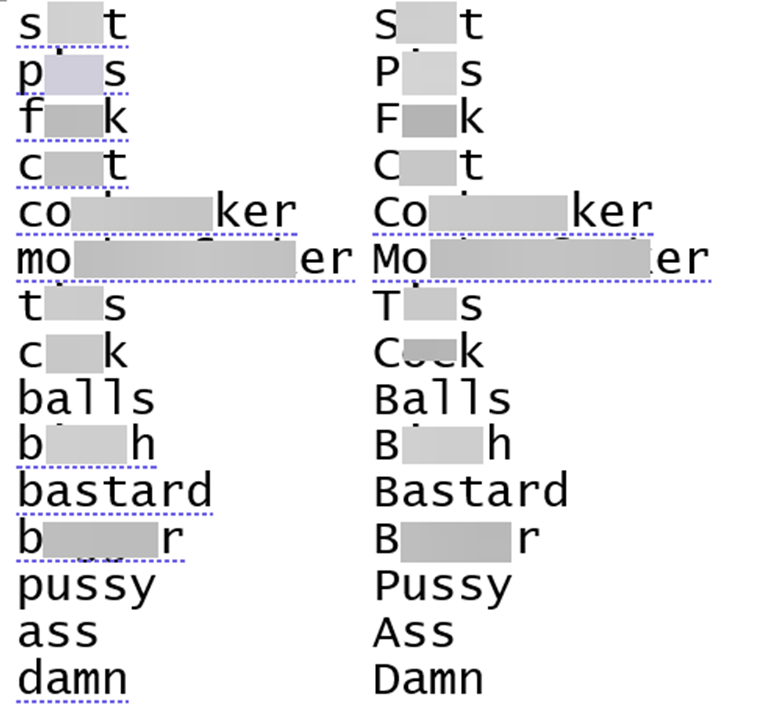
Word’s Profanity check mostly works only for lower case words.  Anything with a Capital letter is usually ignored. For us, this is a huge drawback to the feature. Refer to the below image:

Profanity 4
Profanity checking

Microsoft’s Value Judgements

One person’s plain speaking is another’s profanity.

We were intrigued that ‘ass’ is not marked as an offensive word while ‘damn’ is.  Apparently, Microsoft decided to err on the side of caution, for whatever that is worth.

Use of Capital Letters

In a similar way to some of the other Grammar and refinements checks, most words starting with a Capital letter are ignored.

As you can see, that’s not consistent.  We can not explain why two words on the list above are marked as ‘profane’ regardless of capitalization but others do not.

Word’s grammar checks, etc, treat most capitalized words like proper nouns, so it ignores them.  Of course, that makes no sense if the word starts a sentence, but that’s a distinction Word does not make. Word does have some contextual spell checking but that’s not been extended to Profanity and other grammar checks.

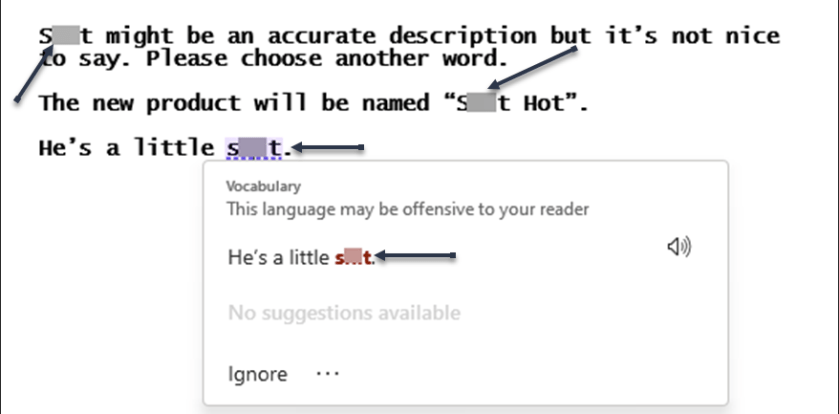
Here are three examples of s**t to demonstrate that only the lower-case word is marked as ‘offensive’. See the below image:

Profanity 5
Upper and lower case Profanity check

A Judgment Call

Do not just rely on Word’s Profanity test (among others) so that there are no ‘naughty words’ in your documents or emails.

As you can see, there are limits to what Word will detect. 

  • Capitalized words are almost always ignored.
  • Words with multiple meanings are always ignored with no consideration of the context.

This post is courtesy of Office Watch.

Quote For the Day

We’re still in the first minutes of the first day of the Internet revolution.

Scott Cook

Tweet Info

That’s it. Please feel free to share this post! One way to share is via Twitter.

Just click the Tweet icon below. This will launch Twitter where you click its icon to post the Tweet.

Check out TechSavvy.Life for blog posts on smartphones, PCs, and Macs! You may email us at contact@techsavvy.life for comments or questions.

I Would Like to Hear From You

Please feel free to leave a comment. I would love to hear from you. Do you have a computer or smart device tech question? I will do my best to answer your inquiry. Just send an email to contact@techsavvy.life. Please mention the device, app, and version you are using. To help us out, you can send screenshots of your data related to your question.

Author’s E-book

You can access the e-book from a Kindle device, the Kindle App for the desktop or smartphone, which is a free app.

The author’s Vietnam eBook on the Battle for Tra Bong Vietnam: Events and Aftermath

How to Delete a Microsoft Outlook Folder

If you do not want to use an email folder in Microsoft Outlook anymore, you can delete that folder as well as all its contents at once. We will show you how to do that in Outlook’s desktop and web versions, as the mobile version does not allow it.

RAYMOND OGLESBY @RaymondOglesby2
May 19, 20212

If you do not want to use an email folder in Microsoft Outlook anymore, you can delete that folder as well as all its contents at once. We will show you how to do that in Outlook’s desktop and web versions, as the mobile version does not allow it.

Note! You can only delete the folders you have created in Outlook. The app does not allow you to remove the default folders, like Inbox, Sent Mail, and so on. Also, if you ever end up removing a folder accidentally, you can restore it from the Deleted Items folder.

This is for devices using Outlook. Screenshots are from Microsoft Outlook for Office 365

Dilbert and Day
Copyright Scott Adams, Inc./Distributed by Universal Uclick for UFS

Using the Desktop

To delete a folder from the Outlook app on your desktop, first, launch the Outlook app.

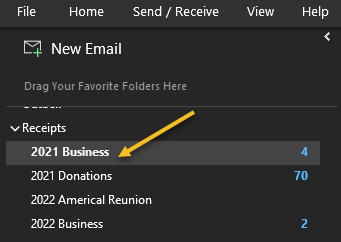
Next, from the sidebar on the left, find the folder you would like to delete. Refer to the below image:

Outlook 1
Selecting a folder to delete

Now, right-click that folder and choose the Delete Folder option. See the below image:

Outlook 2
Selecting Delete Folder option

Next, select Yes in the prompt that opens. See the following image:

Outlook 3
Confirm the deletion

Now, your chosen folder is now removed from Outlook’s main interface.

Later, if you would like to restore a deleted folder, then open the Trash folder and drag and drop your deleted folder out of it.

Using the Web

To remove your email folders from Outlook’s web version, first, launch your preferred web browser and open the Outlook site.

Next, log in to your account if you have not already.

Now, after logging in, from the folder list on the left, find the folder to delete. Refer to the below image:

Outlook 4
Selecting a folder to delete

Next, right-click your folder and choose the Delete folder option. See the below image:

Outlook 5
Selecting the Delete folder option

Now, click OK in the prompt. See the following image:

Outlook 6
Confirm the deletion

Now, your chosen folder is now removed from Outlook’s main interface.

Later, if you would like to restore a deleted folder, then open the Trash folder and drag and drop your deleted folder out of it.

And that’s all there is to removing unwanted folders from your Outlook app.

Quote For the Day

If we continue to develop our technology without wisdom or prudence, our servant may prove to be our executioner.

Omar N. Bradley

Tweet Info

That’s it. Please feel free to share this post! One way to share is via Twitter.

Just click the Tweet icon below. This will launch Twitter where you click its icon to post the Tweet.

Check out TechSavvy.Life for blog posts on smartphones, PCs, and Macs! You may email us at contact@techsavvy.life for comments or questions.

I Would Like to Hear From You

Please feel free to leave a comment. I would love to hear from you. Do you have a computer or smart device tech question? I will do my best to answer your inquiry. Just send an email to contact@techsavvy.life. Please mention the device, app, and version you are using. To help us out, you can send screenshots of your data related to your question.

Author’s E-book

You can access the e-book from a Kindle device, the Kindle App for the desktop or smartphone, which is a free app.
The author’s Vietnam eBook on the Battle for Tra Bong Vietnam: Events and Aftermath

How to Flag a Tweet for Sensitive Content

If you need to tweet an image or video of something with a content warning, it’s a good idea to mark the media as “sensitive.” Doing so will hide the image or video unless someone clicks the Show button.

RAYMOND OGLESBY @RaymondOglesby2
May 10, 2022

If you need to tweet an image or video of something with a content warning, it’s a good idea to mark the media as “sensitive.” Doing so will hide the image or video unless someone clicks the Show button. Here’s how to do this.

This is for devices using Twitter. Screenshots are from iPhone XR

Dilbert and Energy
Copyright Scott Adams, Inc./Distributed by Universal Uclick for UFS

First, visit the Twitter website or open the Twitter app. Begin composing a tweet and attach an image or a video. For this post, we are using an image in reverse color. Your video or image should display normally.

If you are using the Twitter app, tap the Paintbrush icon below the image thumbnail to begin editing. If you are on the web version of Twitter, click Edit in the lower right-hand corner of the image. Refer to the below image:

Twitter 1
Edit the image

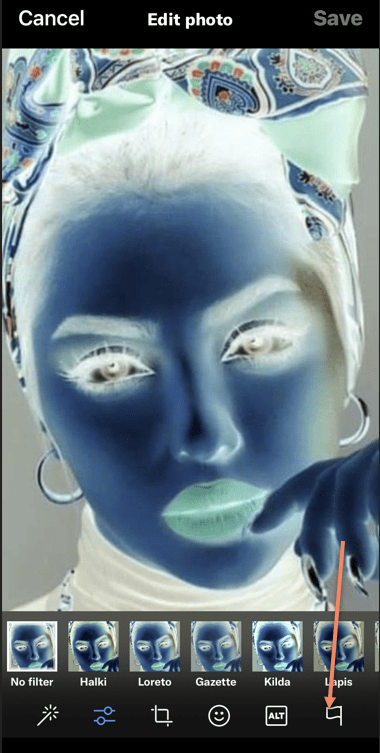
Next, tap or click the Flag icon. On the Twitter app, it’s in the lower right-hand corner of the screen. On the web, you will find the Flag as a tab in the upper right-hand corner, just above the image thumbnail. See the below image:

Twitter 2
Select the Flag icon

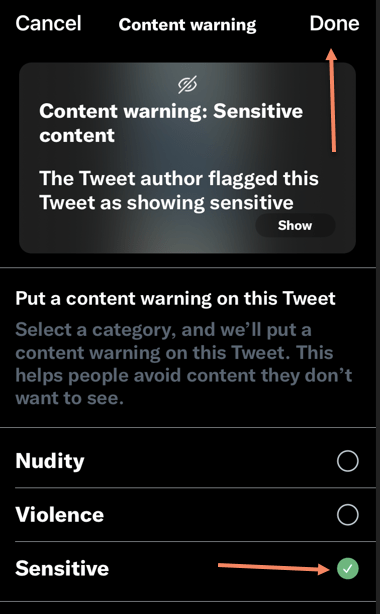
Now, under the Put a content warning on this tweet menu, place a checkmark beside any of the items that apply. If you are posting a spoiler on Twitter, the Sensitive setting works the best. Once finished, tap Done then Save on the Twitter app, or just Save on the web version of Twitter. See the following image:

Twitter 3
Select your option(s)

Next, tap Save on the Twitter app. Refer to the below image:

Twitter 4
Select Save if using the Twitter app

Now, Tweet your post. See the below image:

Twitter 5
Tweet your post

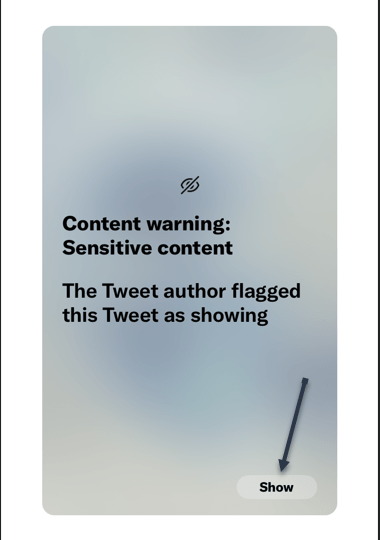
Next, after tweeting, other Twitter users will see the content warning obscuring your image or video unless they click or tap the Show button. See the following image:

Twitter 6
Select Show to see the image

The final image is as follows:

Twitter 7
The final image

Pretty easy, Just make sure that you do not violate Twitter’s terms of service along the way.

Quote For the Day

People don’t notice whether it’s winter or summer when they’re happy.

Anton Chekhov

Tweet Info

That’s it. Please feel free to share this post! One way to share is via Twitter.

Just click the Tweet icon below. This will launch Twitter where you click its icon to post the Tweet.

Check out TechSavvy.Life for blog posts on smartphones, PCs, and Macs! You may email us at contact@techsavvy.life for comments or questions.

I Would Like to Hear From You

Please feel free to leave a comment. I would love to hear from you. Do you have a computer or smart device tech question? I will do my best to answer your inquiry. Just send an email to contact@techsavvy.life. Please mention the device, app, and version you are using. To help us out, you can send screenshots of your data related to your question.

Author’s E-book

You can access the e-book from a Kindle device, the Kindle App for the desktop or smartphone, which is a free app.
The author’s Vietnam eBook on the Battle for Tra Bong Vietnam: Events and Aftermath

How to Find and Delete Old Gmail Emails

Cleaning up your inbox is a chore most of us do not enjoy. But if you do not stay on top of things, you can end up with a mess of outdated, unneeded emails.

RAYMOND OGLESBY @RaymondOglesby2
April 26, 2022

Cleaning up your Inbox is a chore most of us do not enjoy. But if you do not stay on top of things, you can end up with a mess of outdated, unneeded emails. Let’s explore how to remedy this situation in Gmail.

This is for devices using Gmail. Screenshots are from Windows 10

Dilbert and Lord
Copyright Scott Adams, Inc./Distributed by Universal Uclick for UFS

Find Old Emails

Gmail offers a handy Search feature that lets you find emails from or to specific people, or with a particular word in the subject line. But to find emails older than a certain number of years, months, or days, all you need is the Search box.

First. at the top of Gmail, enter the following into the Search box to find emails older than one year. Refer to the below image:

Gmail 1
Gmail Search

Next, you can replace the 1 with a different number to find emails older than two, three, four, or more years.

In addition, you can use a different timeframe. To find emails older than a certain number of months or days, use these expressions:

older_than:1m
older_than:1d

Again, replace the 1 with the number of months (m) or days (d) and see your results.

Find Emails in Label Folders

If you use Gmail labels, you will see the folders for those labels in the left-hand navigation. So if you want to clean up one or two, you can use the above search expressions within those as well.

Now, select a label’s folder on the left. You will then see that expression pop into the Search field. See the below image:

Gmail 2
Search a Labeled folder

Next, select the inserted phrase, type a space, and then one of the older_than expressions above right after it. In the screenshot below, we search our Important label (folder) for emails older than one day. See the following image:

Gmail 3
Search a Labeled folder with a specified time range

Filter Further

The nice part about using the above search expressions, aside from seeing old emails quickly, is that you can filter your results further.

Now, after you search, you will see several buttons across the top. These let you filter your search results by things like Has Attachment, From, To, and Is Unread. Refer to the below image:

Gmail 4
Filter your Search

Next, select one of these filters to narrow down your search results. This is ideal if you want to find only those old emails with attachments, for example, but still, hang onto some others you might need.

Now, to remove a filter after you apply it, just click it again. To do a more in-depth search, click the Show search options icon at the top of your screen. See the below image:

Gmail 5
Selecting Search options

Next, the Search options will be displayed. Just enter your criteria for the search and, when finished, click the Search button. See the following image:

Gmail 6
Your search options

Delete the Emails

After you find those outdated emails, have filtered or reviewed them, and are ready to delete them.

Now, confirm that the emails you see are the ones you want to remove. If so, check the box on the left of the top toolbar. This selects all emails and you can see the total number selected at the bottom. Refer to the below image:

Gmail 7
Selecting to Delete all emails

Next, if you prefer to limit the selection, you can use the arrow next to the checkbox to pick an option like Read, Unread, Starred, or Unstarred. See the below image:

Gmail 8
Limit your deletion

Now, when you are ready, click the Trash can icon in the toolbar to delete the emails. Up to 50 emails will be deleted at a time. See the following image:

Note: You may need to expand More to see the Trash folder.

Gmail 9
Moving your emails to Trash

Next, you will not be asked to confirm this action! So if you mistakenly delete an email, head to the Trash folder in the left-hand sidebar. Select the email and then move it where you want such as your Inbox or a Label’s folder.

Keep in mind that emails in the Trash are automatically deleted for good after 30 days.

Related

How to Bulk Delete Emails in Gmail

Quote For the Day

You don’t take a photograph, you make it.

Ansel Adams

That’s it. Please feel free to share this post! One way to share is via Twitter.

Just click the Tweet icon below. This will launch Twitter where you click its icon to post the Tweet.

Check out TechSavvy.Life for blog posts on smartphones, PCs, and Macs! You may email us at contact@techsavvy.life for comments or questions.

I Would Like to Hear From You

Please feel free to leave a comment. I would love to hear from you. Do you have a computer or smart device tech question? I will do my best to answer your inquiry. Just send an email to contact@techsavvy.life. Please mention the device, app, and version you are using. To help us out, you can send screenshots of your data related to your question.

Author’s E-book

You can access the e-book from a Kindle device, the Kindle App for the desktop or smartphone, which is a free app.
The author’s Vietnam eBook on the Battle for Tra Bong Vietnam: Events and Aftermath

How to Remove Twitter Followers

If you do not like someone following you on Twitter but do not want to block them, you can remove them from your follower list. This only takes a few clicks.

RAYMOND OGLESBY @RaymondOglesby2
April 20, 2022

If you do not like someone following you on Twitter but do not want to block them, you can remove them from your follower list. This only takes a few clicks. Let’s explore how to do it on Twitter’s desktop and mobile site.

This is for the devices using Twitter

Dilbert and Spy
Copyright Scott Adams, Inc./Distributed by Universal Uclick for UFS

Note: As of the writing, the option to remove a follower is only available on Twitter’s desktop and mobile site. The option is not yet available on Twitter for Android or iOS.

The Old and New Methods

Twitter has launched the ability to remove followers at the end of 2021. Earlier, if you wanted to remove a follower, you had to block them. Doing so basically removed that user from your follower’s list, prevented them from following you again, and also hid your tweets from them.

In the new method of removing followers, you can remove someone from your follower’s list without blocking them. Twitter does not notify a user when you remove them from your follower’s list. However, they may notice they are not following you anymore, and they can then choose to follow you again. You will need to block them if you do not want them capable of following you, or choose the nuclear option and delete your Twitter account as a last resort.

Remove Followers Using Desktop

To delete a follower from your Twitter profile on a Windows, Mac, Linux, or Chromebook computer, use the Twitter desktop website.

First, open a web browser on your computer and launch the desktop Twitter site. Log in to your account if you have not already done so.

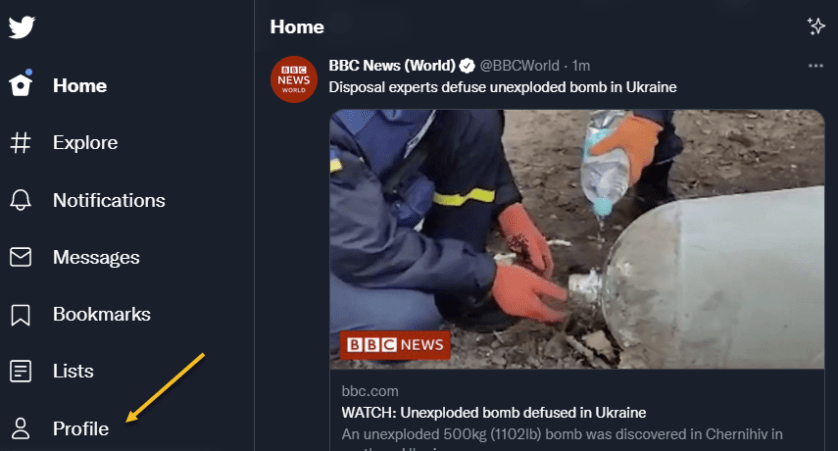
Next, in Twitter’s left sidebar, click the Profile option (the person icon). Refer to the below image:

Twitter 1
Selecting your Profile

Now, your profile page will open. Here, beneath your profile information, click the Followers link to see your followers list. See the below image:

Twitter 2
Selecting your Followers link

Next, on the follower’s page, find the follower you want to remove. Then, next to that user’s name, click the Menu icon (the three dots). See the following image:

Twitter 3
Selecting the Menu for a follower

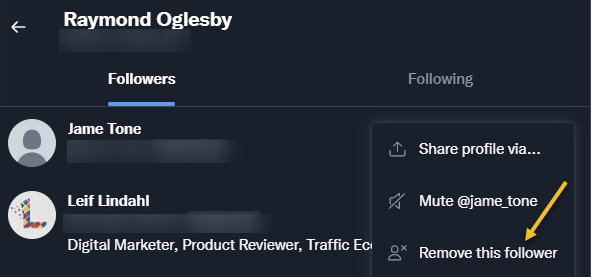
Now, in the three-dots Menu, click Remove this follower. Refer to the below image:

Twitter 4
Selecting to Remove this follower

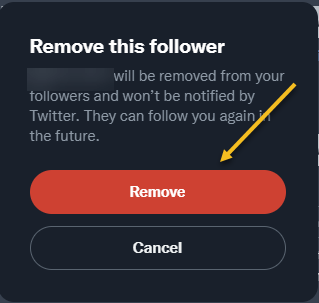
Next, you will see a Remove this follower prompt. Just click the Remove button. See the below image:

Warning: Make sure you really want to remove that follower before clicking “Remove.” Twitter will not show any further prompts and will immediately remove that user from your followers list.

Twitter 5
Remove the follower

Now, you are all set. Your selected follower is now removed from your Twitter followers list.

Remove Followers Using Mobile

If you are on an iPhone, iPad, or Android phone, you can use Twitter’s mobile site to remove a follower from your account.

First, open a web browser on your phone and launch the mobile Twitter site (mobile.twitter.com/home). If you launch Twitter.com (as you do on the desktop), the removal process will not work. Sign in to your Twitter account if not already done so.

Next, in Twitter’s top left-hand corner, tap your Profile icon. See the following image:

Twitter 6
Selecting your Profile

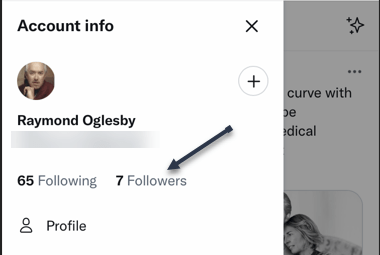
Now, an Account info menu will open. Here, tap the Followers link. Refer to the below image:

Twitter 7
Selecting your Followers link

Next, on the follower’s page, find the follower you want to remove. Then, next to that user’s name, tap the Menu icon (the three dots). See the below image:

Twitter 8
Selecting the Menu for a follower

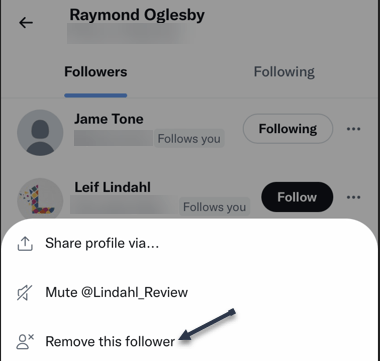
Now, in the three-dots Menu, tap Remove this follower. See the following image:

Twitter 9
Selecting to Remove this follower

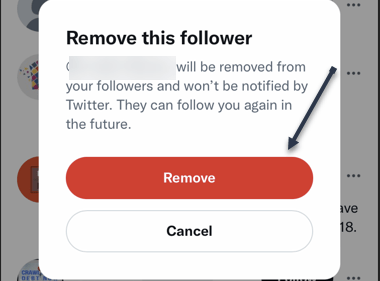
Next, you will see a Remove this follower prompt. Just tap the Remove button. Refer to the below image:

Warning: Make sure you really want to remove that follower before clicking “Remove.” Twitter will not show any further prompts and will immediately remove that user from your followers list.

Twitter 10
Remove the follower

Now, you are all set. Your selected follower is now removed from your Twitter followers list.

Quote For the Day

I have not failed. I’ve just found 10,000 ways that won’t work.

Thomas Edison

That’s it. Please feel free to share this post! One way to share is via Twitter.

Just click the Tweet icon below. This will launch Twitter where you click its icon to post the Tweet.

Check out TechSavvy.Life for blog posts on smartphones, PCs, and Macs! You may email us at contact@techsavvy.life for comments or questions.

I Would Like to Hear From You

Please feel free to leave a comment. I would love to hear from you. Do you have a computer or smart device tech question? I will do my best to answer your inquiry. Just send an email to contact@techsavvy.life. Please mention the device, app, and version you are using. To help us out, you can send screenshots of your data related to your question.

Author’s E-book

You can access the e-book from a Kindle device, the Kindle App for the desktop or smartphone, which is a free app.
The author’s Vietnam eBook on the Battle for Tra Bong Vietnam: Events and Aftermath

How to Save Google Chrome Passwords

Google Chrome can save your website passwords and help you automatically fill them the next time you visit your sites.

RAYMOND OGLESBY @RaymondOglesby2
April 13, 2022

Google Chrome can save your website passwords and help you automatically fill them the next time you visit your sites.

There are several ways to turn on the password saving feature in Chrome. Note that Chrome syncs your passwords with your Google account, which means if you enable Chrome to save passwords on one device, that change automatically applies to all your signed-in devices. Let’s explore this feature on both desktop and mobile devices.

This is for desktop and mobile running Chrome. Screenshots are from Windows 10 and iPhone XR

Dilbert and Bonus
Copyright Scott Adams, Inc./Distributed by Universal Uclick for UFS

Save Passwords on Desktop

To enable Chrome’s password manager on your Windows, Mac, Linux, or Chromebook computer, first, open Chrome on your computer.

Next, in Chrome’s top right-hand corner, click the three dots (the Menu icon). Refer to the below image:

Passwords 1
Selecting the Menu icon

Now, from the three-dots Menu icon, select the Settings option. See the below image:

Passwords 1
Accessing the Settings option

Next, on the left sidebar of the Settings page, click the Autofill option. See the following image:

Passwords 3
Accessing the Autofill option

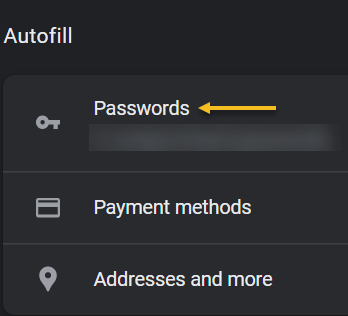
Now, on the right of the Autofill section, click the Passwords option. Refer to the below image:

Passwords 4
Selecting the Passwords option

Next, toggle the Offer to save passwords option to ON at the top of the Passwords page. See the below image:

Passwords 5
Enable Offer to save passwords

Note! If you decide you do not want password prompts, just toggle the Offer to save passwords to OFF.

From now on, when you log in to a site in Chrome on any of your devices, the browser will ask you to save your password for that site. 

Save Passwords on Mobile

First, open Chrome on your iPhone, iPad, or Android device.

Next, tap the three dots (the Menu icon) in Chrome on your device. If you are on Android, these dots are in Chrome’s top right-hand corner. If you are on an iPhone or iPad, you will find the Menu icon in the bottom right-hand corner. See the following image:

Passwords 6
Accessing the Menu icon

Now, in the menu that opens, tap the Settings option. Refer to the below image:

Passwords 7
Accessing the Settings option

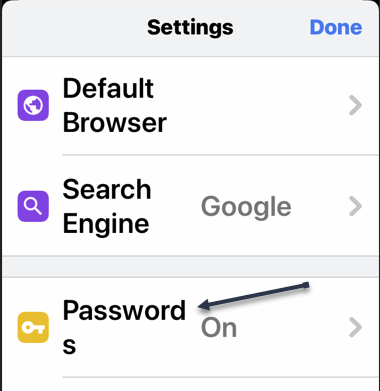
Next, in the Basics section of the Settings page, tap the Passwords option. See the below image:

Passwords 8
Accessing the Passwords option

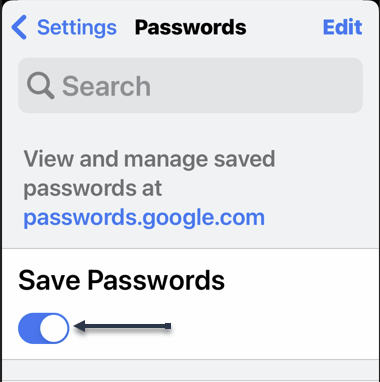
Now, on the Passwords page, toggle the Save Passwords option to ON. See the following image:

Passwords 9
Enable Save Passwords

Save Passwords Using Password Manager Site

To use this method, first, open a web browser on your device and access the Google Password Manager site. Log in to the site with the same Google account that you use in Chrome.

Now, when the Password Manager site opens, in the top right-hand corner, click the password options (the gear icon). Refer to the below image:

Passwords 10
Accessing Password options

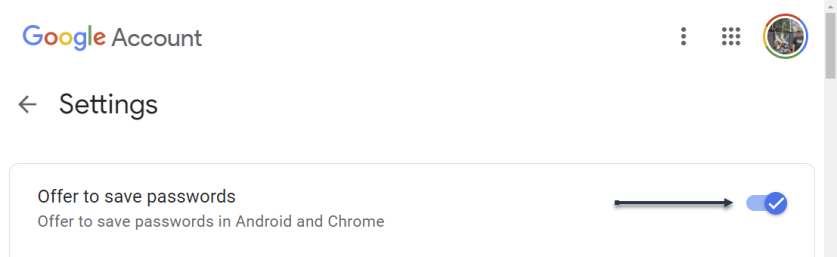
Next, the Settings page will open. Here, at the top, toggle the Offer to save passwords option to ON. See the below image:

Passwords 11
Enable Offer to sasve passwords

From now on, no matter what method you used above, Chrome will start prompting you to save passwords on all your signed-in devices. 

Quote For the Day

If people like you, they’ll listen to you, but if they trust you, they’ll do business with you.

Zig Ziglar

You are finished. Please feel free to share this post! One way to share is via Twitter.

Just click the Tweet icon below. This will launch Twitter where you click its icon to post the Tweet.


Check out TechSavvy.Life blog posts on smartphones, PCs, and Macs! You may email us at contact@techsavvy.life for comments or questions.

I Would Like to Hear From You

Please feel free to leave a comment. I would love to hear from you. Do you have a computer or smart device tech question? I will do my best to answer your inquiry. Just send an email to contact@techsavvy.life. Please mention the device, app, and version you are using. To help us out, you can send screenshots of your data related to your question.

Author’s E-book

You can access the e-book from a Kindle device, the Kindle App for the desktop or smartphone, which is a free app.

The author’s Vietnam eBook on the Battle for Tra Bong Vietnam: Events and Aftermath

How to Turn Off the Prompt “Sign In With Google”

Some websites show you a “Sign in with Google” prompt to help you quickly sign in to that website. If you would like to avoid this prompt, there’s an easy way to disable it from your Google account’s Settings menu

RAYMOND OGLESBY @RaymondOglesby2
April 7, 2022

Some websites show you a “Sign in with Google” prompt to help you quickly sign in to that website. If you would like to avoid this prompt, there’s an easy way to disable it from your Google account’s Settings menu. Let’s see how this is done.

This is for devices using Google. Screenshots are from Windows 10

Dilbert and Experiment
Copyright Scott Adams, Inc./Distributed by Universal Uclick for UFS

The “Sign in with Google” prompt is tied to your Google account and not to a particular web browser. This means that you will need to disable the prompt in your account to prevent it from appearing across all your web browsers, including both desktop and mobile browsers.

First, open your Google My Account site in a web browser on your Windows, Mac, or Linux computer. Then, log in to your Google account if you have not already done so.

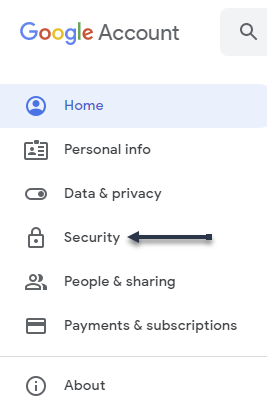
Next, when the site loads, first, select Security in the left sidebar. Refer to the below image:

Signin Google 1
Selecting Security option

Now, on the Security page, scroll down to the Signing in to other sites section. Here, click the Signing in with Google option. See the below image:

Signin Google 2
Selecting Google sign in

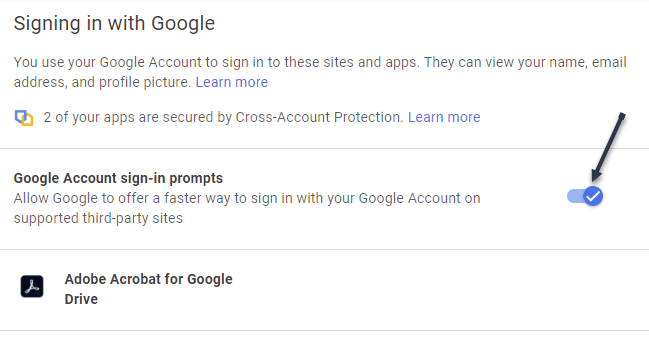
On the next page, under the Signing in with Google section, toggle OFF the Google Account sign-in prompts. See the following image:

Signin Google 3
Disable Google sign in

Now, you will see an Updated message in the lower left-hand corner of your browser telling you that your settings are saved. Refer to the below image:

Signin Google 4
Your updated change notification

Note: If you are logged in to multiple Google accounts in your web browser, repeat the above process for each account to get rid of the Sign in with Google prompt.

If you want to reverse this action, simply repeat the above steps and toggle ON the Google Account sign-in prompts.

From now on, you will not see the Sign in with Google prompt on any website.

Quote For The Day

Time can be an ally or an enemy. What it becomes depends entirely upon you, your goals, and your determination to use every available minute.

Zig Ziglar

That’s it. Please feel free to share this post! One way to share is via Twitter.

Just click the Tweet icon below. This will launch Twitter where you click its icon to post the Tweet.

Check out TechSavvy.Life for blog posts on smartphones, PCs, and Macs! You may email us at contact@techsavvy.life for comments or questions.

I Would Like to Hear From You

Please feel free to leave a comment. I would love to hear from you. Do you have a computer or smart device tech question? I will do my best to answer your inquiry. Just send an email to contact@techsavvy.life. Please mention the device, app, and version you are using. To help us out, you can send screenshots of your data related to your question.

Author’s E-book

You can access the e-book from a Kindle device, the Kindle App for the desktop or smartphone, which is a free app.

The author’s Vietnam eBook on the Battle for Tra Bong Vietnam: Events and Aftermath