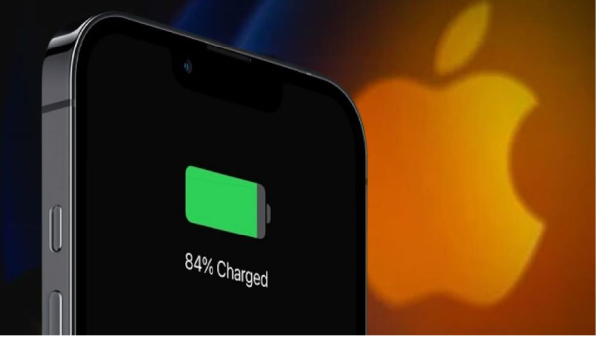
Customize Back Tap Gestures on iPhone and iPad for Enhanced Accessibility

The post discusses the accessibility features on iPhone and iPad, emphasizing their importance for users with visual or audio impairments. It provides a detailed guide on enabling Accessibility Shortcut and Back Tap gestures, highlighting various options such as AssistiveTouch, Color Filters, and Voice Control.

RAYMOND OGLESBY @RaymondOglesby2
August 20, 2024 – 7 minutes read time

This is for iPhone and iPad. Screenshots are from iPhone 14 Pro running iOS 17+

Accessibility is always important since it makes devices easier for those with visual or audio impairments. Apple always does a great job with accessibility, and you will find plenty of accessibility options on your iPhone or iPad to make life easier. Perhaps you need to have more sound on one side of your favorite headphones, or you just need to make text easier to read. No matter what you need, iOS 17 and iPadOS 17 are very inclusive, so you will not feel left behind. And to make it even easier to access your favorite accessibility tools, there is the Accessibility Shortcut on your favorite iPhone or iPad.

  1. Launch the Settings app on your iPhone or iPad.
  2. Tap on Accessibility.
  3. Tap on Accessibility Shortcut; it’s all the way to the bottom. Refer to the below image:
Accessibility 1
Selecting Accessibility Shortcut option
  1. Tap the action you would like to perform when you triple-click the Home or Side button so that a blue checkmark appears next to it. You can assign multiple functions to the shortcut.
  2. If you want to reorder the options, just drag and drop. Tap and hold the handle on the right side of each option to move it.
  3. Triple-click your Home button (Touch ID devices) or Side button (Face ID devices) to perform the action you have assigned to the shortcut.
  4. If you have assigned multiple options, simply choose the action you want to perform from the menu. See the below image:
Accessibility 2
Assigning multiple shortcuts and reordering them

Here’s a brief description of the options you have and what they are:

  • AssistiveTouch: Adds the ability to access many common hardware buttons and gesture controls with single taps; a useful feature for those with motor impairments.
  • Background Sounds: A new feature in iOS 15, Background Sounds lets you play soothing white noise to help you concentrate. Using the Accessibility Shortcut toggles your selected sound. First, you need to set up your Background Sounds.
  • Classic Invert Colors: A great option for anyone with a visual impairment such as color blindness. All colors across iOS will be inverted.
  • Color Filters: Changes the color layout of the screen for those with color blindness.
  • Full Keyboard Access: This allows you to navigate the iOS interface without using touch input. A physical keyboard is required to use this feature.
  • Increase Contrast: This will increase the contrast of visual elements on the screen, making it easier to see and read text.
  • Left/Right Balance: This turns on your custom audio balance setting if you have one set up. For example, if you want more sound on the left or right side of your earbuds or headphones, you will want to adjust that audio balance. Turning this off will go back to the default setting.
  • Magnifier: Triggers a camera-style viewfinder with sharp zoom controls so you can see small text. You will need the Magnifier enabled to have this option available.
  • People Detection: With People Detection, your iPhone 12 or iPhone 13 uses Machine Learning with the LiDAR scanner to determine if an object in the camera is a person. You will receive audio feedback to help you determine how far away or close a person is to you.
  • Reduce Motion: This turns on the Reduce Motion setting, which reduces motion in the user interface, including the parallax with app icons. This can also help conserve some battery power.
  • Reduce Transparency: This reduces the transparency used in apps and websites, including blurred backgrounds. Having this on improves the legibility of text.
  • Reduce White Point: Reduces the intensity of bright colors for those with sensitivities or color blindness.
  • Smart Invert Colors: Same as Classic Invert Colors, except it does not change photos, media, and some apps.
  • Switch Control: This lets you use external switches, or the screen itself, as a switch for motor accessibility.
  • Voice Control: This lets you speak commands to your iPhone or iPad.
  • VoiceOver: Allows your iPhone or iPad to speak to you when enabled. Commonly used by folks with visual impairments.
  • Zoom: Allows you to zoom your content for better visibility. You can then use two and three-finger gestures to tap and pan around.
  • Guided Access: This keeps the iPhone in a single app and allows you to control which features are available. You need the Guided Access feature enabled before it is available as an Accessibility Shortcut option.

Once you have made your selection for the Accessibility Shortcut on iPhone and iPad, you can simply triple-click the Home button or the Side button on iPhones and iPads with Face ID from anywhere, not just from Settings, and your iPhone or iPad will enable the function you have selected. To disable it, just triple-click the button again. If multiple functions are assigned, tap the option you want to use.

iOS 14 added a new Back Tap gesture. With the Back Tap, you can double-tap or even triple-tap the back of your iPhone for quicker access to some commonly used actions, such as accessing the Notification Center or Control Center. You can also use the Back Tap gesture to launch Shortcuts that you have created, opening up a whole new world of possibilities.

  1. Launch Settings on your iPhone or iPad.
  2. Tap Accessibility.
  3. Tap Touch. See the following image
Accessibility 3
Selecting the Touch option
  1. Tap Back Tap at the bottom.
  2. Tap Double Tap or Triple Tap to choose an action. Refer to the below image:
Accessibility 4
Selecting Back Tap options
  1. Select an action for your chosen Back Tap. Options include the Accessibility Shortcut that we just created, or you can choose from System, Accessibility, Scroll Gestures, or your own Shortcuts actions. See the below image:
Accessibility 5
Selecting Double and TripleTtap functions.

As you can see, having an Accessibility Shortcut and Back Tap gestures can make your life easier. It adds another layer of customization to your device, and you do not need to fiddle around in the settings every time to get to certain accessibility actions. Even if you are not visually or hearing impaired, these accessibility features are handy for everyone.

Disclaimer

Technology is always changing. Rarely is there static tech for smartphones and desktops. Thus, the contents of this post are only valid at the time of writing. Blog posts older than six months may have directions incompatible with your device or OS. Hopefully, older post content will continue to work as advertised. Thank you for reading TechSavvy.Life for Technology at Work For You.

“Real work is completed in silence and strikes a chord in the minds of only a very few.”

CG Jung

That’s it. Please feel free to share this post! One way to share is via Twitter.

Just click the Tweet icon below. This will launch Twitter where you click its icon to post the Tweet.

Checkout TechSavvy.Life for blog posts on smartphones, PCs, and Macs! You may email us at contact@techsavvy.life for comments or questions.

Was this post helpful? We would love to hear your comments. Do you have a computer or smart device tech question? I will do my best to answer your inquiry. Just send an email to contact@techsavvy.life. Please mention the device, app, and version you are using. To help us out, you can send screenshots of the data related to your question.

The author’s Vietnam eBook on the “Battle for Tra Bong Vietnam: Events and Aftermath” can be accessed from a Kindle device or the Kindle App for a desktop or smartphone. The apps are free.
The author’s Vietnam eBook on the Battle for Tra Bong Vietnam: Events and Aftermath

Maximize Online Protection: The Power of Password Managers and Unique Access Codes

This post emphasizes the importance of strong, unique passwords and the use of password managers to enhance security. It highlights the risks of using common or personal information-based passwords and provides tips for creating and managing secure passwords.

RAYMOND OGLESBY @RaymondOglesby2
August 13, 2024 -9 minutes read time

This is for devices using passwords. Screenshots are from iPhone 14 Pro running iOS 17.5.1+

If you are still using “qwerty” or “starwars” as a password, you should stop doing this. Let’s find out what makes a bad password, why you should care, and how to make a good one.

Don’t have the password to get into your bank account? You are out of luck unless you can trick the bouncer into telling you the password is “kangaroo.” A simple password like that would be a terrible choice to protect your access to a bank site. And yet, chances are good you are using something just as bad, because stronger passwords are too hard to remember.

The only safe way to store proper passwords is in a password manager. If you are not using one, you probably rely on a highly crackable password like “baseball” or “12345”, or you have memorized one complex password, like “Jazz2day4Me!” and use it everywhere. Password security is no small matter. Given the enormous risk, you need to keep your passwords safe.

Even the best password manager does not guarantee the safety of your accounts; not if you use it to store the same old, tired passwords. You have to switch out your old and weak passwords for new and stronger ones.

Once you have replaced all your lame passwords with strong, unique ones, you can relax, at least until a data breach forces a change. The National Institute of Standards and Technology (NST) no longer recommends changing passwords every 90 days. NIST now recommends using long phrases like “Correct-Horse-Battery-Staple” and changing them only when necessary. If you have terrible passwords, “when necessary” means right now.

Passwords 1
Bad passwords

Just what makes a bad password? Let’s look at some of the attributes of terrible passwords, and then some pointers on improving them.

Every few months a news outlet posts a list of the worst passwords. We see a lot of easy-to-type options, like“12345” and “qwerty”. Easy for you to type? Sure. But also easy for hackers to crack. Other common (and poor) passwords consist of simple dictionary words, like “baseball”, “monkey”, and “starwars” in the list of worst passwords. These, too, are easy to crack.

A few of the best password managers (tap or click a button to view):

Some secure websites lock down after a given number of wrong password attempts, but many do not. For those with no bad guess lockout, hackers can cross a list of email addresses with a list of popular passwords and set up an automated process to keep trying combinations until they get in.

A properly secured website does not store your password anywhere. Instead, it runs the password through a hashing algorithm, a one-way encryption. The same input always produces the same output, but there’s no way to return to the original password from the resulting hash. If the password you type hashes to the same one that’s stored, you gain access. Even if hackers capture the site’s user data, they do not get passwords, just hashes.

But smart hackers can crack weak passwords if they know the site’s hashing function. They start by running a huge dictionary of common passwords through the hashing function. Then they look for the resulting hashes in the captured data. Each match is a cracked password. Sites with the best security enhance the hash function with password salting, which makes table-based cracking impossible, but why take the risk? Just stay out of the dictionary.

What about this perfect password: 1qaz2wsx3edc4rfv. You just “type” it by sliding a finger down four slanted columns of the keyboard. You think it’s so perfect, that you use it everywhere. And that is a big mistake.

Hardly a week goes by without news of a breach at some company or website, exposing thousands or millions of usernames and passwords. Smart victims change their passwords immediately. Those who ignore the problem may find themselves locked out of their accounts after the hackers have reset your passwords.

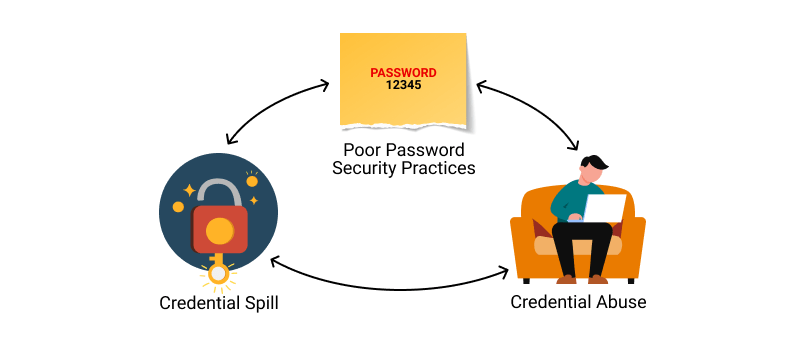
Those hackers know that all too many people recycle their passwords. Once they find a working username and password pair, they try the same credentials on other sites. You may not be so worried about losing access to your old Dropbox account, but if you used the same login on your bank’s website, you are in big trouble.

Passwords 2
Using the same credentials on websites

It gets worse. If someone else takes control of your email account, they can lock you out by changing the password. Then they can break into your other accounts by having a password reset link emailed to that account. Worried yet? You should be!!!!

Using personal information as the basis for your passwords is awfully tempting, but it’s a bad idea. Whether your dog’s name is Fifi or Khaleesi, that name probably appears in the dictionaries hackers use for brute-force attacks. Other possibilities such as the initials and birthdate of a family member probably will not fall to a brute-force attack. If someone wants to hack your account specifically, that personal data can fuel a trial-and-error guessing attack.

Do not think for a minute that your personal details are private. There are dozens of sites people can use to find details about anybody: address, birthdate, marital status, and more. Your social media posts can be another source of personal info, especially if you have not properly secured your accounts. A determined hacker (or a nosy neighbor) can probably guess any password you build based on your data.

If you are not using a password manager, you have surely experienced forgetting the password for a site. It’s all too common. That is why virtually every login page includes a “Forgot your password?” link. Some sites send a reset link to your email address, while others let you reset the password after answering your security questions. And that opens a back door to anyone wanting to hack your account.

Most sites offer abysmal options for security questions like:

  • What is your mother’s maiden name?
  • Where did you go to high school?
  • What was your first job?

As noted, your personal life is an open book to anyone with internet searching skills. When possible, ignore the preset questions. Create your own question, with a unique answer you will always remember but nobody else could guess.

It’s harder when the site does not let you define your own questions. In that case, your best bet is to use a memorable answer that’s a total LIE like:

  • My mother’s maiden name is Fauci.
  • I went to school at More Science High School.
  • For my first job, I was a linotype operator.

There is an element of risk since you might forget which lie you chose. We suggest storing these oddball answers in the iPhone Notes app or on Google Drive.

We hope we have convinced you that using common passwords is a rotten idea, as is building passwords from personal information. Even the best strong, random password becomes a liability if you use it everywhere. If you are ready to spring into action, here are some starting points:

  • Use a password manager
  • Switch to a better password manager
  • Remember an extremely secure master password for your password manager and keep it on another app. Better yet, just remember the master password.
  • Take advantage of a random password generator to upgrade your old, bad passwords
  • You could even create your own random password generator in Excel
  • Enable multi-factor authentication wherever available

If a secure site does not take care of security, you could still lose that site’s credentials to a data breach, but by making all your passwords long, strong, and unique, you can rest assured that you have done everything you can to protect your online accounts from password-based attacks.

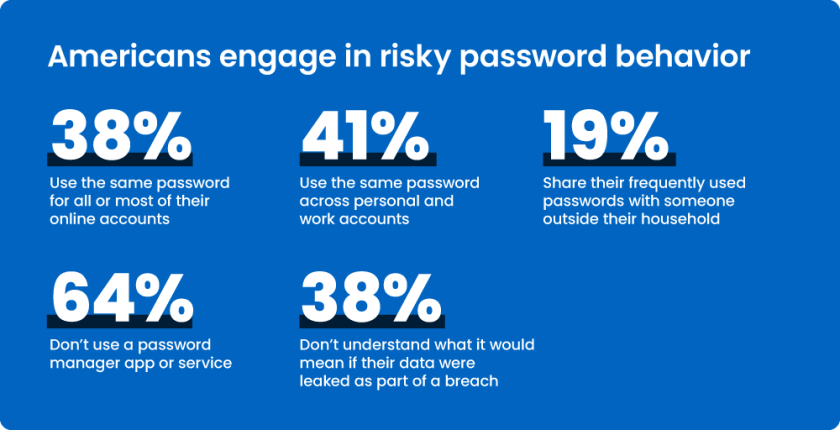
Passwords 3
Risky password behavior

You may want to switch to using Passkeys or Passphrases.

Source: PC Mag

Disclaimer

Technology is always changing. Rarely is there static tech for smartphones and desktops. Thus, the contents of this post are only valid at the time of writing. Blog posts older than six months may have directions incompatible with your device or OS. Hopefully, older post content will continue to work as advertised. Thank you for reading TechSavvy.Life for Technology at Work For You.

“Try and keep on trying until that which seems difficult becomes possible and that which seems only possible becomes habit and a real part of you.”

Dieter F Uchtdorf

That’s it. Please feel free to share this post! One way to share is via Twitter.

Just click the Tweet icon below. This will launch Twitter where you click its icon to post the Tweet.

Checkout TechSavvy.Life for blog posts on smartphones, PCs, and Macs! You may email us at contact@techsavvy.life for comments or questions.

Was this post helpful? We would love to hear your comments. Do you have a computer or smart device tech question? I will do my best to answer your inquiry. Just send an email to contact@techsavvy.life. Please mention the device, app, and version you are using. To help us, you can send screenshots of the data related to your question.

You can access the E-book from a Kindle device, or the Kindle App for a desktop or smartphone. The apps are free.

The author’s Vietnam eBook on the Battle for Tra Bong Vietnam: Events and Aftermath

How to Clean AirPods, AirPods Pro, and AirPods Max: Complete Guide

The post provides advice on cleaning Apple AirPods to prevent dirt and bacteria accumulation, which can affect performance and cause irritation or infection. It provides specific cleaning instructions for AirPods, AirPods Pro, and AirPods Max. Regular maintenance is emphasized to extend their life. Additionally, the post advises on cleaning the case.

RAYMOND OGLESBY @RaymondOglesby2
August 6, 2024 – 5 minutes read time

This is for Apple AirPod. AirPod Pro and AirPod Max.

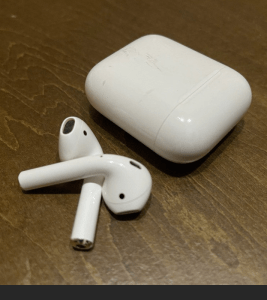
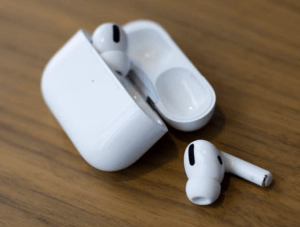
AirPods, Pro, and Max can accumulate dirt and bacteria you do not want to introduce into your ear canal because they can cause irritation or infection. As for your AirPods, an accumulation of wax, sweat, and other substances can affect their performance. 

Cleaning those small white AirPods and AirPods Pro can seem pretty delicate. And even the bulky AirPods Max can be baffling because of the mix of materials they are made out of. Let’s explore how to clean your AirPods.

AirPods
AirPods
AirPods Pro
AirPods Pro
AirPods Max
AirPods Max

The first thing you can do is a bit of prevention. To keep AirPods and AirPods Pro out of dirt and water as much as possible, consider getting a third-party strap so they are attached to each other, making them less likely to fall. You can find many styles, from simple silicone to glitzy gold. When your AirPods Max are not in use, stash them in their case instead of leaving them out or letting them go loose in a bag.

The things to have on hand if you want to keep your AirPods clean are pretty simple: lint-free cloths, cotton swabs, and a bit of water will do the job in most instances. 

Apple used to only recommend water and lint-free cloths for cleaning most of its products before the pandemic. Now it says it’s okay to use 70% isopropyl alcohol wipes, 75% ethyl alcohol wipes, or Clorox Disinfecting Wipes on the exterior parts of AirPods, AirPods Pro, and AirPods Max. But you should avoid using such wipes on the knit mesh or ear cushion parts of the AirPods Max.

And you should not use bleach or anything with hydrogen peroxide to clean any AirPods.

Maintenance is key to extending the life of your AirPods. For maintenance, clean AirPods, AirPods Pro, and AirPods Max with a dry, lint-free cloth. It does not have to be expensive or fancy like the $19 Polishing Cloth Apple sells. You can clean any microphone and speaker meshes with a dry cotton swab.

If your AirPods have gotten something on them like lotion or food (it happens), or have stood up to a lot of sweat, you can take a lint-free cloth, dampen it with a bit of water, and give them a light rubdown. Dry them off with a lint-free cloth and then let them sit out a bit before you put them back in the case. If there’s earwax present, hold your AirPods with the mesh facing toward the ground and go over the mesh lightly with a dry cotton swab. If it’s still stuck, carefully try a toothpick or other small pointed object around the edges of the mesh but be aware that if you exert too much force, you can loosen or dislodge the mesh itself.

The AirPods Pro has an ear tip, so if you want a more thorough cleaning, remove the tips and rinse them with water. If there is earwax or anything else still stuck to them, use a dampened cotton swab to remove it. Dry the ear tips with a lint-free cloth and don’t put them back on until they’re thoroughly dry.

For the AirPods Max, a good cleaning involves wiping them down with a slightly dampened lint-free cloth and then a dry one after. Because the AirPods Max are headphones, there’s more surface area to attract dirt. If the cushions and headband look or feel grimy, you can give them a bit of a wash. Remove the ear cushions first to clean them separately. Then combine a teaspoon of mild detergent with a cup of water and use a lint-free cloth to wipe the band and cushions down with the solution. Follow that with a wipe of just water on a cloth and then dry all the components completely.

Since your AirPods are often in their case, you also want to keep that clean. You can use a clean, lint-free cloth slightly dampened with water or an alcohol wipe if the case really needs it. Ensure the case is completely dry before you put your AirPods back in. You would do well to turn the case upside down while it dries.

Disclaimer

Technology is always changing. Rarely is there static tech for smartphones and desktops. Thus, the contents of this post are only valid at the time of writing. Blog posts older than six months may have directions incompatible with your device or OS. Hopefully, older post content will continue to work as advertised. Thank you for reading TechSavvy.Life for Technology at Work For You.

Tell the world what you intend to do, but first show it.

Napoleon Hill

That’s it. Please feel free to share this post! One way to share is via Twitter.

Just click the Tweet icon below. This will launch Twitter where you click its icon to post the Tweet.

Checkout TechSavvy.Life for blog posts on smartphones, PCs, and Macs! You may email us at contact@techsavvy.life for comments or questions.

Was this post helpful? We would love to hear your comments. Do you have a computer or smart device tech question? I will do my best to answer your inquiry. Just send an email to contact@techsavvy.life. Please mention the device, app, and version you are using. To help us out, you can send screenshots of the data related to your question.

You can access the E-book from a Kindle device, or the Kindle App for a desktop or smartphone. The apps are free.

The author’s Vietnam eBook on the Battle for Tra Bong Vietnam: Events and Aftermath

How to Enable Night Vision Mode on iPhone for Enhanced Visibility

The iPhone’s night vision mode turns the screen red to reduce eye strain. This feature is beneficial for low-light environments and can be enabled in the device’s settings. The red screen helps with quicker eye adaptation in the dark and can be useful for various activities such as stargazing and viewing smartphones discreetly in dark environments.

RAYMOND OGLESBY @RaymondOglesby2
July 30, 2024 – 3 minute read

This is for the iPhone. Screenshots are from iPhone 14 Pro running iOS 17.5.1+

The iPhone has a “night vision” feature that turns your screen red. More than giving a spy movie vibe, a red screen could help sharpen people’s night vision by reducing the harmful effect of the bright displays we stare at all day.

Night vision mode is helpful at night and when we first wake up, since the regular light the iPhone displays can cause fatigue and harm our eyes. Apple already offers some built-in options to protect our eyes, such as:

  • Warn that the iPhone is too close to your face.
  • Night Mode, which reduces blue light and reduces fatigue.
  • True Tone, which adjusts the display color based on your environment.
  • Dark Mode, which switches the bright whites to black or dark gray colors, puts less stress on your eyes.

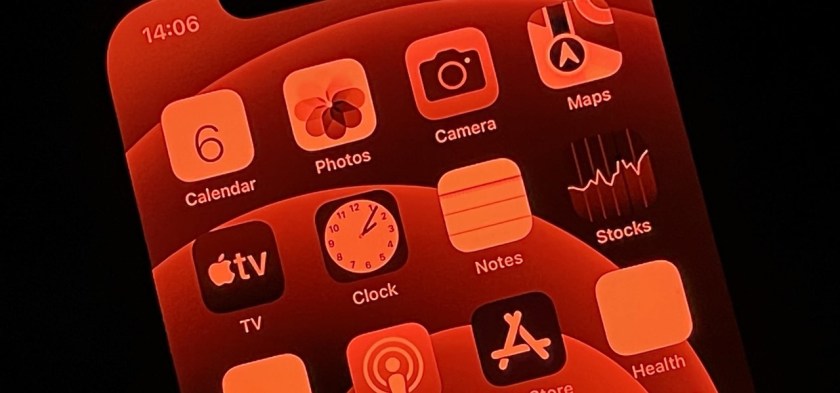
Still, there are benefits to turning your iPhone screen red. The color is more difficult to see than other light frequencies, so it tricks our eyes into thinking it’s less bright than it actually is. In a dark room, for example, your pupils will not have to adjust as much to the light. Also, when you look away, your eyes adapt quicker to the darkness around you. Refer to the below image:

iPhone Red Screen
iPhone Red Screen for Night Vision

In addition, this iPhone feature can also help you use star map apps for astronomy, sneaking your phone at the theaters, eyesight animals, or when you check your phone in the middle of the night.

With that in mind, Apple has this Night Vision mode. Here’s how you can enable it.

  • On your iPhone, open Settings
  • In the Accessibility tab, search for Display & Text Size
  • Turn on Color Filters
  • Move Intensity to the far-right position for the full red-screen effect.
  • Select Color Tint

Now that you know how to turn on this iPhone’s feature, there are three options to make turning it on and off more straightforward.

Triple click: 

On Settings, Accessibility, Accessibility Shortcut, choose Color Filters to triple-click the side button and activate this setting.

Control Center:

On Settings, Control Center, and Accessibility Shortcuts, you can add this shortcut to your Control Center, so it’s just one tap away from changing your display from bright white to red.

Siri:

You can ask Siri to either enable or disable color filters.

Technology is always changing. Rarely is there static tech for smartphones and desktops. Thus, the contents of this post are only valid at the time of writing. Blog posts older than six months may have directions incompatible with your device or OS. Hopefully, older post content will continue to work as advertised. Thank you for reading TechSavvy.Life for Technology at Work For You.

An ounce of action is worth a ton of theory.

Friedrick Engels

That’s it. Please feel free to share this post! One way to share is via Twitter.

Just click the Tweet icon below. This will launch Twitter where you click its icon to post the Tweet.

Checkout TechSavvy.Life for blog posts on smartphones, PCs, and Macs! You may email us at contact@techsavvy.life for comments or questions.

Was this post helpful? We would love to hear your comments. Do you have a computer or smart device tech question? I will do my best to answer your inquiry. Just send an email to contact@techsavvy.life. Please mention the device, app, and version you are using. To help us out, you can send screenshots of your data related to your question.

The author’s Vietnam eBook on the “Battle for Tra Bong Vietnam: Events and Aftermath” can be accessed from a Kindle device or the Kindle App for a desktop or smartphone. The apps are free.

The author’s Vietnam eBook on the Battle for Tra Bong Vietnam: Events and Aftermath

Discover How to Use Apple Indoor Maps on iPhone and iPad

Apple Maps now offers indoor maps for certain malls and airports, accessible through the app on iPhone and iPad. This feature eliminates the need for physical maps, allowing users to easily navigate these indoor spaces. By following specific steps within the Maps app, users can view indoor locations and access additional details.

RAYMOND OGLESBY @RaymondOglesby2
July 23, 2024 – 5 minutes read

This is for the iPhone and iPad using Apple Maps. Screenshots are from iPhone 14 Pro running iOS 17.5.1

For certain malls and airport locations, Apple has indoor maps viewing directly from the Maps app. You will love this feature because it allows you to figure out where you are without locating a directory or physical map somewhere inside the location. Let’s explore this feature.

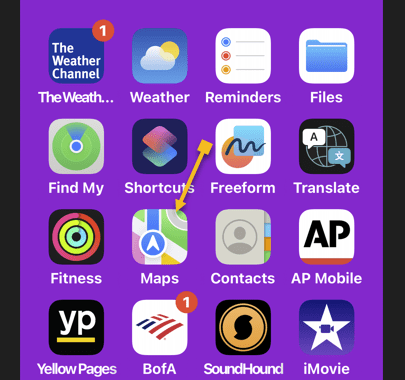
First, open Maps on your iPhone. Refer to the below page:

Indoor Maps 1
Accessing the Maps app

Next, tap the Search box and type in the name of the airport or mall. See the below image:

Indoor Maps 3
Selecting the Search box

Now, tap it or swipe up to access the menu options until you see the location you want and tap it. See the following image:

Indoor Maps 4
Selecting your search criteria

Next, depending on what map you are looking at, you will see options for various stores and/or locations within the building. Tap one of the options to see it plotted on the map. Refer to the below image:

Indoor Maps 5
Search menu options

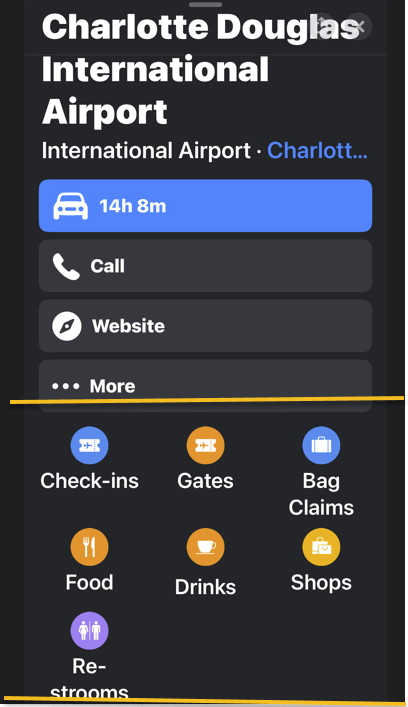
Now, you will see all the gates, shops, or other type of location you selected. For example, we are accessing the Charlotte Douglas International Airport airport gates. See the below image:

Indoor Maps 5
Selecting Gates for the airport

Next, swipe up for a list of all locations. See the following image:

Indoor Maps 6
Selecting aGate from the listing

Now, when you tap a location, it will get larger on the map, making it easier to find. Refer to the below image:

Indoor Maps 7
Your highlighted gate

For a 2024 Apple Indoor Maps listing, tap here.

And that’s how you view indoor maps! Apple is constantly updating its inventory of indoor maps, so hopefully, we will have access to even more of them in the future.

Disclaimer

Technology is always changing. Rarely is there static tech for smartphones and desktops. Thus, the contents of this post are only valid at the time of writing. Blog posts older than six months may have directions incompatible with your device or OS. Hopefully, older post content will continue to work as advertised. Thank you for reading TechSavvy.Life for Technology at Work For You.

“You will either step forward into growth or you will step back into safety.”

Abraham Maslow

That’s it. Please feel free to share this post! One way to share is via Twitter.

Just click the Tweet icon below. This will launch Twitter where you can tap the Post icon to post the Tweet.

Checkout TechSavvy.Life for blog posts on smartphones, PCs, and Macs! You may email us at contact@techsavvy.life for comments or questions.

Was this post helpful? We would love to hear your comments. Do you have a computer or smart device tech question? I will do my best to answer your inquiry. Just send an email to contact@techsavvy.life. Please mention the device, app, and version you are using. To help us out, you can send screenshots of your data related to your question

You can access the E-book from a Kindle device, or the Kindle App for a desktop or smartphone. The apps are free.
The author’s Vietnam eBook on the Battle for Tra Bong Vietnam: Events and Aftermath

iPhone Camera Macro Mode: How to Enable and Disable the Flower Icon

The Flower icon in iPhone Pro indicates macro mode for close-up photography. To disable the macro lens, tap the Flower icon in the camera app. In settings, under Camera, toggle Macro Control to disable the Flower icon. The iPhone 15 Pro models support macro photography, while the standard model does not.

RAYMOND OGLESBY @RaymondOglesby2
July 16, 2024 = 4 minutes read

This is for the iPhone Pro. Screenshots are from iPhone 14 Pro running iOS 17.5.1

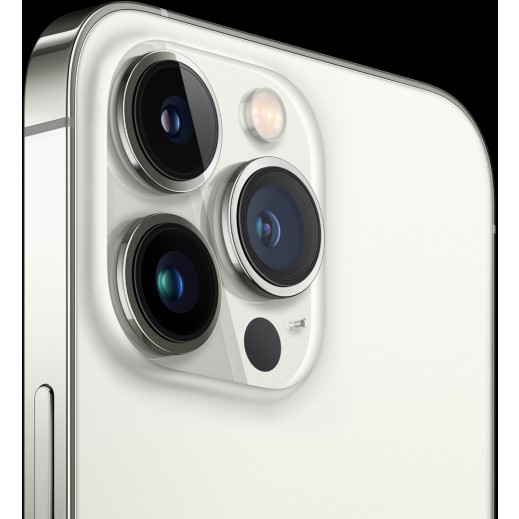
If you have a Pro iPhone, you have probably noticed the Flower icon while taking photos on your iPhone camera. This icon should only appear when your camera enters Macro mode for taking close-up pictures. Let’s explore how to use and disable the Macro mode Flower icon.

As you might have guessed, the icon indicates your iPhone’s macro camera is enabled. iPhone macro photography lets you take clear, extreme close-up shots of nearly any subject. If you do not need to use the iPhone’s macro lens, you can easily disable it from the camera by tapping the Flower icon.

If you are uninterested in iPhone macro photography, you can disable the macro lens.

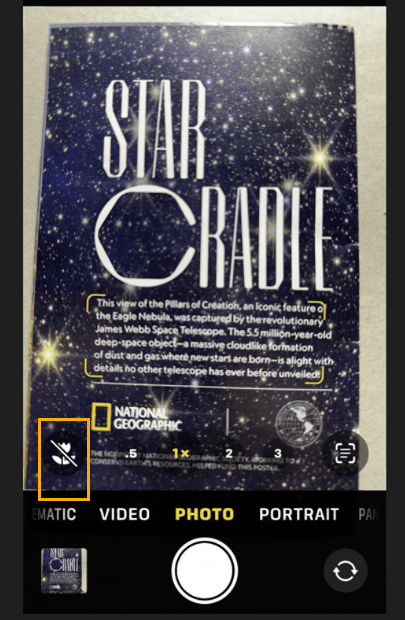
First, when the camera is open, tap the yellow Flower icon. Refer to the below image:

Macro 1
Maco Mode is enabled

Next, when it is gray with a slash through it, that means it has been disabled. See the below image:

Macro 2
Macro Mode is disabled

That’s how to disable the macro photography lens. If you want to disable the icon itself, see the below section.

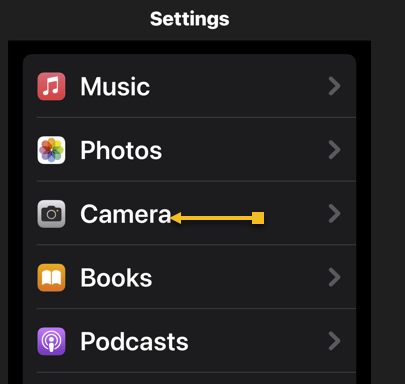
If you do not want the Flower icon to appear on your iPhone camera, you can disable that in the Settings app.

First, the Settings app, and tap Camera. See the following image:

Macro 3
Accessing your Camera option

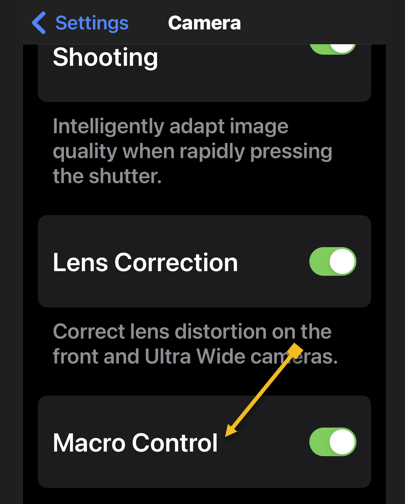
Next, scroll to the bottom and tap the toggle next to Macro Control to disable or enable the Flower icon. Refer to the below image:

Macro 4
Disable or enable Macro Control

Note! This does not disable Macro mode, only the Flower icon. You will not be able to turn off Macro mode if you turn off the above toggle.

FAQ

What does Macro mode do?

Macro mode keeps the image clear while taking extreme close-up shots. This means you can take crisp photos of smaller subjects, like plants or animals.

Does the iPhone 15 have macro photography?

The standard iPhone 15 model does not have a Macro mode. However, all Pro models iPhones, including the iPhone 15 Pro and Pro Max, can capture macro photography images.

Disclaimer

Technology is always changing. Rarely is there static tech for smartphones and desktops. Thus, the contents of this post are only valid at the time of writing. Blog posts older than six months may have directions incompatible with your device or OS. Hopefully, older post content will continue to work as advertised. Thank you for reading TechSavvy.Life for Technology at Work For You.

“Don’t believe everything you hear: Real eyes, Realize, Real lies.”

Tupac Shakur

That’s it. Please feel free to share this post! One way to share is via Twitter.

Just click the Tweet icon below. This will launch Twitter where you click its icon to post the Tweet.

Checkout TechSavvy.Life for blog posts on smartphones, PCs, and Macs! You may email us at contact@techsavvy.life for comments or questions.

Was this post helpful? We would love to hear your comments. Do you have a computer or smart device tech question? I will do my best to answer your inquiry. Just send an email to contact@techsavvy.life. Please mention the device, app, and version you are using. To help us out, you can send screenshots of your data related to your question.

You can access the E-book from a Kindle device, or the Kindle App for a desktop or smartphone. The apps are free.

The author’s Vietnam eBook on the Battle for Tra Bong Vietnam: Events and Aftermath

How to Recover Deleted Photos from iPhone

This post provides detailed instructions on recovering deleted photos and videos on iPhone, emphasizing the 30-day recovery period and the importance of backups. It also suggests using Google Photos and mentions third-party solutions for permanent deletions.

RAYMOND OGLESBY @RaymondOglesby2
July 9, 2024 – 3 minute read

This is for the iPhone. Screenshots are from iPhone 14 Pro running iOS 17+

The first thing we used to do to free storage on my previous iPhones was to head to the Photos app and delete pictures and videos. We usually did this after a backup or AirDrop the files we wanted to keep to our PC. However, there were exceptions to the rule, and we sometimes accidentally deleted photos and videos we still needed.

If you accidentally delete files while cleaning up, you should not panic. The files are not actually lost. Go to the Albums section of your iPhone and look for the Recently Deleted folder. You must unlock it with Face ID, Touch ID, or PIN code. In there, tap the Select button and check the photos you deleted by mistake, tap the three dots menu button at the bottom, and then tap Recover. Refer to the below image:

Recover Photo 1
Selecting your photos to recover

If you have selected more than one photo, click the recover multiple photos button. See the below image:

Recover Photo 2
Recover your photos

We already knew how to rescue those files, as there’s a simple rule about deleting stuff on iPhone. The files do not get permanently removed. Instead, they sit for 30 days in the Trash folders of the various apps where you can delete content. The Photos app is one of them. And that’s how easy it is to recover those deleted photos and videos.

It gets even better if you do regular backups via iCloud or use a third-party alternative to Apple Photos. Google Photos easily comes to mind, as it’s a great app to store and back up photos.

Most iPhone users will use the default Photos app. That’s where to start when viewing photos and videos and managing the storage.

Another option is to bring a single photo into view and then look for the same Recover button. This method only lets you recover photos and videos one by one.

Once that’s done, the recovered files will be available in the Photos app.

You have to remember to recover your deleted photos within 30 days. That’s how long you have until the iPhone permanently removes them. We went to this folder on iPhones with lower storage than my current iPhone 14 Pro to permanently delete the files we did not need. That’s the only way to free storage immediately.

The best way to ensure your photos and videos are safe is to perform routine backups. Whether via iCloud or your PC, the backups will help you recover files. Another option is to manually transfer the photos to a computer and store them on external devices.

There are many Photo Recovery apps from the App Store you can install.

Google Photos is a handy tool for storing images and photos on your iPhone. But, like the default Apple Photos app, you can accidentally delete files in Google Photos.

The solution is similar to Apple Photos. Google does not delete the images directly, moving them to a Trash file in the Library tab. You have 30 days to recover the file if the photo or video was not backed up to the cloud. That goes up to 60 days if the files you deleted accidentally were backed up to the cloud.

Google Photos is also available on the web and other devices.

Whether you forget the 30-day recovery deadline or accidentally empty the trash, recovering permanently deleted files might be a big problem. Third-party software solutions might help you get those files back. 

But as Gizmodo points out, not all of them might work. The blog also mentions Stellar Data Recovery as a well-reviewed solution for recovering deleted files from iPads and iPhones.

The software is not free, starting at $49.99, and there are no guarantees it will work. But if you must try anything to recover a particularly dear deleted photo from your iPhone, you will want to look into third-party apps that claim they can do the job.

Disclaimer

Technology is always changing. Rarely is there static tech for smartphones and desktops. Thus, the contents of this post are only valid at the time of writing. Blog posts older than six months may have directions incompatible with your device or OS. Hopefully, older post content will continue to work as advertised. Thank you for reading TechSavvy.Life for Technology at Work For You.

Kites rise highest against the wind, not with it.

Winston Churchill

That’s it. Please feel free to share this post! One way to share is via Twitter.

Just click the Tweet icon below. This will launch Twitter where you click its icon to post the Tweet.

Checkout TechSavvy.Life for blog posts on smartphones, PCs, and Macs! You may email us at contact@techsavvy.life for comments or questions.

Was this post helpful? We would love to hear your comments. Do you have a computer or smart device tech question? I will do my best to answer your inquiry. Just send an email to contact@techsavvy.life. Please mention the device, app, and version you are using. To help us out, you can send screenshots of your data related to your question.

You can access the E-book from a Kindle device, or the Kindle App for a desktop or smartphone. The apps are free.

The author’s Vietnam eBook on the Battle for Tra Bong Vietnam: Events and Aftermath

How to Preserve Your Voice on iPhone

RAYMOND OGLESBY @RaymondOglesby2
July 2, 2024

This is for the iPhone running iOS 17+. Screenshots are from iPhone 14 Pro

The iPhone has a hidden feature that lets you preserve your voice forever. You just need to read a few inquiries for 15 minutes, and you will always be able to hear your voice the way it was at that moment. While this function could be fun for some tech people, some lose the ability to speak for various reasons.

With that in mind, Apple introduced Personal Voice. Apple says this feature was made to assist those at risk of losing their voice.

The company explains: “Users can create a Personal Voice by reading along with a randomized set of text prompts to record 15 minutes of audio on iPhone or iPad. This speech accessibility feature uses on-device machine learning to keep users’ information private and secure. It integrates seamlessly with Live Speech so users can speak with their Personal Voice when connecting with loved ones.”

Live Voice, for example, allows users to type what they want to say and then have that spoken for them on a phone or FaceTime call. If you use Personal Voice, the person on the other end of the call will hear your actual voice, even though you simply typed a response.

Here are the steps:

  1. Open the Settings > Accessibility > Personal Voice.
  2. Tap Create a Personal Voice.
  3. Follow the onscreen instructions to record your voice.

You must be in a quiet environment for your recording. We found it best to use pause after recording a phrase. Refer to the below image:

Personal Voice 1
Selecting to Create Your Personal Voice

Tap Done in the upper-left corner or close the Settings app to pause your recording session. Your progress will be saved.

To resume your recording session, follow these steps:

  1. Go to Settings > Accessibility > Personal Voice.
  2. Tap the Personal Voice that you want to continue creating.
  3. Tap Continue Recording, then follow the onscreen instructions.

See the below image:

Personal Voice 2
Selecting to Continue Recording

To use Live Voice, here are the steps:

  1. Open the Settings app > Accessibility > Live Speech.
  2. Toggle Live Speech to ON.
  3. Under the Voices section, tap your keyboard language, then select a voice to use. Samantha is the default voice. (You might need to tap the download a voice by tapping the Download button before you can select it.)
  4. Tap the Voice Settings button next to the voice to adjust a voice’s pitch or speed.

See the following image:

Personal Voice 3
Turning ON Live Speech and selecting your voice

Once you delete a recorded voice, you can not recover it.

  1. Open the Settings app > Accessibility > Personal Voice.
  2. Tap the Personal Voice that you want to delete.
  3. Authenticate with Face ID or Touch ID, or enter your passcode.
  4. Tap Delete Voice, then tap Delete Voice And Recordings to confirm.

Refer to the below image:

Personal Voice 4
Selecting to Delete Voice

Disclaimer

Technology is always changing. Rarely is there static tech for smartphones and desktops. Thus, the contents of this post are only valid at the time of writing. Blog posts older than six months may have directions incompatible with your device or OS. Hopefully, older post content will continue to work as advertised. Thank you for reading TechSavvy.Life for Technology at Work For You.

An ounce of action is worth a ton of theory.

Friedrick Engels

You are finished. Please feel free to share this post! One way to share is via Twitter.

Just click the Tweet icon below. This will launch Twitter where you click its icon to post the Tweet.

Checkout TechSavvy.Life for blog posts on smartphones, PCs, and Macs! You may email us at contact@techsavvy.life for comments or questions.

Was this post helpful? We would love to hear your comments. Do you have a computer or smart device tech question? I will do my best to answer your inquiry. Just send an email to contact@techsavvy.life. Please mention the device, app, and version you are using. To help us out, you can send screenshots of your data related to your question.

You can access the E-book from a Kindle device, or the Kindle App for a desktop or smartphone. The apps are free.

The author’s Vietnam eBook on the Battle for Tra Bong Vietnam: Events and Aftermath

How to Enable Screen Distance on iPhone/iPad

The iPhone/iPad now has a hidden feature called Screen Distance, found in iOS/iPadOS 17 or higher, designed to reduce eye strain by detecting when the device is held too close to your face.

RAYMOND OGLESBY @RaymondOglesby2
June 25, 2024 – 4 minutes read time

This is for the iPhone/iPad using iOS or iPadOS 17 or greater. Screenshots are from iPhone 14 Pro running iOS 17.5.1

The iPhone/iPad has a hidden display feature introduced in iOS/iPadOS 17 that everyone with an iPhone/iPad should start using. Screen Distance is designed to help reduce eye strain caused by holding your phone too close to your face. Let’s explore this feature.

Viewing something like a device or book too closely for an extended period can increase eye strain and the risk of myopia. The Screen Distance feature in Screen Time uses the TrueDepth camera to detect when you hold your iPhone/iPad closer than 12 inches for an extended period and encourages you to move it farther away. Screen Distance can help children engage in healthy viewing habits that can lower their risk of myopia and can give people of all ages the opportunity to reduce digital eyestrain.

First, open Settings. Refer to the below image:

Screen Distance 1
Accessing Settings

Next, tap the Screen Time option. See the below image:

Screen Distance 2
Selecting the Screen Time option

Now, tap the Screen Distance option. See the following image:

Screen Distance 3
Selecting the Screen Distance option

Next, an informational screen will be displayed about Screen Distance. Just tap the Continue button. Refer to the below image:

Screen Distance 4
Notification screen

Now, another informational screen about “How Screen Distance Works” will be shown. Once again, tap the Continue button. See the below image:

Screen Distance 5
Notification screen

Next, toggle the Screen Distance to ON. See the following image:

Screen Distance 6
ToggleScreen Distancer to ON

If you are too close to your iPhone/iPad, it will pop up a notification splash screen interrupting whatever you are doing at the moment. Refer to the below image:

Screen Distance 7
Screen Too Close notification

To readjust the Screen Distance feature, move your iPhone/iPad at least 12 inches from your face. A new notification splash screen will appear allowing you to proceed by tapping the Continue button. See the below image:

Screen Distance 8
Screen Distance notification screen

Once you activate this feature, your iPhone/iPad Face ID sensors take about five minutes to work.

Considering how easy it is to hold your phone up to your face without thinking about it, this feature can be really handy for people who want to help reduce the strain on their eyes. 

Of course, if you have trouble reading, you may find that Screen Distance is more annoying than helpful, especially if you prefer to keep your phone close to your face. If so, go back and toggle the Screen Distance feature to OFF.

Disclaimer

Technology is always changing. Rarely is there static tech for smartphones and desktops. Thus, the contents of this post are only valid at the time of writing. Blog posts older than six months may have directions incompatible with your device or OS. Hopefully, older post content will continue to work as advertised. Thank you for reading TechSavvy.Life for Technology at Work For You.

Being realistic is the most common path to mediocrity.

-Will Smith

Congratulations, you are finished. Please feel free to share this post! One way to share is via Twitter.

Just click the Tweet icon below. This will launch Twitter where you click its icon to post the Tweet.

Checkout TechSavvy.Life for blog posts on smartphones, PCs, and Macs! You may email us at contact@techsavvy.life for comments or questions.

Was this post helpful? We would love to hear your comments. Do you have a computer or smart device tech question? I will do my best to answer your inquiry. Just send an email to contact@techsavvy.life. Please mention the device, app, and version you are using. To help us out, you can send screenshots of your data related to your question.

You can access the E-book from a Kindle device, or the Kindle App for a desktop or smartphone. The apps are free.
The author’s Vietnam eBook on the Battle for Tra Bong Vietnam: Events and Aftermath

How to Route iPhone Calls to Your Speaker and Set Auto-Answer

This post provides guidance for iPhone users on enabling the speaker for all calls and setting up the Auto-Answer feature.

RAYMOND OGLESBY @RaymondOglesby2
June 18, 2024 -3 minutes read time

This is for the iPhone with iOS 17 or above. Screenshots are from iPhone 14 Pro running iOS 17+

If you like talking on the phone for long periods but do not love holding the iPhone to your face for hours, you may prefer to use the speaker. You can turn on a setting that automatically makes all calls through your speaker. Also, you can set the Auto-Answer feature to answer your phone within a certain time frame. This is useful for those working using a headset. Let’s explore these features.

First, head to

Settings > Accessibility > Touch

Refer to the below image:

Accessing the Touch option

Next, select Call Audio Routing. See the below image:

Selecting the Call Audio Routing option

Now, tap the Speaker option. See the following image:

Selecting the Speaker for all calls

Next, when you get a phone call, it will automatically use the speaker when you answer!

If you have paired your iPhone to your car audio system, we recommend leaving the Speaker setting to Automatic. This will send/receive your calls through your audio system speakers.

While you are here, you can set the Auto-Answer feature and the time to pick up a call.

First, tap the Auto-Answer Calls option. Refer to the below image:

Accessing the Auto-Answer Calls option

Next, tap the Auto-Answer Calls toggle to ON. See the below image:

Toggle the Auto-Answer Calls to ON

Now, set your time duration to auto-answer a call (default is 3 seconds). See the following image:

Setting time duration for Auto-Answer

Disclaimer

Technology is always changing. Rarely is there static tech for smartphones and desktops. Thus, the contents of this post are only valid at the time of writing. Blog posts older than six months may have directions incompatible with your device or OS. Hopefully, older post content will continue to work as advertised. Thank you for reading TechSavvy.Life for Technology at Work For You.

Logic will get you from A to B. Imagination will take you everywhere.

Albert Einstein

Just click the Tweet icon below. This will launch Twitter where you click its icon to post the Tweet.

Just click the Tweet icon below. This will launch Twitter where you click its icon to post the Tweet.

Checkout TechSavvy.Life for blog posts on smartphones, PCs, and Macs! You may email us at contact@techsavvy.life for comments or questions.

Was this post helpful? We would love to hear your comments. Do you have a computer or smart device tech question? I will do my best to answer your inquiry. Just send an email to contact@techsavvy.life. Please mention the device, app, and version you are using. To help us out, you can send screenshots of your data related to your question.

You can access the E-book from a Kindle device, or the Kindle App for a desktop or smartphone. The apps are free.
The author’s Vietnam eBook on the Battle for Tra Bong Vietnam: Events and Aftermath