How to Set a Custom Color for Start Menu in Windows 10

Out of the box, the Start menu includes a default layout with elements and settings that usually fit most people. However, if you want to make it more functional and personal, the experience available on Windows 10 is highly customizable.

On Windows 10, the Start menu is an essential component, as it is the experience you use every day to find apps, settings, and files.

Out of the box, the Start menu includes a default layout with elements and settings that usually fit most people. However, if you want to make it more functional and personal, the experience available on Windows 10 is highly customizable.

Starting with the October 2020 update, Windows 10 now defaults to a light theme that takes away accent colors from your Start menu and Taskbar. If you would like to select a custom color for your Start menu, there is an easy way to pick it in Settings. Let’s explore how to do this.

This is for devices running Windows 10
Dilbert and Words
Copyright Scott Adams, Inc./Distributed by Universal Uclick for UFS

Selecting Colors Settings

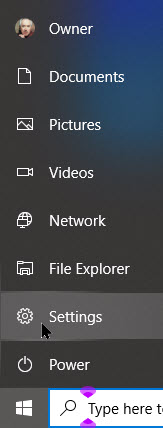
First, launch Settings by pressing Windows+I keys or by opening the Start menu and clicking the gear icon on the left. Refer to below image:
Start 1
Accessing Settings

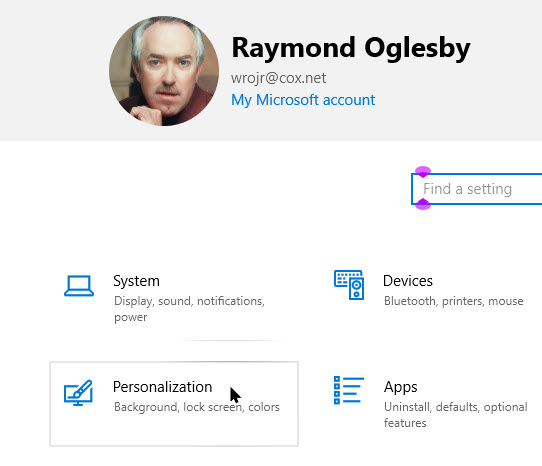
In Settings, click the Personalization option. See below image:
Start 2
Accessing Personalization option

Now, in its settings, click the Colors option. See following image:

Start 3
Accessing Colors option

Selecting your Colors

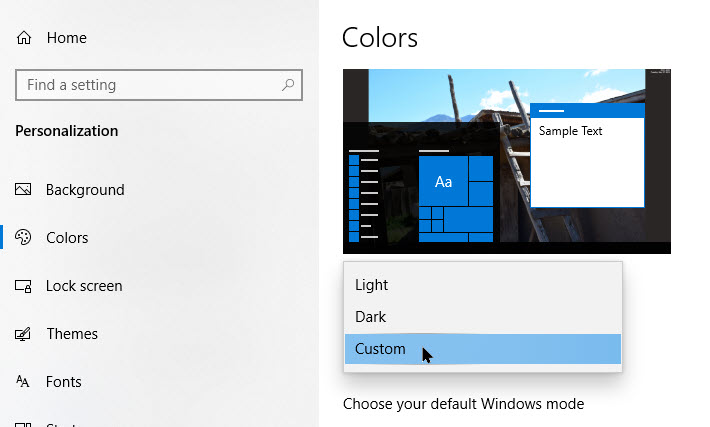
Next, in the Colors settings, locate the Choose your color drop-down menu. In this menu, select Custom. Refer to below image:
Start 4
Selecting Custom color option from drop-down

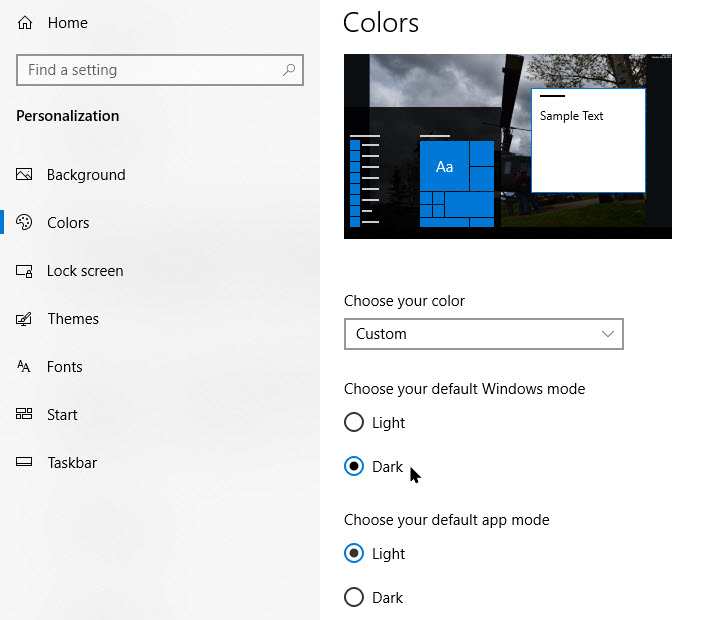
Now, two new choices will appear. Under Choose your default Windows mode, select Dark. This Dark mode is required for colorizing of your Start menu.

Now, under Choose your default app mode, select one of two options, Light or Dark, whichever one you would like the best. See below image:
Start 5
Selecting Dark mode

Selecting your Accent Color

Next, scroll down the Colors page and locate the Choose your accent color section.

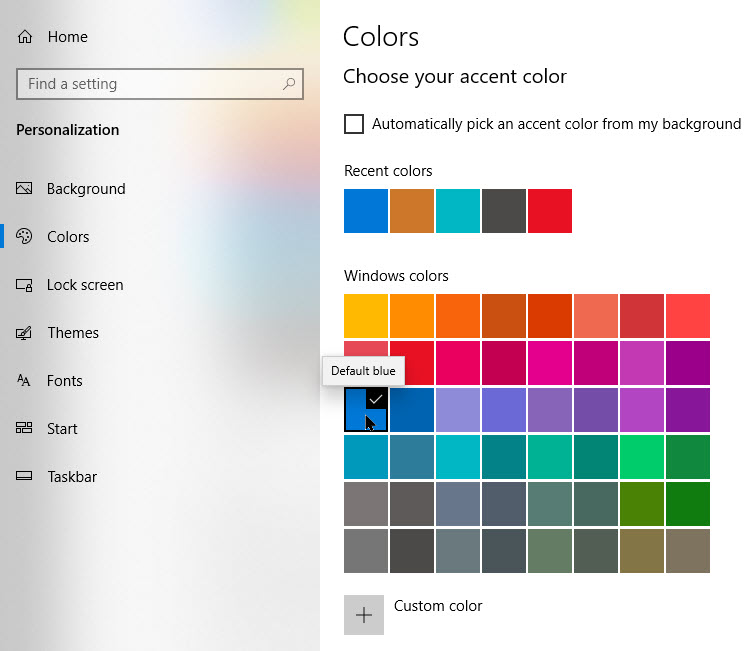
If you want the color to automatically match your desktop background image, checkmark Automatically pick an accent color from my background. Otherwise, click a color in the grid that you would like to use for your Start menu and Taskbar. You can also pick a custom color by clicking the Custom color button below the grid. See following image:
Start 6
Selecting your accent color

Now, locate the Show accent color on the following surfaces section and checkmark Start, taskbar, and action center.

Note! If this option is greyed out, make sure you select Dark as your default Windows mode above. It won’t work in Light mode. Refer to below image:

Start 7
Selecting your accent color on surfaces

Your New Look

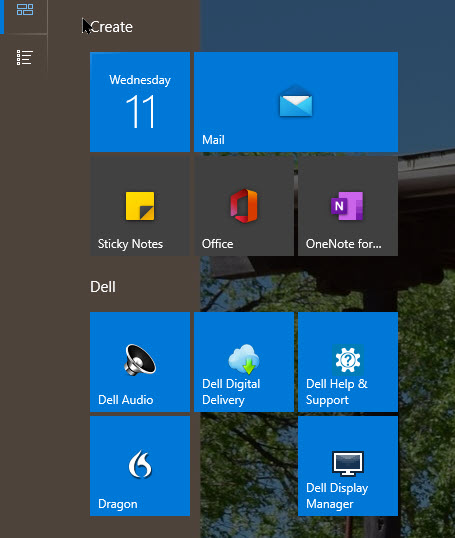
The next time you open your Start menu, you will see that it has changed to the accent color you selected. See below image:
Start 8
Your new Start colorized icons

If you ever want to switch back to the standard Windows 10 theme, open

Settings > Personalization > Colors

and select Light in the Choose your color drop-down menu.

That’s it. Please feel free to share this post! One way to share is via Twitter.

Just click the Tweet icon below. This will launch Twitter where you click its icon to post the Tweet.

Check out TechSavvy.Life for blog posts on smartphones, PCs, and Macs! Feel free to email us at contact@techsavvy.life.

I Would Like to Hear From You

Please feel free to leave a comment. I would love hearing from you. Do you have a computer or smart device tech question? I will do my best to answer your inquiry. Just send an email to contact@techsavvy.life. Please mention the device, app and version that you are using. To help us out, you can send screenshots of your data related to your question.


The author’s Vietnam eBook on the Battle for Tra Bong: Events and Aftermath

How to Manage System Folders in Start Menu in Windows 10

On Windows 10, the Start menu is an essential component, as it is the experience you use every day to find apps, settings, and files.

On Windows 10, the Start menu is an essential component, as it is the experience you use every day to find apps, settings, and files.

Out of the box, the Start menu includes a default layout with elements and settings that usually fit most people. However, if you want to make it more functional and personal, the experience available on Windows 10 is highly customizable.

We are going to explain a little know feature, manage the system folders. Here’s how to do this:

This is for devices running Windows 10

Copyright Scott Adams, Inc./Distributed by Universal Uclick for UFS

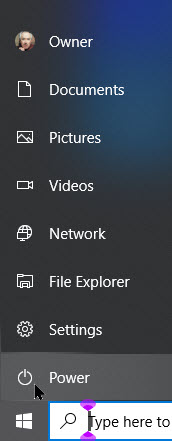
The User, Documents, Pictures, Settings and Power options are now tucked away in a column on the far left of the Start menu. Click the button at the top left of the Start menu to expand this column. Refer to below image:

Start Menu 1
The default Start menu System folders

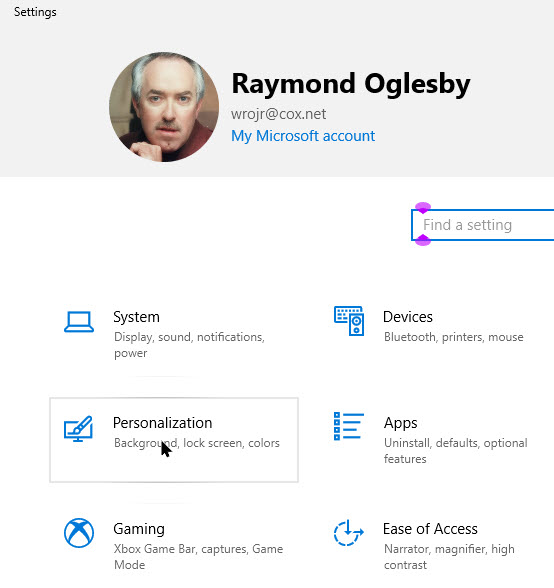
First, launch Settings by pressing Windows+I. Now click the Personalization option. See below image:

Start Menu 2
Accessing Personalization option in Settings

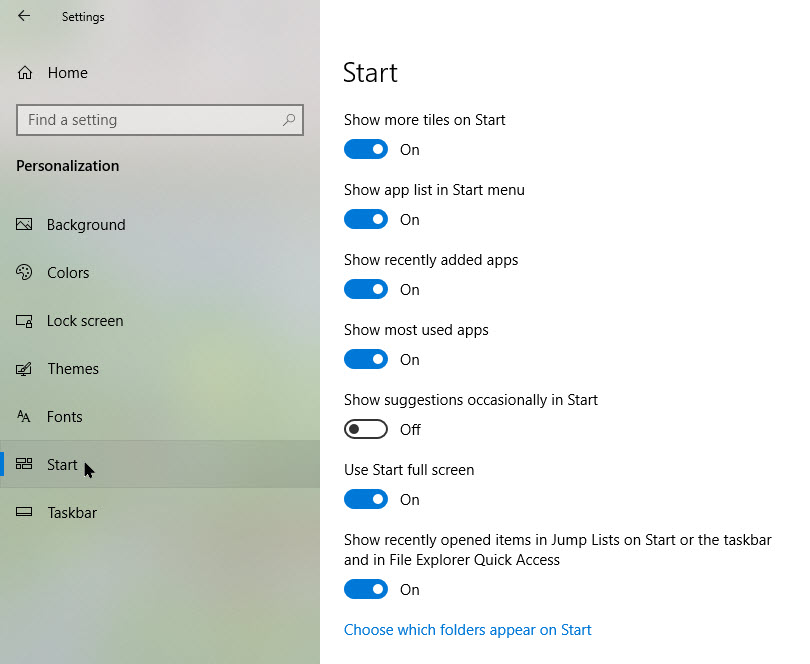
Next, click the Start option. See following image:

Start Menu 3
Accessing the Start option

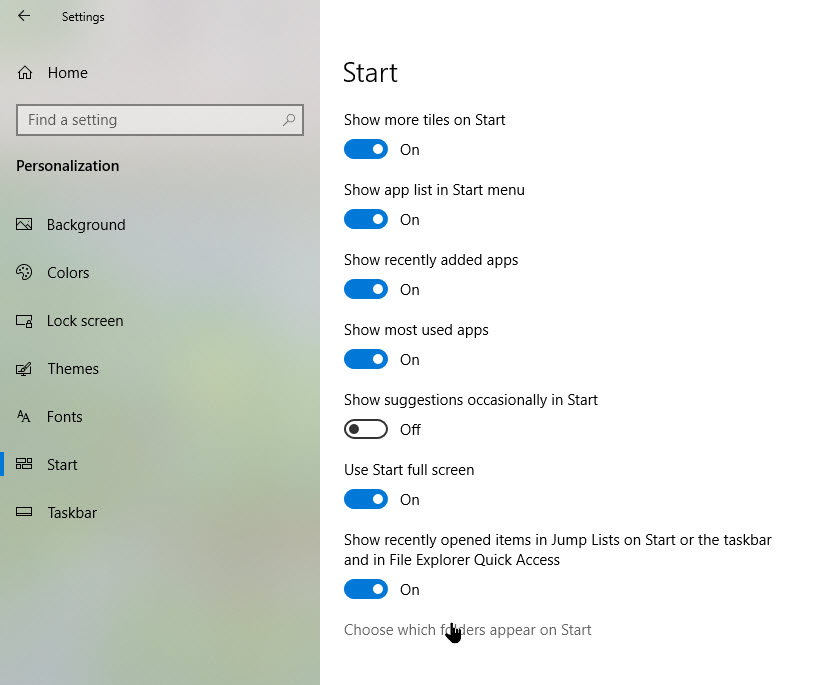
On the right, scroll all the way to the bottom and click the Choose which folders appear on Start link. Refer to below image:

Start Menu 4
Accessing the System folders link

Now, choose whatever folders you want to appear on the Start menu. See below image:

Start Menu 5

Enable/Disable System folders to appear on Start Menu

I have selected several folders. To view an icon’s associated text, just hover your mouse over an icon. See following image for the my new system Start menu:

Start Menu 6
Your new System folder Start menu

That’s it. Please feel free to share this post! One way to share is via Twitter.

Just click the Tweet icon below. This will launch Twitter where you click its icon to post the Tweet.

Check out TechSavvy.Life for blog posts on smartphones, PCs, and Macs! Feel free to email us at contact@techsavvy.life.

I Would Like to Hear From You

Please feel free to leave a comment. I would love hearing from you. Do you have a computer or smart device tech question? I will do my best to answer your inquiry. Just send an email to contact@techsavvy.life. Please mention the device, app and version that you are using. To help us out, you can send screenshots of your data related to your question.
The author’s Vietnam eBook on the Battle for Tra Bong: Events and Aftermath

How to Access Full Screen Startup in Windows 10

While in desktop mode, Windows 10 allows you to use the Start menu in a full-screen mode or in a way that only covers part of the screen.

While in desktop mode, Windows 10 allows you to use the Start menu in a full-screen mode or in a way that only covers part of the screen. Lets explore how to do this.

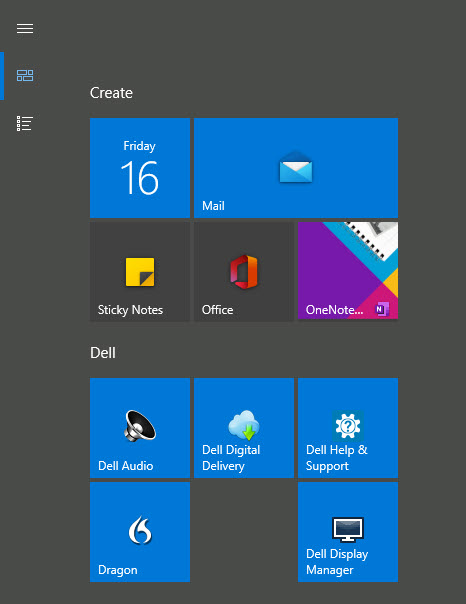
Depending on how you have your Start menu configured, a full-screen Start menu covers the entire screen (but not the Taskbar), and you can change between a “pinned tiles” view and an “all apps” view using the buttons in the upper-left corner.

In either view, you will see a screen full of shortcuts that you click on to launch an application. Refer to below image for a partial view of my desktop:

Start 1
Partial Desktop screen

To configure whether you see the full-screen Start menu in desktop mode or not, we need to make a change in Windows Settings.

This is for devices running Windows 10 operating system

Dilbert and Training
Copyright Scott Adams, Inc./Distributed by Universal Uclick for UFS

First, click the Start menu, select the Gear icon on the bottom left, then click Settings, or press the Windows+I keys to open Settings. See below image:

Start 2
Accessing Settings

Now, click on Personalization. See following image:

Start 3
Access Personalization

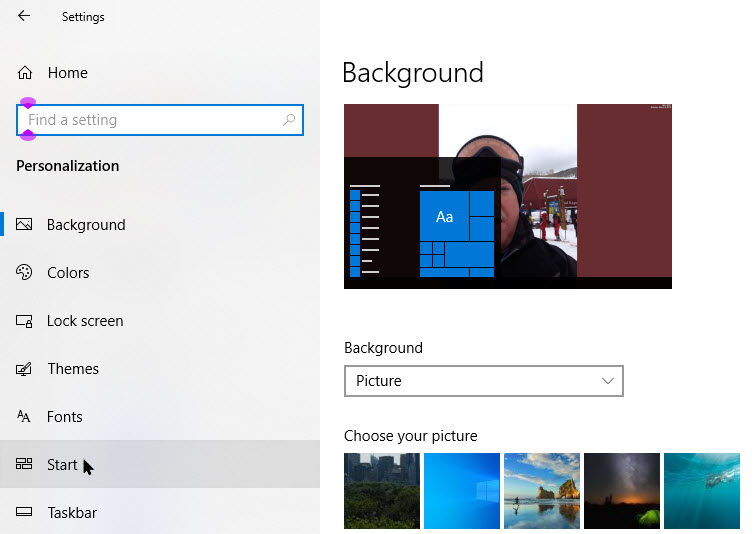
Next, select Start from the sidebar to open the its settings. Refer to below image:

Start 4
Accessing Start option

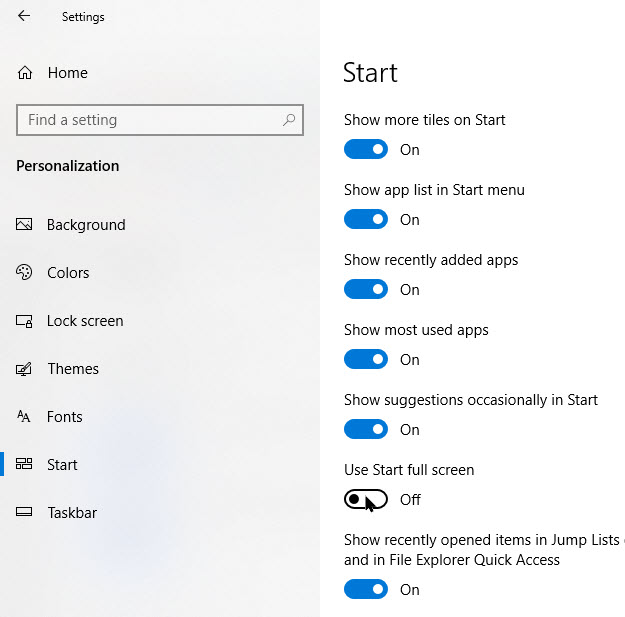
In Start menu settings, scroll down to the switch labeled Use Start Full Screen. If you would like to use the Start menu full screen in desktop mode, set this switch to On. If you do not want Start to cover the entire screen when you open it in desktop mode, set this switch to Off. See below image:

Start 5
Disabling Start Full Screen

Note! If your PC is in tablet mode, it will always show a full-screen Start menu.

You do not have to use a full-screen Start menu to get more room for shortcuts. If you would like to use a larger Start menu without having it occupy the full screen, you can easily resize the Start menu by clicking and dragging its edges.

Also, you can add a few more tiles by enabling the switch labeled Show more tiles located at the top of Start menu settings. Refer to above image.

You arte finished. Please feel free to share this post! One way to share is via Twitter.

Just click the Tweet icon below. This will launch Twitter where you click its icon to post the Tweet.

Check out TechSavvy.Life for blog posts on smartphones, PCs, and Macs! Feel free to email us at contact@techsavvy.life.

I Would Like to Hear From You

Please feel free to leave a comment. I would love hearing from you. Do you have a computer or smart device tech question? I will do my best to answer your inquiry. Just send an email to contact@techsavvy.life. Please mention the device, app and version that you are using. To help us out, you can send screenshots of your data related to your question.
The author’s Vietnam eBook on the Battle for Tra Bong: Events and Aftermath

How to Use Emoji in Microsoft Word

One of the most common forms of shorthand communication developed for the mobile age is the icon-based vocabulary known as Emoji. You have seen those seen Emoji pictures on social media. It’s available for Microsoft Word in Windows 10, MacOS, iOS, iPadOS, and Android.

One of the most common forms of shorthand communication developed for the mobile age is the icon-based vocabulary known as Emoji. You have seen those seen Emoji pictures on social media. It’s available for Microsoft Word in Windows 10, MacOS, iOS, iPadOS, and Android.

Microsoft Word is an indisputable application in the documentation world. When preparing documentations, you can easily insert Emoji to jazz up a Word document on various devices.

You can enter an Emoji in Word in the same way you can enter an Emoji in any other application. While typing in a Word document, just use the appropriate keyboard shortcut for your operating system. Let!s explore how this is done.

This is for devices supporting Microsoft Word. Screenshots are from Windows 10

Dilbert and Attention
Copyright Scott Adams, Inc./Distributed by Universal Uclick for UFS

Open Rmoji Keyboard

Open your Word document and position the cursor where you want to insert the Emoji.

  • For Windows 10 – Press, “Windows + Period” keys or “Windows + Semicolon” keys to open the Emoji picker.
  • For MaOS – Press “Command + Control + Space” keys to open Emoji keyboard on a Mac, which is a Character Viewer app in MacOS.
  • For iPhone, iPad, or Android phone, you can use the standard Emoji keyboard.

These keyboard shortcuts work in basically all Windows or Mac applications.

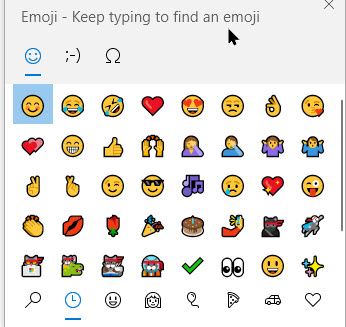
A pop-up will be displayed with all popular emoji symbols. The most frequently used Emoji will appear first. Refer to below image:

Emoji 1
The Emoji keyboard

Searching for an Emoji

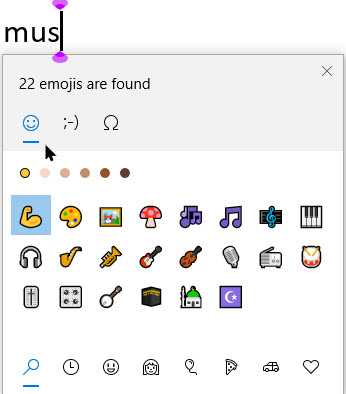
On both Windows and Mac, you can start typing the name of an Emoji to search for it. For example, to find “music” related Emoji, just start typing a few characters of the keyword. You can also just scroll through the long list of Emoji to find one.

Use the arrow keys and press Enter or click an Emoji to insert it. See below image:

Emoji 2
Searching for a music Emoji

The Emoji you insert into your document will appear as a colorful icon. You can resize them. adjust their font size, just as you would with any other text in the document.

See following image for an inserted “music”Emoji followed by text:

Emojii 3
Inserting an Emoji followed by some text

I hope you have found this post helpful. If so, click the Tweet icon below. This will launch Twitter where you click its icon to post the Tweet.

I have found TechSavvy.Life blog posts extremely helpful. Check them out for posts on smart phone apps, Macs and PCs!

I Wouild Like to Hear From You

Please feel free to leave a comment. I would love hearing from you. Do you have a computer or smart device tech question? I will do my best to answer your inquiry. Please mention the device, app and version that you are using. To help us out, you can send screenshots of your data related to your question.
The author’s Vietnam eBook on the Battle for Tra Bong: Events and Aftermath

How to Check If You Have the Latest Version of Windows 10

The latest version of Windows 10 is the October 2020 Update, version “20H2,” which was released on October 20, 2020. Microsoft releases new major updates about every six months.

The latest version of Windows 10 is the October 2020 Update, version “20H2,” which was released on October 20, 2020. Microsoft releases new major updates about every six months.

This is for devices running Windows 10

Dilbert and Wireless
Copyright Scott Adams, Inc./Distributed by Universal Uclick for UFS

To Tweet about this post, click the Tweet icon below to launch Twitter, then click its Tweet icon to post.

Check out TechSavvy.Life for their blog posts on smartphone apps, PCs. and Macs!

These major updates can take some time to reach your PC since Microsoft and PC manufacturers do extensive testing before fully rolling them out. Let’s find out what version you are running, and how you can skip the wait and get the most recent version if you do not already have it.

This update was codenamed “20H2” during its development process, as it was released in the second half of 2020. Its final build number is 19042.

Related

How to Understand Windows 10 Names and Numbers

How to Check for the Latest Version

First, open your Start menu, and then click the gear-shaped Settings icon or press the Windows+I to open the Settings app. Refer to below image:

Latest Version 1
Accessing Settings

In the Settings window, head to

System > About

and then scroll down toward the bottom to the Windows Specifications section.

A version number of “20H2” indicates you are using the October 2020 Update. This is the latest version. If you see a lower version number, you are using an older version.

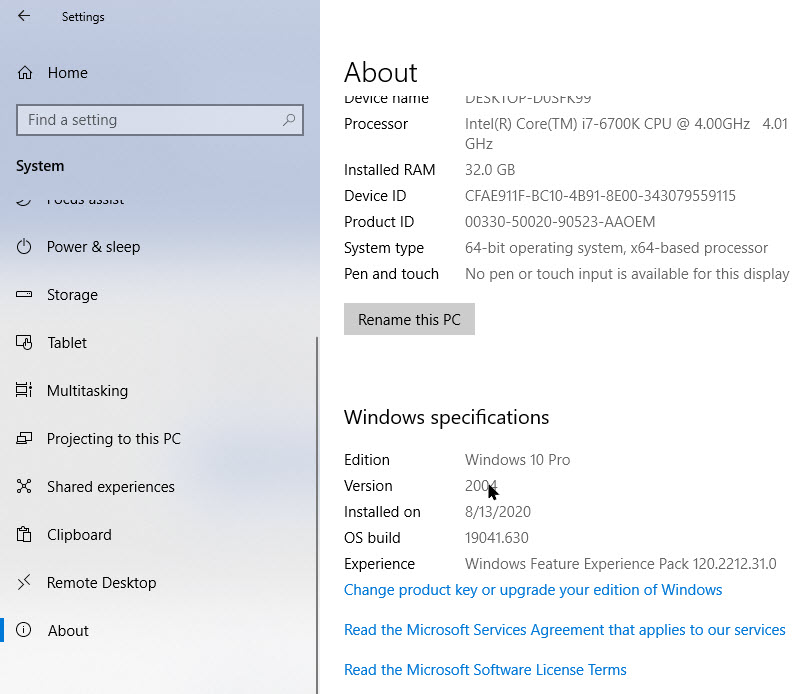
In my example below, I am using “2004”, the May 2020 Update. See below image:

Latest Version 2
Accessing Windows About information

To find out information on Microsoft Windows releases, head to Microsoft’s Windows 10 release information web page. Just look at the most recent version under “Semi-Annual Channel” section.

How to Get the Latest Version

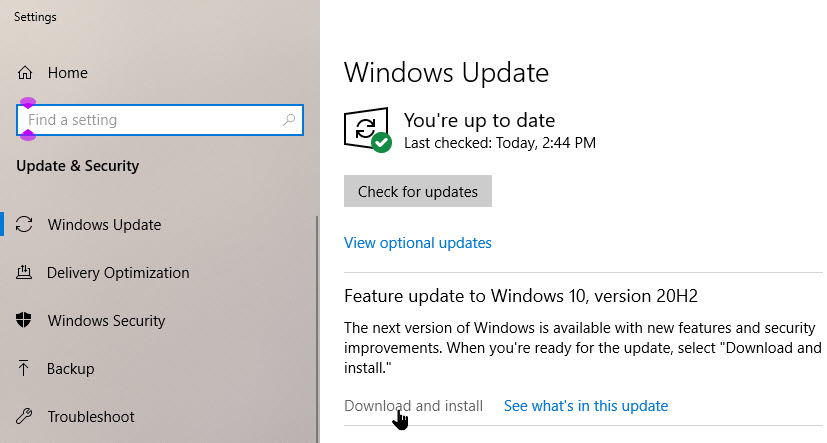
The best way to do this is by typing in Windows Update in the Cortana search bar in lower left-hand corner of your screen. Next, click on the Windows Update settings in upper left-hand corner of your screen. Now, click the Check for updates link for any updates and install per instructions. See following image where it says I am up to date, but there is an update available, the October 2020 update with an Download and Install link:

Latest Update 3
Checking for Windows updates

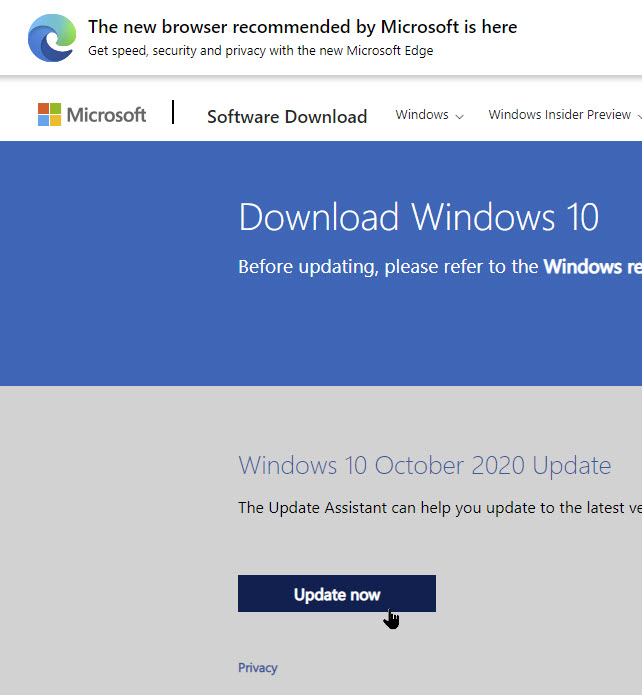
An alternate method is to visit Microsoft.com and hit the Update now button visible on the page. A small exe file, the Update Assistant tool, will be downloaded to your computer. Refer to below image:

Latest Version 4
Download the Windows Update Assistant tool

When you run this file, you will see the main screen of the Update Assistant tool. It will let you know if you are running the latest version of the Windows and whether your PC is capable of running it.

Click on Update now to start the upgrade process.

The tool will run a few compatibility checks for your PC and disk space required for installing the update.

If all appears well, the Update Assistant will access the Microsoft servers.

It will offer you two options:

  1. Upgrade this PC now
  2. Create installation media

Now, chose the first option.

The main highlight of the whole upgrade process is that all your files will be safe and right where you left them. Also, if the method does not work, you can go back to a prior version of Windows 10 anytime.

The install will take some time and your PC will restart several times. The best you can do is wait till the upgrade is finished..

In the end, when the process is complete you could either choose to restart the PC right way or after some time to allow the changes to take effect.

Note: By running the Upgrade Assistant, you are forcing Windows 10 to upgrade itself. Even if there is a known problem with the update on your computer, Windows will ignore the problem and install the update anyway. Microsoft recommends you check for any known problems impacting your system first.

You are done. Please feel free to share this post! One way to share is via Twitter, as mentioned below.

I hope you have found this post helpful. If so, click the Tweet icon below. This will launch Twitter where you click its icon to post the Tweet.

I have found TechSavvy.Life blog posts extremely helpful. Check them out for posts on smart phone apps, Macs and PCs!

The following is a previous Twitter feed so you can view how a Tweet will be displayed.

Display of your tweet

I Would Like to Hear From You

Please feel free to leave a comment. I would love hearing from you. Do you have a computer or smart device tech question? I will do my best to answer your inquiry. Please mention the device, app and version that you are using. To help us out, you can send screenshots of your data related to your question.

The author’s Vietnam eBook on the Battle for Tra Bong: Events and Aftermath

How to Understand Windows 10 Names and Numbers

Windows 10 has a lot of overlapping version numbers and names. For example, the October 2020 Update is also called 20H2, version 2009, and build 19042. It often seems like different teams at Microsoft are speaking different languages. Here’s how to understand Microsoft’s jargon.

Windows 10 has a lot of overlapping version numbers and names. For example, the October 2020 Update is also called 20H2, version 2009, and build 19042. It often seems like different teams at Microsoft are speaking different languages. Here’s how to understand Microsoft’s jargon.

This is for the Windows 10 operating system

Dilbert and Fake
Copyright Scott Adams, Inc./Distributed by Universal Uclick for UFS

To Tweet about this post, click the Tweet icon below to launch Twitter, then click its Tweet icon to post.

Check out TechSavvy.Life for their blog posts on smartphone apps, PCs. and Macs!

The Development Codename

Each Windows 10 Update starts with a development codename. In recent years, Microsoft has simplified these.

For example, Windows 10 20H2 became the October 2020 Update. It was named “20H2” because it was planned for release in the second half of 2020.

In theory, these development codenames are just that; for the Windows development process. In practice. Microsoft has a lot of documentation that uses them, referring to “20H2” and “20H1.” These modern development codenames are easy to understand.

These development codenames appear to be replacing the version numbers in Windows 10’s interface. To view your codename, go to:

Settings > System > About

Here you willl see the development codename presented as the “version” under Windows Specifications. Refer to below image:

Win Version 1
The About option

Here is a list of Windows 10’s development codenames for 2020 and 2019 updates:

  • 20H2 became the October 2020 update
  • 20H1 became the May 2020 update
  • 19H2 became the November 2019 update
  • 19H1 became th May 2019 update

Prior to this, Microsoft named these updates “Redstone” and “Threshold”. Threshold 1″ was the original codename for Windows 10.

The Marketing Name

To make things “simpler” for us, Microsoft created official names for each update, designed to make them human-readable. When an update is near release, it gets one of these names.

In recent years, these names have been pretty self-explanatory. “October 2020 Update” and “May 2019 Update” are easy terms to understand. That’s the month and year the update was released. It’s more precise than “20H2” and “19H1.”

We call them “marketing names” because that’s what they originally were. Despite Microsoft presenting names like “October 2020 Update” as the official ones, many Microsoft documents use terms like “20H2” or “version 2009” instead. Even Windows 10 itself doesn’t use this name; perhaps because it’s created by the engineers and not the marketing department.

The Version Number

Windows 10 has version numbers which are different from the development codename. The Windows 10 October 2020 Update is technically Windows 10 version 2009. The first two digits represent the year and the last two digits represent the month.

Microsoft is confusing us. The version number seems to refer to the month the update was “finalized” (and perhaps released to Insiders), while the marketing name refers to the update the month was released.

Here’s a list of 2020 and 2019 version numbers for Windows 10 updates:

  • The October 2020 Update is version 2009, which refers to September 2020
  • The May 2020 Update is version 2004, which refers to April 2020
  • The November 2019 Update is version 1909, which refers to September 2019
  • The May 2019 Update is version 1903, which refers to March 2019

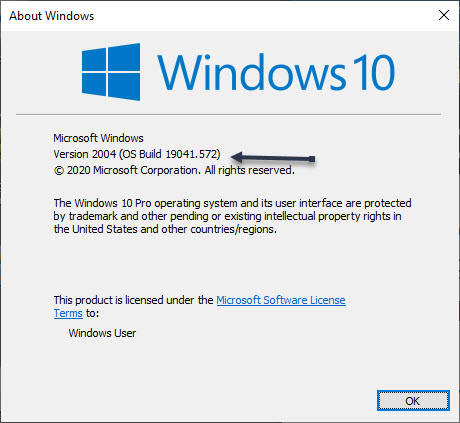
Microsoft is getting away from these numbers, with development names like “20H2” now shown in the System panel. Another way to view your version number is to launch the winver dialog:

  • Press Windows+R
  • Enter winver in the dialog box
  • Press Enter or OK

See below image:

Win Version 2
The Windows version and OS Build number

In older versions of Windows 10, these screens showed the version number instead.

The OS Build Number

Windows 10 also has operating system (OS) build numbers. During the Windows development process, each “build” of Windows 10 released has its own build number.

After much testing and bug-fixing, Microsoft settles on a final build that will be the stable version of the update. When the stable update is released, it still has this OS build number.

The October 2020 Update has the OS build number “19042.” Technically, the full build number is “10.0.19042,” to indicate that it’s a Windows 10 build. Only the last five digits change.

Also, there are minor build numbers; the stable version of 20H2 is initially “19042.572”, but the “572” number will increase as Microsoft issues minor patches for the update. Here is a list of 2020 and 2019 OS build numbers:

  • 20H2 is build number 19042.
  • 20H1 is build number 19041.
  • 19H2 is build number 18363.
  • 19H1 is build number 18362.

What Does All This Mean?

At times, it seems like different teams at Microsoft are speaking different languages. One document talks about 20H2, another talks about version 2009, a technical document refers to build 19042, and the marketing team talks up the October 2020 Update. They’re all talking about the same thing.

Now that you understand this, it’s easier to make sense of the mess of version numbers you see across Microsoft’s websites and within Windows 10 itself.

I hope you have found this post helpful. If so, click the Tweet icon below. This will launch Twitter where you click its icon to post the Tweet.

I have found TechSavvy.Life blog posts extremely helpful. Check them out for posts on smart phone apps, Macs and PCs!

The following is a previous Twitter feed so you can view how a Tweet will be displayed.

I Would Like to Hear From You

Please feel free to leave a comment. I would love hearing from you. Do you have a computer or smart device tech question? I will do my best to answer your inquiry. Please mention the device, app and version that you are using. To help us out, you can send screenshots of your data related to your question.
The author’s Vietnam eBook on the Battle for Tra Bong: Events and Aftermath

How to Switch Virtual Desktops in Windows 10

Virtual Desktops, or Windows, are a handy way to juggle multiple workspaces in Windows 10. There are several ways to switch between virtual Desktops.

Virtual Desktops, or Windows, are a handy way to juggle multiple workspaces in Windows 10. There are several ways to switch between virtual Desktops. Let us explore how to do this.

This is for Windows 10 operating system

Dilbert and Sod
Copyright Scott Adams, Inc./Distributed by Universal Uclick for UFS

To Tweet about this post, click the Tweet icon below to launch Twitter, then click its Tweet icon to post.

Check out TechSavvy.Life for their blog posts on smartphone apps, PCs. and Macs!

Use Keyboard Shortcuts

Press Windows+Tab to see the virtual Desktops you have available. You will see a screen called “Task View,” which shows thumbnails of each.

Now, release the Windows key and press the Tab or Arrow keys to highlight a Desktop, then press Enter to view that Desktop. You may also switch Desktops by using the Alt+Tab keys.

Also, you can press Windows+Ctrl+Left Arrow to display a lower number Desktop or Right Arrow to a higher number Desktop.

While in “Task View”, click the Plus “+” Tile or press Windows+Ctrl+D to add a new Desktop. Click the “X” in the upper corner to remove a Desktop.

If you want to exit the “Task View”, just hit Escape to return to your Desktop.

Use the Taskbar

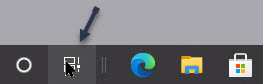
Right-click on an empty area of the Taskbar, then click Show Task View Button. Ensure the option is checkmarked. Refer to below image:

TaskView 1
Setting the Show Task View option

Now, locate and click the Task View button in the Taskbar to view your Desktops. Next, click or tap the Desktop to which you want to switch. See below image:

Task View 2
Accessing the Task View button

You can click Task View at any time to manage your virtual Desktops.

That’s it. Please feel free to share this post! One way to share is via Twitter, as mentioned below.

To Tweet about this post, click the Tweet icon below to launch Twitter, then click its Tweet icon to post.

I have found TechSavvy.Life blog posts extremely helpful. Check them out for posts on smart phone apps, Macs and PCs!

The following is a previous Twitter feed so you can view how a Tweet will be displayed.

Display of your Tweet

I Would Like to Hear From From You

Please feel free to leave a comment. I would love hearing from you. Do you have a computer or smart device tech question? I will do my best to answer your inquiry. Please mention the device, app and version that you are using. To help us out, you can send screenshots of your data related to your question.

The author’s Vietnam eBook on the Battle for Tra Bong: Events and Aftermath

How to Insert a PDF into Word

One unique feature of Microsoft Word is the ability to insert a PDF file directly into Word, and it can be done in only a few steps. You can insert it as an embedded object, a linked object, or text only.

One unique feature of Microsoft Word is the ability to insert a PDF file directly into Word, and it can be done in only a few steps. You can insert it as an embedded object, a linked object, or text only. Let’s explore how to do this.

This is for devices supporting Microsoft Word

Dilbert and Dumb
Copyright Scott Adams, Inc./Distributed by Universal Uclick for UFS

To Tweet about this post, click the Tweet icon below to launch Twitter, then click its Tweet icon to post.

Check out TechSavvy.Life for their blog posts on smartphone apps, PCs. and Macs!

Embedding Explained

When you embed a PDF file in Word, the first page of your PDF appears in the document. Since an embedded object becomes part of the document after it is inserted, it’s no longer connected to the source file. Any changes made to the original PDF in the future will not be reflected in the Word document.

Linking Explained

Inserting a PDF file as a linked object means it appears as the first page of the PDF, but it is also linked to the original file. Changes made to the PDF will also be reflected in the Word document. You can opt to display an icon instead of a preview. Either option will open the PDF file when selected.

Text Only Explained

Inserting a PDF as text involves the use of copy and paste. Copying the text from the PDF file and pasting it into a document is a straightforward way to insert a bit of text into Word.

Embed or Link a PDF

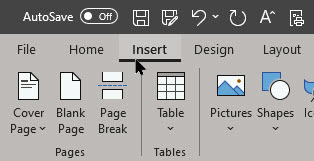
First, open a Word document, and place your cursor where you would like to insert the PDF file. Next, select the Insert tab. Refer to below image:

Insert PDF 1
Selecting the Insert tab

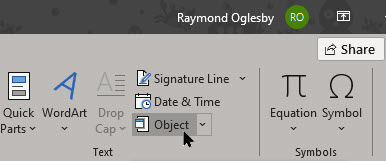
Now, click Object from the Text group. See below image:

Insert PDF 2
Selecting the Object option

From the small drop-down menu, select Object. See following image:

Insert PDF 3
Selecting the Object option from drop-down menu

From the Object window, click the Create from File tab. Next, select Browse. Refer to below image:

Insert PDF 4
From the Create from file tab, selecting the Browse option

Navigate to the location of the PDF, select it, and then click Insert. See below image:

Insert PDF 5
Selecting your PDF file to Insert into Word

Selecting Your Options

Now, it is time to decide if you want to (1) link directly to the source file, and/or (2) display the PDF as an icon. Link directly to the source file if you want to have the inserted file reflect any new changes made to the source file. To do so, just checkmark the Link to file option. You are linking to the PDF in your document.

While here, checkmark Display as icon if you don’t want to take up too much space on the page. If you do not enable any of these options, the PDF will be displayed in its entirety on the Word document and will not reflect any new changes made to the source file. You are embedding the PDF into your document.

To finish, select OK. Refer to below image:

Insert PDF 6
Selecting ink your PDF file and display an icon

The PDF will now be inserted in the Word document. See below image:

Insert PDF 7
Your linked PDF file displayed as an icon in Word

Copy and Paste

Copy

First, open your PDF file. Now, highlight some text you want to copy. Next, right-click your selection and select Copy.

Paste

Second, open your Word document. Now, place the cursor where you want to paste the text from the PDF file. Next, right-click and select a Paste option with or without formatting.

I hope you have found this post helpful. If so, click the Tweet icon below. This will launch Twitter where you click its icon to post the Tweet.

I have found TechSavvy.Life blog posts extremely helpful. Check them out for posts on smart phone apps, Macs and PCs!

The following is a previous Twitter feed so you can view how a Tweet will be displayed.

I Would Like to Hear From You

Please feel free to leave a comment. I would love hearing from you. Do you have a computer or smart device tech question? I will do my best to answer your inquiry. Please mention the device, app and version that you are using. To help us out, you can send screenshots of your data related to your question.
The author’s Vietnam eBook on the Battle for Tra Bong: Events and Aftermath

How to Remove Adobe Flash Player in Windows 10

At the end of 2020, Adobe will kill its Flash Player app for security reasons. Microsoft is taking a pre-emptive strike though by using an optional Windows Update to both uninstall and block Flash from being reinstalled.

At the end of 2020, Adobe will kill its Flash Player app for security reasons. Microsoft is taking a pre-emptive strike though by using an optional Windows Update to both uninstall and block Flash from being reinstalled.

It seems the update does not check to see if Flash has been installed using Adobe’s standalone installer, meaning if you have ever installed Flash Player manually, it remains available to use. Web browserscan also have a Flash Player component installed, and these also remain available after the update.

If you have no intention of using Flash again, the Windows Update to remove it is worthwhile simply to make your system a bit more secure. However, it’s worth checking if the Flash Player is installed as an app as well and removing it.

This is for the Windows 10 operating system

Dilbert and Deck
Copyright Scott Adams, Inc./Distributed by Universal Uclick for UFS

To Tweet about this post, click the Tweet icon below to launch Twitter, then click its Tweet icon to post.

Check out TechSavvy.Life for their blog posts on smartphone apps, PCs. and Macs!

To check this:

  • Launch Settings (the gear icon)
  • Click the Apps option

Refer to below image:

Flash 2
Accessing the Apps option

If it is there, click on the app and select Uninstall to remove the app. In my example, the app has been removed and is no longer listed. See below image:

spacer

Flash 1
Your installed apps


Now, lets check your web browser. For Google Chrome:

  • Launch Chrome
  • Click the Hamburger icon in upper right-hand corner (the one with 3 dots)
  • Click More tools
  • Click on Extensions

See following image:

Flash 3
Accessing Chrome extensions


If it is there, click on the slider to disable or the Remove option to delete the app (this is the recommended choice). In my example, the app has been removed and is no longer listed. Refer to below image:

Flash 4
Your Chrome extensions

That’s it. You have successfully removed the app and its Chrome extension. Be sure to run the Windows optional update when available.

I hope you have found this post helpful. If so, click the Tweet icon below. This will launch Twitter where you click its icon to post the Tweet.

I have found TechSavvy.Life blog posts extremely helpful. Check them out for posts on smart phone apps, Macs and PCs!

The following is a previous Twitter feed so you can view how a Tweet will be displayed.

I Would Like to Hear From You

Please feel free to leave a comment. I would love hearing from you. Do you have a computer or smart device tech question? I will do my best to answer your inquiry. Please mention the device, app and version that you are using. To help us out, you can send screenshots of your data related to your question.

The author’s Vietnam eBook on the Battle for Tra Bong: Events and Aftermath

Five Ways to Lock Windows 10

Locking your Windows 10 PC is the best way to secure your computer when you step away. This will not quit or interrupt any running applications. When you return, you have to enter your PIN or password to get past the lock screen.

Locking your Windows 10 PC is the best way to secure your computer when you step away. This will not quit or interrupt any running applications. When you return, you have to enter your PIN or password to get past the lock screen. Let’s explore these five methods.

This is for smartphones and devices using Windows 10

Dilbert and Virus
Copyright Scott Adams, Inc./Distributed by Universal Uclick for UFS

To Tweet about this post, click the Tweet icon below to launch Twitter, then click its Tweet icon to post.

Check out TechSavvy.Life for their blog posts on smartphone apps, PCs. and Macs!

Method 1 – Use the Start Menu

First, click the Start button. Next, select your account name. Now, click the Lock option. Refer to below image:

Lock PC 4
Lock your device from the Start Menu

Method 2 – Use the Keyboard

The Lock Shortcut

Hit the Windows+L key on your keyboard to lock your device.

The Combination Key

Press Ctrl+Alt+Del keys. Next, click the Lock option in the menu that appears.

Method 3 – Use a Desktop Icon

If you’d rather lock your PC with just a click, you can create a desktop icon.

First, right-click on your desktop. Now, hover over the New option. Next, click the Shortcut option. See below image:

Lock PC 1
Create a desktop shortcut to lock your device

The Create Shortcut window will be displayed. Now, type the following command in the Type the location of the item text box. Once you have entered the command, click Next.

Rundll32.exe user32.dll,LockWorkStation

See following image:

LOck PC 2
Entering the Lock command

Now, enter an icon name like “Lock PC”. Next, click Finish. Refer to below image:

Lock PC 3
Naming your shortc ut

Your icon will appear on your desktop. Just double-click it any time to lock your device.

Method 4 – Use the Screen Saver

Another method is to set your PC to lock after the Screen Saver has been on for a certain length of time. First, type in screen saver in the Cortana search box. Next, click Change screen saver in the search results at upper left hand corner of your screen. See below image:

Lock PC 5
Accessing the Screen Saver

In the Screen Saver menu, checkmark the box labeled On Resume, display logon screen option. Now, use the arrow buttons in the Wait box to select how many minutes should pass before your device locks. Next, to save your change click Apply. See following image:

Lock PC 6
Setting your Screen Saver to lock your device

For security reasons, it is best to use another method to lock your device before you step away from it.

Method 5 – Use Dynamic Lock

Dynamic Lock is a feature that automatically locks your PC after you step away from it. It does this by detecting the strength of the Bluetooth signal. When the signal drops, Windows 10 assumes you have left the immediate area of your PC and locks it for you.

This is a nifty feature and my favorite. You just walk away from your PC with your smartphone in hand and let the Dynamic Lock feature lock your PC.

Setup the Smartphone

To use Dynamic Lock, you will first need to pair your smartphone with your PC.

To do this:

On your smartphone, go to Settings > Bluetooth and enable the toggle. Refer to below image:

Lock PC 7
Enabling Bluetooth on your smartphone
Setup the PC

On your PC, go to Settings (the gear icon) > Devices > Bluetooth and Other devices.

Now, click Add Bluetooth or other device. Next, select your phone, confirm the PIN, and they will be paired. See below image:

1 LOck PC 8
Accessing Add a Device

Next, close Settings and relaunch the app. Now, go to Accounts > Sign-in options. Scroll down to the Dynamic Lock section. Next, checkmark the box labeled Allow Windows to automatically lock Your device when you’re away option. See following image where Raymond’s Phone is paired:

Lock PC 9
Enabling Dynamic Lock

I hope you have found this post helpful. If so, click the Tweet icon below. This will launch Twitter where you click its icon to post the Tweet.

I have found TechSavvy.Life blog posts extremely helpful. Check them out for posts on smart phone apps, Macs and PCs!

The following is a previous Twitter feed so you can view how a Tweet will be displayed.

I Would Like to Hear From You

Please feel free to leave a comment. I would love hearing from you. Do you have a computer or smart device tech question? I will do my best to answer your inquiry. Please mention the device, app and version that you are using. To help us out, you can send screenshots of your data related to your question.

The author’s Vietnam eBook on the Battle for Tra Bong: Events and Aftermath