Apple Maps now offers indoor maps for certain malls and airports, accessible through the app on iPhone and iPad. This feature eliminates the need for physical maps, allowing users to easily navigate these indoor spaces. By following specific steps within the Maps app, users can view indoor locations and access additional details.
This is for the iPhone and iPad using Apple Maps. Screenshots are from iPhone 14 Pro running iOS 17.5.1
For certain malls and airport locations, Apple has indoor maps viewing directly from the Maps app. You will love this feature because it allows you to figure out where you are without locating a directory or physical map somewhere inside the location. Let’s explore this feature.
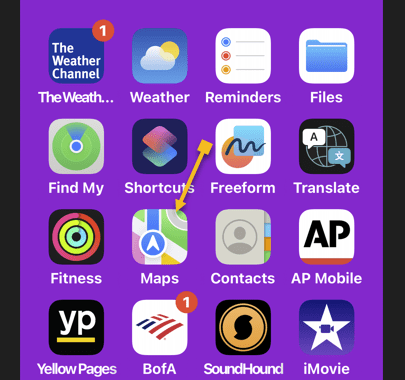
First, open Maps on your iPhone. Refer to the below page:
Accessing the Maps app
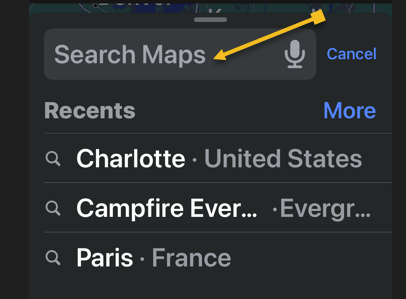
Next, tap the Search box and type in the name of the airport or mall. See the below image:
Selecting the Search box
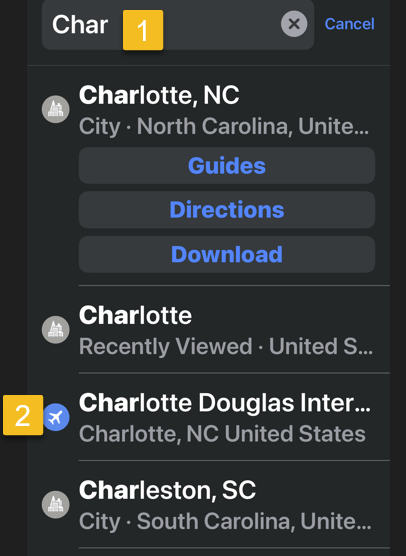
Now, tap it or swipe up to access the menu options until you see the location you want and tap it. See the following image:
Selecting your search criteria
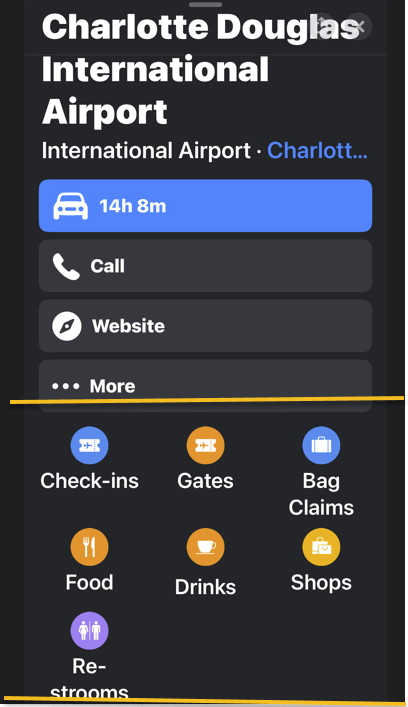
Next, depending on what map you are looking at, you will see options for various stores and/or locations within the building. Tap one of the options to see it plotted on the map. Refer to the below image:
Search menu options
Now, you will see all the gates, shops, or other type of location you selected. For example, we are accessing the Charlotte Douglas International Airport airport gates. See the below image:
Selecting Gates for the airport
Next, swipe up for a list of all locations. See the following image:
Selecting aGate from the listing
Now, when you tap a location, it will get larger on the map, making it easier to find. Refer to the below image:
And that’s how you view indoor maps! Apple is constantly updating its inventory of indoor maps, so hopefully, we will have access to even more of them in the future.
Disclaimer
Technology is always changing. Rarely is there static tech for smartphones and desktops. Thus, the contents of this post are only valid at the time of writing. Blog posts older than six months may have directions incompatible with your device or OS. Hopefully, older post content will continue to work as advertised. Thank you for reading TechSavvy.Life for Technology at Work For You.
Quote For the Day
“You will either step forward into growth or you will step back into safety.”
Abraham Maslow
X (Twitter) Info
That’s it. Please feel free to share this post! One way to share is via Twitter.
Just click the Tweet icon below. This will launch Twitter where you can tap the Post icon to post the Tweet.
Checkout TechSavvy.Life for blog posts on smartphones, PCs, and Macs! You may email us at contact@techsavvy.life for comments or questions.
Was this post helpful? We would love to hear your comments. Do you have a computer or smart device tech question? I will do my best to answer your inquiry. Just send an email to contact@techsavvy.life. Please mention the device, app, and version you are using. To help us out, you can send screenshots of your data related to your question
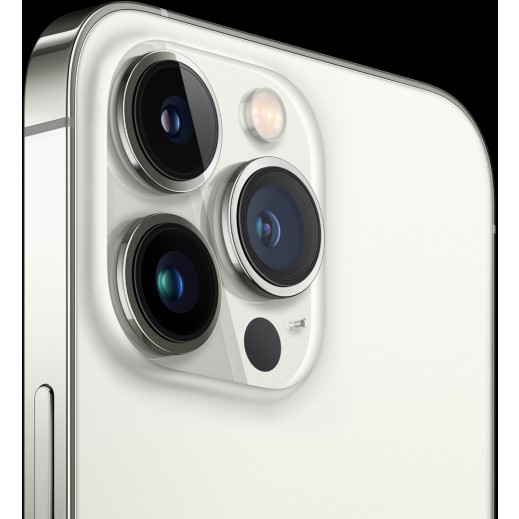
The Flower icon in iPhone Pro indicates macro mode for close-up photography. To disable the macro lens, tap the Flower icon in the camera app. In settings, under Camera, toggle Macro Control to disable the Flower icon. The iPhone 15 Pro models support macro photography, while the standard model does not.
This is for the iPhone Pro. Screenshots are from iPhone 14 Pro running iOS 17.5.1
If you have a Pro iPhone, you have probably noticed the Flower icon while taking photos on your iPhone camera. This icon should only appear when your camera enters Macro mode for taking close-up pictures. Let’s explore how to use and disable the Macro mode Flower icon.
What is the Flower Icon on Your iPhone Camera
As you might have guessed, the icon indicates your iPhone’s macro camera is enabled. iPhone macro photography lets you take clear, extreme close-up shots of nearly any subject. If you do not need to use the iPhone’s macro lens, you can easily disable it from the camera by tapping the Flower icon.
How to Turn Off the Macro Lens
If you are uninterested in iPhone macro photography, you can disable the macro lens.
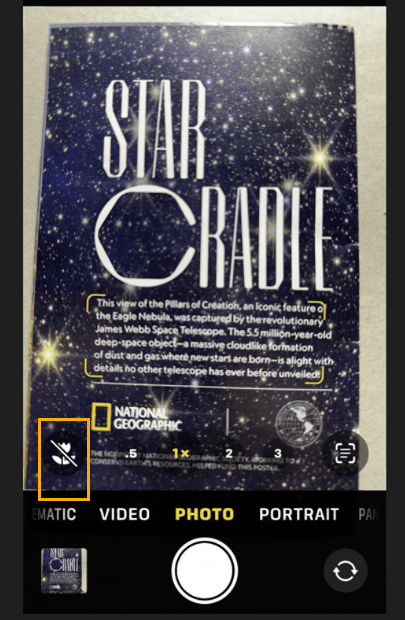
First, when the camera is open, tap the yellow Flower icon. Refer to the below image:
Maco Mode is enabled
Next, when it is gray with a slash through it, that means it has been disabled. See the below image:
Macro Mode is disabled
That’s how to disable the macro photography lens. If you want to disable the icon itself, see the below section.
How to Disable the Flower Icon in iPhone Camera
If you do not want the Flower icon to appear on your iPhone camera, you can disable that in the Settings app.
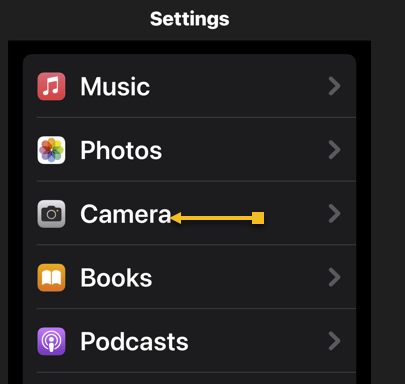
First, the Settings app, and tap Camera. See the following image:
Accessing your Camera option
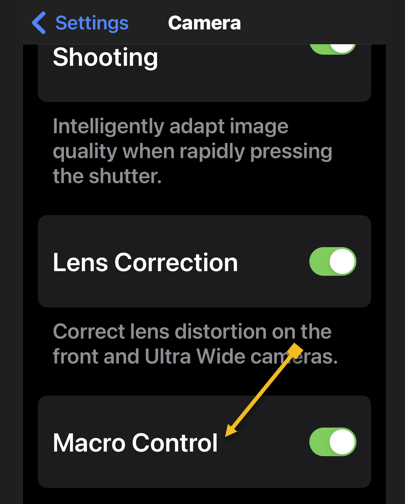
Next, scroll to the bottom and tap the toggle next to Macro Control to disable or enable the Flower icon. Refer to the below image:
Disable or enable Macro Control
Note! This does not disable Macro mode, only the Flower icon. You will not be able to turn off Macro mode if you turn off the above toggle.
FAQ
What does Macro mode do?
Macro mode keeps the image clear while taking extreme close-up shots. This means you can take crisp photos of smaller subjects, like plants or animals.
Does the iPhone 15 have macro photography?
The standard iPhone 15 model does not have a Macro mode. However, all Pro models iPhones, including the iPhone 15 Pro and Pro Max, can capture macro photography images.
Disclaimer
Technology is always changing. Rarely is there static tech for smartphones and desktops. Thus, the contents of this post are only valid at the time of writing. Blog posts older than six months may have directions incompatible with your device or OS. Hopefully, older post content will continue to work as advertised. Thank you for reading TechSavvy.Life for Technology at Work For You.
Quote For the Day
“Don’t believe everything you hear: Real eyes, Realize, Real lies.”
Tupac Shakur
X (Twitter) Info
That’s it. Please feel free to share this post! One way to share is via Twitter.
Just click the Tweet icon below. This will launch Twitter where you click its icon to post the Tweet.
Checkout TechSavvy.Life for blog posts on smartphones, PCs, and Macs! You may email us at contact@techsavvy.life for comments or questions.
Was this post helpful? We would love to hear your comments. Do you have a computer or smart device tech question? I will do my best to answer your inquiry. Just send an email to contact@techsavvy.life. Please mention the device, app, and version you are using. To help us out, you can send screenshots of your data related to your question.
This post provides detailed instructions on recovering deleted photos and videos on iPhone, emphasizing the 30-day recovery period and the importance of backups. It also suggests using Google Photos and mentions third-party solutions for permanent deletions.
This is for the iPhone. Screenshots are from iPhone 14 Pro running iOS 17+
The first thing we used to do to free storage on my previous iPhones was to head to the Photos app and delete pictures and videos. We usually did this after a backup or AirDrop the files we wanted to keep to our PC. However, there were exceptions to the rule, and we sometimes accidentally deleted photos and videos we still needed.
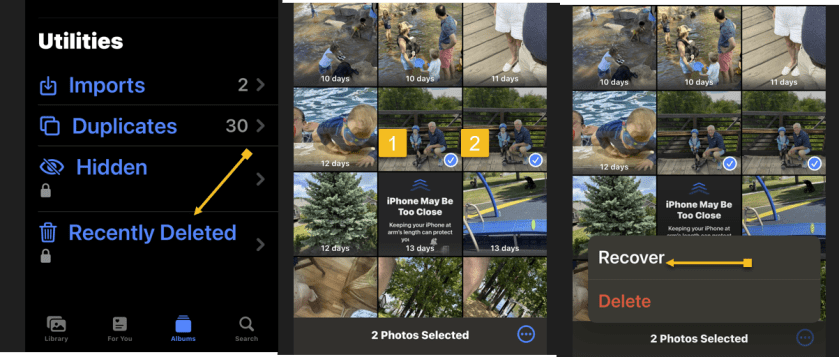
If you accidentally delete files while cleaning up, you should not panic. The files are not actually lost. Go to the Albums section of your iPhone and look for the Recently Deleted folder. You must unlock it with Face ID, Touch ID, or PIN code. In there, tap the Select button and check the photos you deleted by mistake, tap the three dots menu button at the bottom, and then tap Recover. Refer to the below image:
Selecting your photos to recover
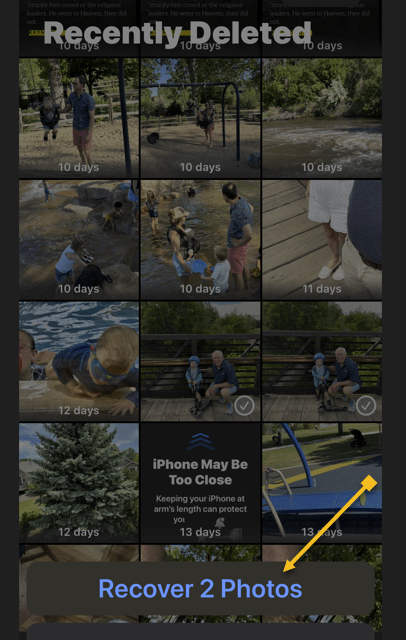
If you have selected more than one photo, click the recover multiple photos button. See the below image:
Recover your photos
We already knew how to rescue those files, as there’s a simple rule about deleting stuff on iPhone. The files do not get permanently removed. Instead, they sit for 30 days in the Trash folders of the various apps where you can delete content. The Photos app is one of them. And that’s how easy it is to recover those deleted photos and videos.
It gets even better if you do regular backups via iCloud or use a third-party alternative to Apple Photos. Google Photos easily comes to mind, as it’s a great app to store and back up photos.
Default Photo App
Most iPhone users will use the default Photos app. That’s where to start when viewing photos and videos and managing the storage.
Another option is to bring a single photo into view and then look for the same Recover button. This method only lets you recover photos and videos one by one.
Once that’s done, the recovered files will be available in the Photos app.
You have to remember to recover your deleted photos within 30 days. That’s how long you have until the iPhone permanently removes them. We went to this folder on iPhones with lower storage than my current iPhone 14 Pro to permanently delete the files we did not need. That’s the only way to free storage immediately.
The best way to ensure your photos and videos are safe is to perform routine backups. Whether via iCloud or your PC, the backups will help you recover files. Another option is to manually transfer the photos to a computer and store them on external devices.
There are many Photo Recovery apps from the App Store you can install.
Using Google Photos
Google Photos is a handy tool for storing images and photos on your iPhone. But, like the default Apple Photos app, you can accidentally delete files in Google Photos.
The solution is similar to Apple Photos. Google does not delete the images directly, moving them to a Trash file in the Library tab. You have 30 days to recover the file if the photo or video was not backed up to the cloud. That goes up to 60 days if the files you deleted accidentally were backed up to the cloud.
Google Photos is also available on the web and other devices.
What if You Deleted Your Photos for Good?
Whether you forget the 30-day recovery deadline or accidentally empty the trash, recovering permanently deleted files might be a big problem. Third-party software solutions might help you get those files back.
But as Gizmodo points out, not all of them might work. The blog also mentions Stellar Data Recovery as a well-reviewed solution for recovering deleted files from iPads and iPhones.
The software is not free, starting at $49.99, and there are no guarantees it will work. But if you must try anything to recover a particularly dear deleted photo from your iPhone, you will want to look into third-party apps that claim they can do the job.
Disclaimer
Technology is always changing. Rarely is there static tech for smartphones and desktops. Thus, the contents of this post are only valid at the time of writing. Blog posts older than six months may have directions incompatible with your device or OS. Hopefully, older post content will continue to work as advertised. Thank you for reading TechSavvy.Life for Technology at Work For You.
Quote For the Day
Kites rise highest against the wind, not with it.
Winston Churchill
X (Tweeter) Info
That’s it. Please feel free to share this post! One way to share is via Twitter.
Just click the Tweet icon below. This will launch Twitter where you click its icon to post the Tweet.
Checkout TechSavvy.Life for blog posts on smartphones, PCs, and Macs! You may email us at contact@techsavvy.life for comments or questions.
Was this post helpful? We would love to hear your comments. Do you have a computer or smart device tech question? I will do my best to answer your inquiry. Just send an email to contact@techsavvy.life. Please mention the device, app, and version you are using. To help us out, you can send screenshots of your data related to your question.
This is for the iPhone running iOS 17+. Screenshots are from iPhone 14 Pro
The iPhone has a hidden feature that lets you preserve your voice forever. You just need to read a few inquiries for 15 minutes, and you will always be able to hear your voice the way it was at that moment. While this function could be fun for some tech people, some lose the ability to speak for various reasons.
With that in mind, Apple introduced Personal Voice. Apple says this feature was made to assist those at risk of losing their voice.
The company explains: “Users can create a Personal Voice by reading along with a randomized set of text prompts to record 15 minutes of audio on iPhone or iPad. This speech accessibility feature uses on-device machine learning to keep users’ information private and secure. It integrates seamlessly with Live Speech so users can speak with their Personal Voice when connecting with loved ones.”
Live Voice, for example, allows users to type what they want to say and then have that spoken for them on a phone or FaceTime call. If you use Personal Voice, the person on the other end of the call will hear your actual voice, even though you simply typed a response.
Record Your Voice
Here are the steps:
Open the Settings > Accessibility > Personal Voice.
Tap Create a Personal Voice.
Follow the onscreen instructions to record your voice.
You must be in a quiet environment for your recording. We found it best to use pause after recording a phrase. Refer to the below image:
Selecting to Create Your Personal Voice
Tap Done in the upper-left corner or close the Settings app to pause your recording session. Your progress will be saved.
Resume Your Session
To resume your recording session, follow these steps:
Go to Settings > Accessibility > Personal Voice.
Tap the Personal Voice that you want to continue creating.
Tap Continue Recording, then follow the onscreen instructions.
See the below image:
Selecting to Continue Recording
Use Your Recorded Voice
To use Live Voice, here are the steps:
Open the Settings app> Accessibility > Live Speech.
Toggle Live Speech to ON.
Under the Voices section, tap your keyboard language, then select a voice to use. Samantha is the default voice. (You might need to tap the download a voice by tapping the Download button before you can select it.)
Tap the Voice Settings button next to the voice to adjust a voice’s pitch or speed.
See the following image:
Turning ON Live Speech and selecting your voice
Delete a Personal Voice
Once you delete a recorded voice, you can not recover it.
Open the Settings app > Accessibility > Personal Voice.
Tap the Personal Voice that you want to delete.
Authenticate with Face ID or Touch ID, or enter your passcode.
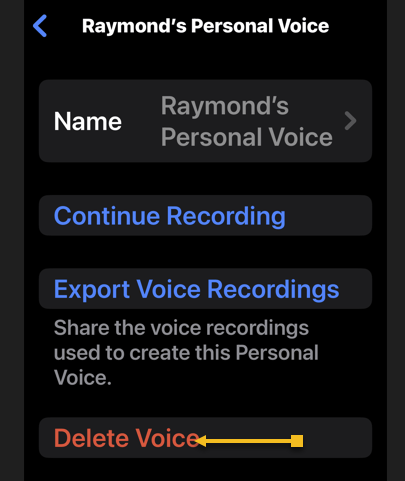
Tap Delete Voice, then tap Delete Voice And Recordings to confirm.
Refer to the below image:
Selecting to Delete Voice
Disclaimer
Technology is always changing. Rarely is there static tech for smartphones and desktops. Thus, the contents of this post are only valid at the time of writing. Blog posts older than six months may have directions incompatible with your device or OS. Hopefully, older post content will continue to work as advertised. Thank you for reading TechSavvy.Life for Technology at Work For You.
Quote For the Day
An ounce of action is worth a ton of theory.
Friedrick Engels
X (Tweeter) Info
You are finished. Please feel free to share this post! One way to share is via Twitter.
Just click the Tweet icon below. This will launch Twitter where you click its icon to post the Tweet.
Checkout TechSavvy.Life for blog posts on smartphones, PCs, and Macs! You may email us at contact@techsavvy.life for comments or questions.
Was this post helpful? We would love to hear your comments. Do you have a computer or smart device tech question? I will do my best to answer your inquiry. Just send an email to contact@techsavvy.life. Please mention the device, app, and version you are using. To help us out, you can send screenshots of your data related to your question.
The iPhone/iPad now has a hidden feature called Screen Distance, found in iOS/iPadOS 17 or higher, designed to reduce eye strain by detecting when the device is held too close to your face.
RAYMOND OGLESBY @RaymondOglesby2 June 25, 2024 – 4 minutes read time
This is for the iPhone/iPad using iOS or iPadOS 17 or greater. Screenshots are from iPhone 14 Pro running iOS 17.5.1
The iPhone/iPad has a hidden display feature introduced in iOS/iPadOS 17 that everyone with an iPhone/iPad should start using. Screen Distance is designed to help reduce eye strain caused by holding your phone too close to your face. Let’s explore this feature.
What is Screen Distance
Viewing something like a device or book too closely for an extended period can increase eye strain and the risk of myopia. The Screen Distance feature in Screen Time uses the TrueDepth camera to detect when you hold your iPhone/iPad closer than 12 inches for an extended period and encourages you to move it farther away. Screen Distance can help children engage in healthy viewing habits that can lower their risk of myopia and can give people of all ages the opportunity to reduce digital eyestrain.
Enable Screen Distance
First, open Settings. Refer to the below image:
Accessing Settings
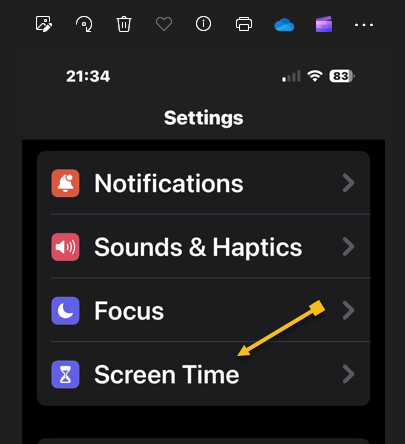
Next, tap the Screen Time option. See the below image:
Selecting the Screen Time option
Now, tap the Screen Distance option. See the following image:
Selecting the Screen Distance option
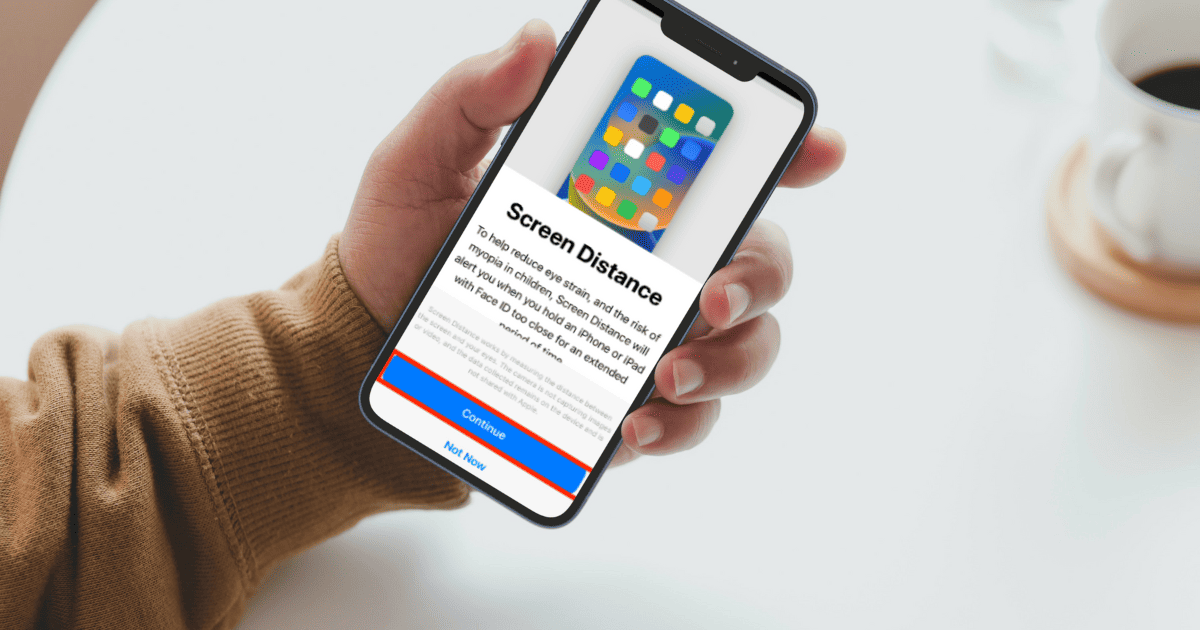
Next, an informational screen will be displayed about Screen Distance. Just tap the Continue button. Refer to the below image:
Notification screen
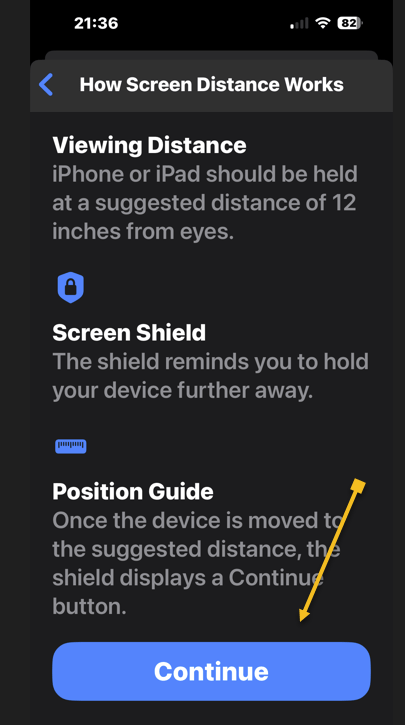
Now, another informational screen about “How Screen Distance Works” will be shown. Once again, tap the Continue button. See the below image:
Notification screen
Next, toggle the Screen Distance to ON. See the following image:
ToggleScreen Distancer to ON
If you are too close to your iPhone/iPad, it will pop up a notification splash screen interrupting whatever you are doing at the moment. Refer to the below image:
Screen Too Close notification
To readjust the Screen Distance feature, move your iPhone/iPad at least 12 inches from your face. A new notification splash screen will appear allowing you to proceed by tapping the Continue button. See the below image:
Screen Distance notification screen
Once you activate this feature, your iPhone/iPad Face ID sensors take about five minutes to work.
Considering how easy it is to hold your phone up to your face without thinking about it, this feature can be really handy for people who want to help reduce the strain on their eyes.
Of course, if you have trouble reading, you may find that Screen Distance is more annoying than helpful, especially if you prefer to keep your phone close to your face. If so, go back and toggle the Screen Distance feature to OFF.
Disclaimer
Technology is always changing. Rarely is there static tech for smartphones and desktops. Thus, the contents of this post are only valid at the time of writing. Blog posts older than six months may have directions incompatible with your device or OS. Hopefully, older post content will continue to work as advertised. Thank you for reading TechSavvy.Life for Technology at Work For You.
Quote For the Day
Being realistic is the most common path to mediocrity.
-Will Smith
Tweet Info
Congratulations, you are finished. Please feel free to share this post! One way to share is via Twitter.
Just click the Tweet icon below. This will launch Twitter where you click its icon to post the Tweet.
Checkout TechSavvy.Life for blog posts on smartphones, PCs, and Macs! You may email us at contact@techsavvy.life for comments or questions.
Was this post helpful? We would love to hear your comments. Do you have a computer or smart device tech question? I will do my best to answer your inquiry. Just send an email to contact@techsavvy.life. Please mention the device, app, and version you are using. To help us out, you can send screenshots of your data related to your question.
This post provides guidance for iPhone users on enabling the speaker for all calls and setting up the Auto-Answer feature.
RAYMOND OGLESBY @RaymondOglesby2 June 18, 2024 -3 minutes read time
This is for the iPhone with iOS 17 or above. Screenshots are from iPhone 14 Pro running iOS 17+
If you like talking on the phone for long periods but do not love holding the iPhone to your face for hours, you may prefer to use the speaker. You can turn on a setting that automatically makes all calls through your speaker. Also, you can set the Auto-Answer feature to answer your phone within a certain time frame. This is useful for those working using a headset. Let’s explore these features.
Using Your Speaker
First, head to
Settings > Accessibility > Touch
Refer to the below image:
Accessing the Touch option
Next, select Call Audio Routing. See the below image:
Selecting the Call Audio Routing option
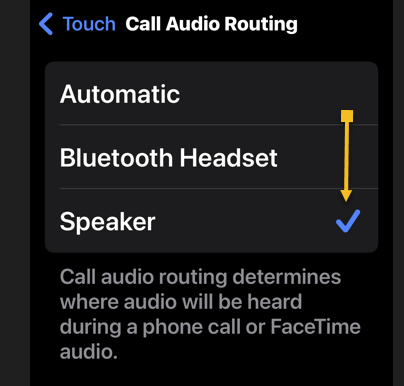
Now, tap the Speaker option. See the following image:
Selecting the Speaker for all calls
Next, when you get a phone call, it will automatically use the speaker when you answer!
If you have paired your iPhone to your car audio system, we recommend leaving the Speaker setting to Automatic. This will send/receive your calls through your audio system speakers.
Auto-Answer
While you are here, you can set the Auto-Answer feature and the time to pick up a call.
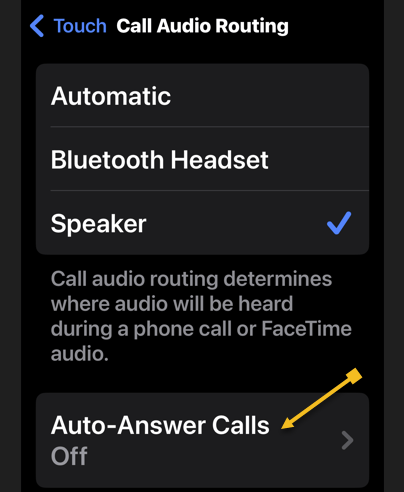
First, tap the Auto-Answer Calls option. Refer to the below image:
Accessing the Auto-Answer Calls option
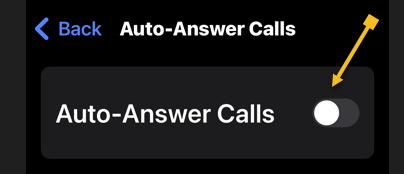
Next, tap the Auto-Answer Calls toggle to ON. See the below image:
Toggle the Auto-Answer Calls to ON
Now, set your time duration to auto-answer a call (default is 3 seconds). See the following image:
Setting time duration for Auto-Answer
Disclaimer
Technology is always changing. Rarely is there static tech for smartphones and desktops. Thus, the contents of this post are only valid at the time of writing. Blog posts older than six months may have directions incompatible with your device or OS. Hopefully, older post content will continue to work as advertised. Thank you for reading TechSavvy.Life for Technology at Work For You.
Quote For the Day
Logic will get you from A to B. Imagination will take you everywhere.
Albert Einstein
Tweet Info
Just click the Tweet icon below. This will launch Twitter where you click its icon to post the Tweet.
Just click the Tweet icon below. This will launch Twitter where you click its icon to post the Tweet.
Checkout TechSavvy.Life for blog posts on smartphones, PCs, and Macs! You may email us at contact@techsavvy.life for comments or questions.
Was this post helpful? We would love to hear your comments. Do you have a computer or smart device tech question? I will do my best to answer your inquiry. Just send an email to contact@techsavvy.life. Please mention the device, app, and version you are using. To help us out, you can send screenshots of your data related to your question.
This post discusses how to identify legitimate calls and avoid scammers, addressing phone verification, spoofed numbers, and web searching. It provides options like reverse phone lookup websites and tools like WhoCallsMe, Spy Dialer, PeopleFinders, and USPhoneBook. It also suggests utilizing mobile carrier solutions, reporting to the FTC, and the National Do Not Call Registry to combat spam calls.
This is for any browser on a desktop, laptop, or smartphone. Screenshots are from Google Chrome on Windows 10
The phone rings and it’s a number you do not recognize. Or perhaps an unknown number shows up in your missed calls. You are curious but do not want to pick up or call back if it’s a telemarketer or scammer. Instead of playing robocall roulette let’s explore five ways to see who is calling before you engage.
Legit Verses Scam Calls
You may have noticed that America has a problem with scam calls. Scammers took $10 billion from unsuspecting victims in 2023, and it’s hard to see the problem going away anytime soon. If you get a call, there are a few ways to tell if it’s legit or not.
What does the phone say? When a call comes in, look for a displayed number and location. If your phone is not showing any information and says something like Unknown, chances are there’s a scammer on the other end. Anyone can hide their number, but it’s best to let this one go to voicemail and call back if it’s someone you know. If the phone says Scam Likely, it’s typically correct; just ignore the call.
Look for verification. Carriers have started verifying phone numbers when you receive a call. Google’s phone app also adds a badge on incoming calls that can be attached to a business. Unfortunately, this does not verify every call from a legitimate business or weed out legitimate businesses that use robocalls.
Watch out for spoofed numbers. Have you ever gotten a call from what looks to be your own phone number, only it’s a few numbers off? Do not pick those calls up; scammers like to spoof phone numbers and trick you into picking up. They think you are more likely to pick up if the call is from your area code or someone you know.
Note! We recommend ou not click or tap on any icon off the main screen. These buttons launch web sites that may introduce malware or be blocked by your browser security. Also, any screen that has flashing items, immediately exit the screen.
If you click or tap on a button that starts a scanning process for addresses,emails, public information, criminal records, etc., the process will take several minutes. On the desktop, you can stop the process by hitting Cntl-Alt-Del keys, then select Task Manger. Next, right=-click on your browser entry and select End Task. Your browser will exit stopping the scanning process.
Search the Web
If you want to quickly know whether a caller is legit or a scammer, do a quick web search. As a rule of thumb, if the search results are primarily reverse phone lookup websites, it’s safe to say other people have received unwarranted calls from that same number and are reporting it to warn others. Refer to the below image:
Search the web
Reverse Phone Lookup
Speaking of reverse phone lookups, if you want to do some digging about a certain phone number, many websites can help you. You usually have to pay to get any worthwhile information, but there are a few tools that can help you for free. Even though they are free if you want additional information about the phone number, the sites charge for their service.
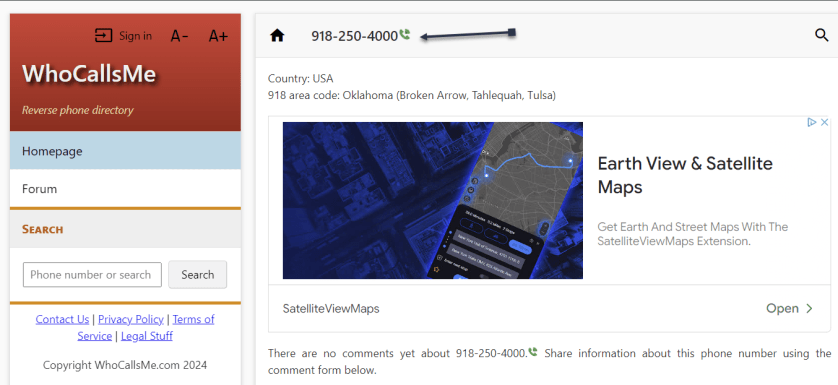
whocallsme
At WhoCallsMe, users can report their experiences with specific phone numbers. Enter a number and the website will tell you where the area code is from. You can then enter your own report or view what others say about it. See the below image:
WhoCallsMe main screen
spy dialer
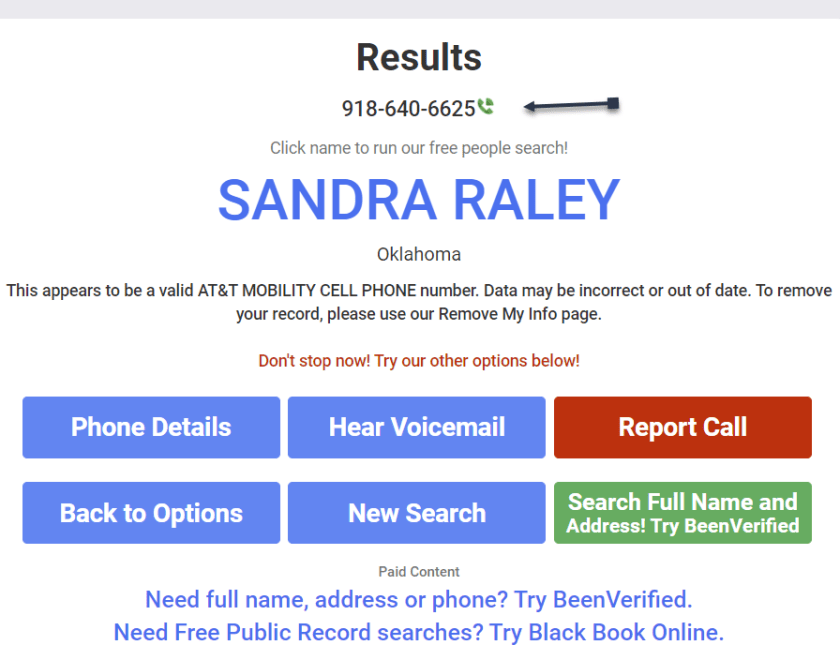
Spy Dialer allows you to search for phone numbers, names, addresses, and emails. Enter a phone number, then choose if you want to look up any linked names or photos, listen to the number’s outbound voicemail, or confirm if the number is spam or not. Spy Dialer can tell you with whom the number is registered, their general location, and whether or not the number has been reported as spam before.
For more information, click Phone Details to see how long the line has been in service and if the number is spoofed. Choose Hear Voicemail to get the caller’s outbound voicemail, if available. You can click Report Call to file a complaint with Spy Dialer.
We recommend this site over the others because it’s faster and offers more information. See the following image:
Spy Dialer main screen
peoplefinders
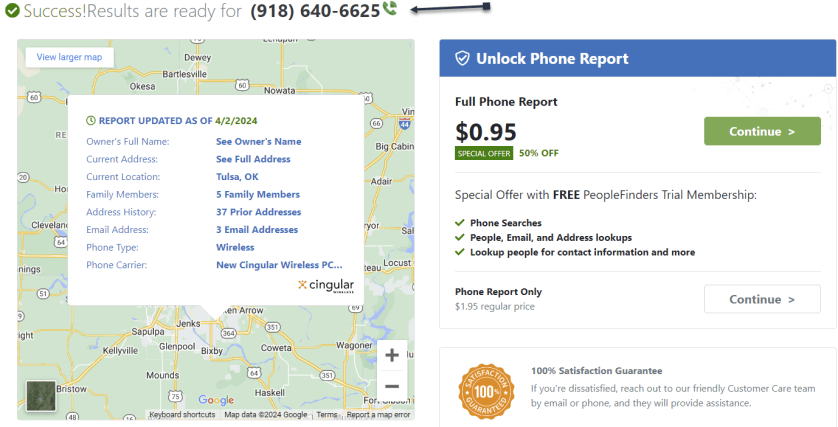
PeopleFinders allows you to look up a phone number, name, address, or email. Enter a phone number into the search bar to get the caller’s general location, carrier, and phone type. More revealing information, such as the caller’s full name and address, is hidden requiring a fee. Refer to the below image:
PeopleFinders main screen
usphonebook
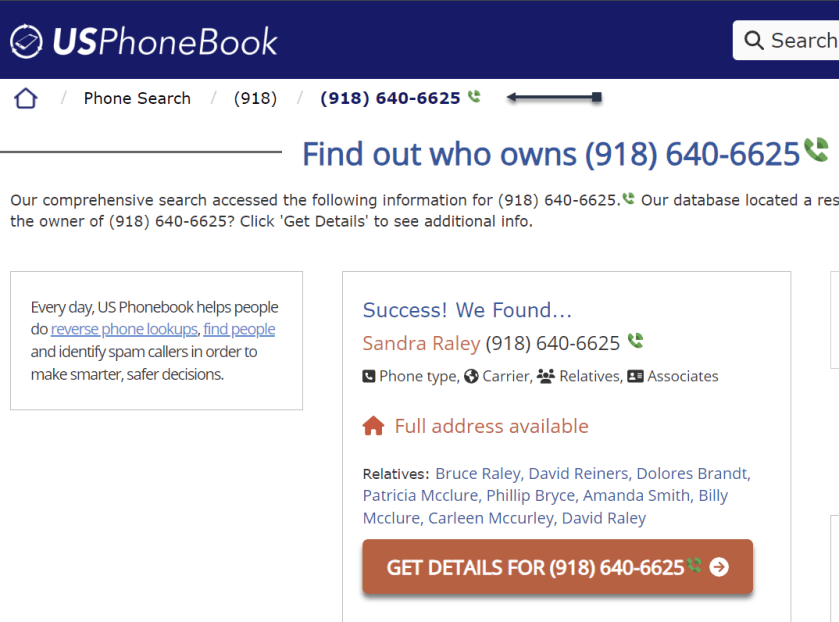
You can look up phone numbers, names, and addresses at USPhoneBook, though this works better for identifying individuals rather than businesses. Enter a number to find the person connected to it. The site will display a list of people who may be related to the person. You can then mark the number as safe or spam. Keep in mind that these listings can be outdated.
Click Get Details to view extra information about the person. This will include their age, current (and former) addresses, phone numbers associated with them, a list of relatives and associates, and even related email addresses. See the below image:
USPhoneBook main screen
What To Do Next
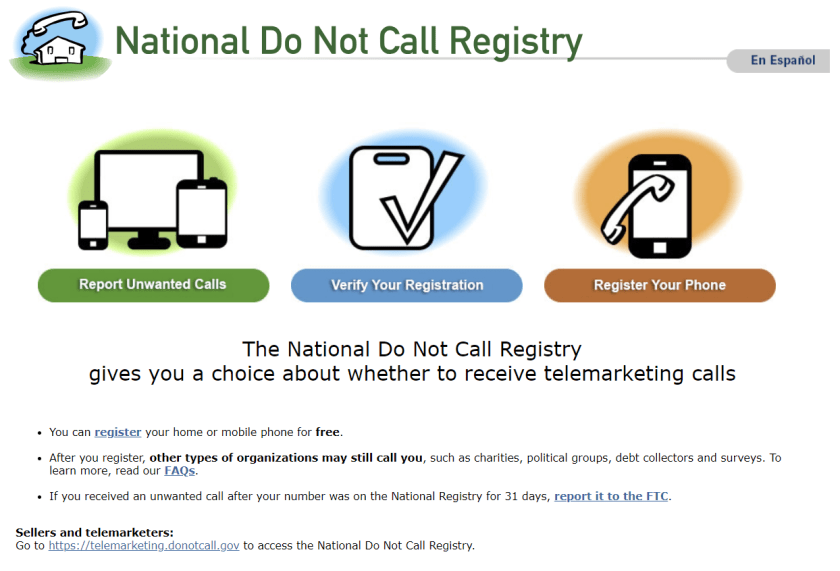
One option is to look at your mobile carrier’s anti-spam solutions for stopping spam calls and robo texts. Additionally, apps likeRoboKiller and Truecaller help keep the spam callers at bay. You can also report unwanted calls to the FTC and register your number with the National Do Not Call Registry, though those wishing to do you harm will undoubtedly ignore this. See the following image:
National Do Not Call Registry main screen
Disclaimer
Technology is always changing. Rarely is there static tech for smartphones and desktops. Thus, the contents of this post are only valid at the time of writing. Blog posts older than six months may have directions incompatible with your device or OS. Hopefully, older post content will continue to work as advertised. Thank you for reading TechSavvy.Life for Technology at Work For You.
Quote For the Day
. Motivation is what gets you started. Habit is what keeps you going.
Jim Rohn
Tweet Info
You are finished. Please feel free to share this post! One way to share is via Twitter.
Just click the Tweet icon below. This will launch Twitter where you click its icon to post the Tweet.
Checkout TechSavvy.Life for blog posts on smartphones, PCs, and Macs! You may email us at contact@techsavvy.life for comments or questions.
Was this post helpful? We would love to hear your comments. Do you have a computer or smart device tech question? I will do my best to answer your inquiry. Just send an email to contact@techsavvy.life. Please mention the device, app, and version you are using. To help us out, you can send screenshots of your data related to your question.
Low Power Mode on iPhone reduces features to save battery. To enable, go to Settings>Battery and toggle Low Power Mode on, or add it to Control Center for quick access.
This is for the iPhone. Screenshots are from iPhone 14 Pro running iOS 17.5+
When Low Power Mode is enabled, the Battery icon at the top of your phone will appear yellow, and features like mail fetch, background app refresh, automatic downloads, and some visual effects will be reduced or disabled until it is turned off. There are two primary ways to turn on Low Power Mode.
Use Settings
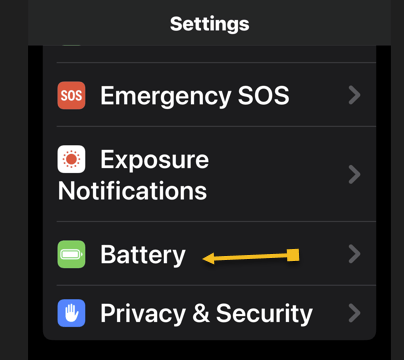
First, open Settings and tap the Battery option. Refer to the below image:
Selecting the Battery option
Now, toggle the Low Power Mode to ON. See the below image:
Turning the Low Power Mode to ON
Use the Control Center
If you want quick and easy access to the Low Power Mode setting but do not want to go into your Settings and scroll to access it, let’s add it to your Control Center.
First, open Settings and tap the Control Center option. See the following image:
Selecting the Control Center option
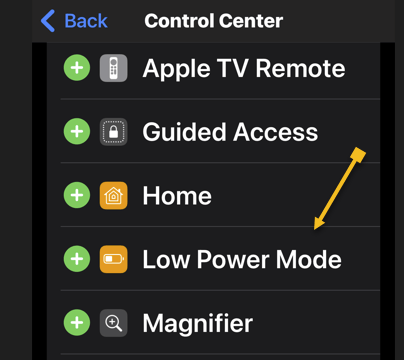
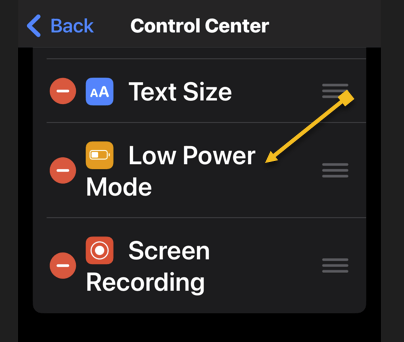
Next, tap Low Power Mode to add it to your Control Center. (If you see a red minus sign instead of a green plus side here, it means Low Power Mode is already in your Control Center.) Refer to the below image:
Selecting to add Low Power Mode to Control Center
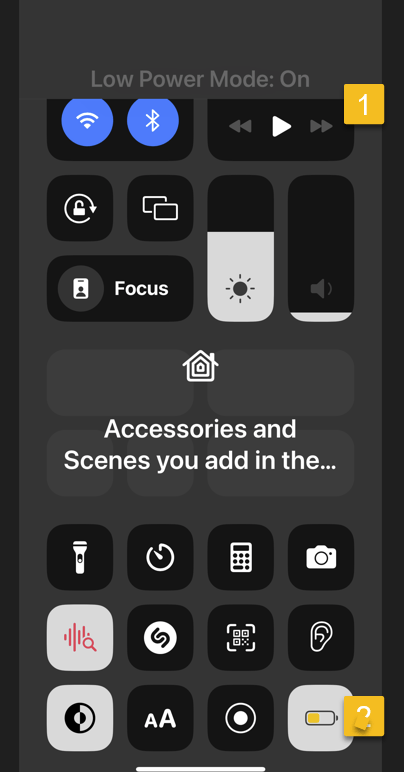
When added, the option will be in your Control Center. See the below image:
Low Power Mode added to Control Center
Next, swipe down from the top right of the screen. See the following image:
Accessing the Control Center by swiping down
Now, tap the Battery icon to toggle Low Power ModeON or OFF. At the top of your screen, you will see the option status. Refer to the below image:
Toggle on pr pff Low Power Mode from the Control Center
What Does Low Power Mode Do
Your iPhone’s Low Power Mode does many things to save battery power. It automatically changes some settings to save battery power, like disabling the automatic fetching of new mail, reducing your screen brightness, and automatically locking the phone and powering off its display more quickly. Apps can detect low power mode is enabled and choose to disable animations and other battery-hungry features, too.
Motion effects and animated wallpapers are also disabled. Background activities and networking are paused to prevent unnecessary power drain in the background. Your iPhone even automatically reduces the performance of its CPU and GPU, which makes it perform a bit slower but saves battery life. Tests have found that this slows iPhones by about 40 percent when Low Power Mode is enabled.
By entering Low Power Mode you will save some battery life until you can get to your charger.
Disclaimer
Technology is always changing. Rarely is there static tech for smartphones and desktops. Thus, the contents of this post are only valid at the time of writing. Blog posts older than six months may have directions incompatible with your device or OS. Hopefully, older post content will continue to work as advertised. Thank you for reading TechSavvy.Life for Technology at Work For You.
Quote For the Day
If you can’t do great things, do small things in a great way.
Napoleon Hill
Tweet Info
That’s it. Please feel free to share this post! One way to share is via Twitter.
Just click the Tweet icon below. This will launch Twitter where you click its icon to post the Tweet.
Checkout TechSavvy.Life for blog posts on smartphones, PCs, and Macs! You may email us at contact@techsavvy.life for comments or questions.
Was this post helpful? We would love to hear your comments. Do you have a computer or smart device tech question? I will do my best to answer your inquiry. Just send an email to contact@techsavvy.life. Please mention the device, app, and version you are using. To help us out, you can send screenshots of your data related to your question.
This post provides tips for iPhone users to quickly navigate to the top of any screen using simple gestures. It also explains how to use Reachability to access the top half of the screen with one hand.
This is for the iPhone. Screenshots are from iPhone 14 Pro running iOS 17.4
Did you know that a simple iPhone gesture can save your thumb the workout of scrolling back to the top of most apps? Across all apps, pages, and platforms, this simple tip will automatically return you to the top of any screen. Whether you have been scrolling Instagram or Facebook, or you have been searching in the Settings app, just tap once at the top of the iPhone’s screen to snap back to the beginning.
We are unsure why we forgot this hidden gesture. This is the BEST iPhone post we have written out of 100-plus posts on the iPhone.
Jump to the Top of the Screen
First, open any app, and simply tap the top of the iPhone screen anywhere from the Time to Battery Indicator, known as the Dynamic Island area. We are using the Settings app for our example. Refer to the below image:
Tapping to jump to the top of the Settings screen
Next, it should return you back to the top immediately. Be sure when you are doing this, you are tapping at the level of the Time or Battery Indicator. If you tap just below, nothing will happen. See the below image:
You are now at the top of the Settings screen
Now, based on your iPhone model:, here is where to tap:
iPhone 15 or iPhone 14 Pro — you can tap on either side of the Dynamic Island and the phone will instantly scroll up.
iPhone X or any of the models with the notch—you can tap on either side of the notch.
If you have an older iPhone without Dynamic Island or a notch, you can achieve the same thing by tapping the Clock on the status bar.
It’s that simple! This works in nearly any app with screens you can scroll down on, whether you’ve scrolled through endless emails, a playlist in music, or photos. etc. Now go give that poor thumb a massage.
Reach the Top of the Screen
When you use an iPhone with one hand in Portrait orientation, you can use Reachability to lower the top half of the screen so it’s within easy reach of your thumb.
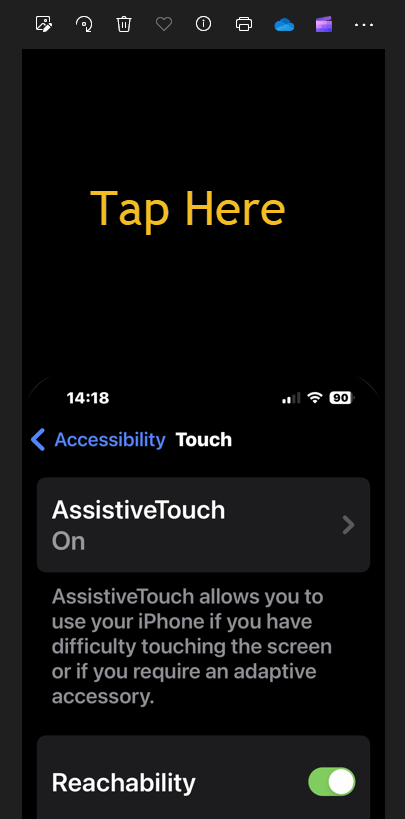
Head to:
Settings > Accessibility > Touch > Reachability
and toggle to ON. See the following image:
Turning on the Reachability option
To lower the top half of the screen, do one of the following:
On an iPhone with Face ID: Swipe down on the bottom edge of the screen.
On an iPhone with a Home button: Lightly double-tap the Home button.
Refer to the below image:
Swiping down to reveal the top half of the screen
To return to the full screen, tap the upper half of the screen or just wait a few seconds and the screen will return to full screen. See the below image:
Tapping the upper part of the screen to return to the full screen
Jumping in the Photos App
In the Photos app, use the above to jump to the top. To return to the bottom, tap the Library icon or the All Photos button.
Note! If you have thousands of photos, tapping the All Photos button is faster.
See the following image:
Tapping the Library icon or All Photos button to return to the bottom
Disclaimer
Technology is always changing. Rarely is there static tech for smartphones and desktops. Thus, the contents of this post are only valid at the time of writing. Blog posts older than six months may have directions incompatible with your device or OS. Hopefully, older post content will continue to work as advertised. Thank you for reading TechSavvy.Life for Technology at Work For You.
Quote For the Day
Success is liking yourself, liking what you do, and liking how you do it.
-Maya Angelou
Tweet Info
You are finished. Please feel free to share this post! One way to share is via Twitter.
Just click the Tweet icon below. This will launch Twitter where you click its icon to post the Tweet.
Checkout TechSavvy.Life for blog posts on smartphones, PCs, and Macs! You may email us at contact@techsavvy.life for comments or questions.
Was this post helpful? We would love to hear your comments. Do you have a computer or smart device tech question? I will do my best to answer your inquiry. Just send an email to contact@techsavvy.life. Please mention the device, app, and version you are using. To help us out, you can send screenshots of your data related to your question.
This post provides a guide to viewing the desktop version of a website on an iPhone, including how to switch between desktop and mobile versions and enabling Reader Mode.
Viewing the desktop version of a website can sometimes help you find something unavailable on the mobile version. Of course, the iPhone always defaults to the mobile site, but there is a way to force Safari to load the desktop version. Let’s check out how to request a desktop site on iPhone.
This is for the iPhone running iOS 17+. Screenshots are from iPhone 14 Pro running iOS 17+
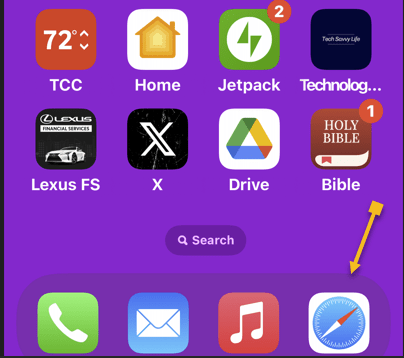
First, open Safari. Refer to the below image:
Selecting the Safari app
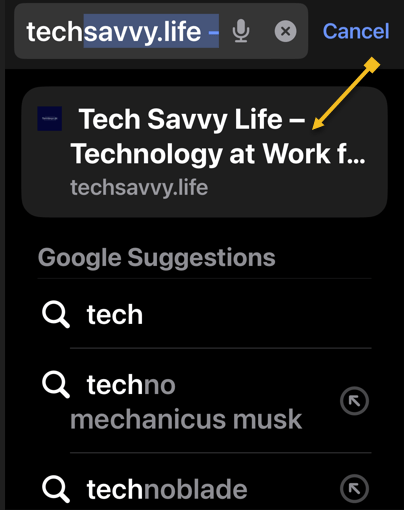
Next, search and open a webpage. We are opening TechSavvy.Life. See the below image:
Opening a webpage in Safari
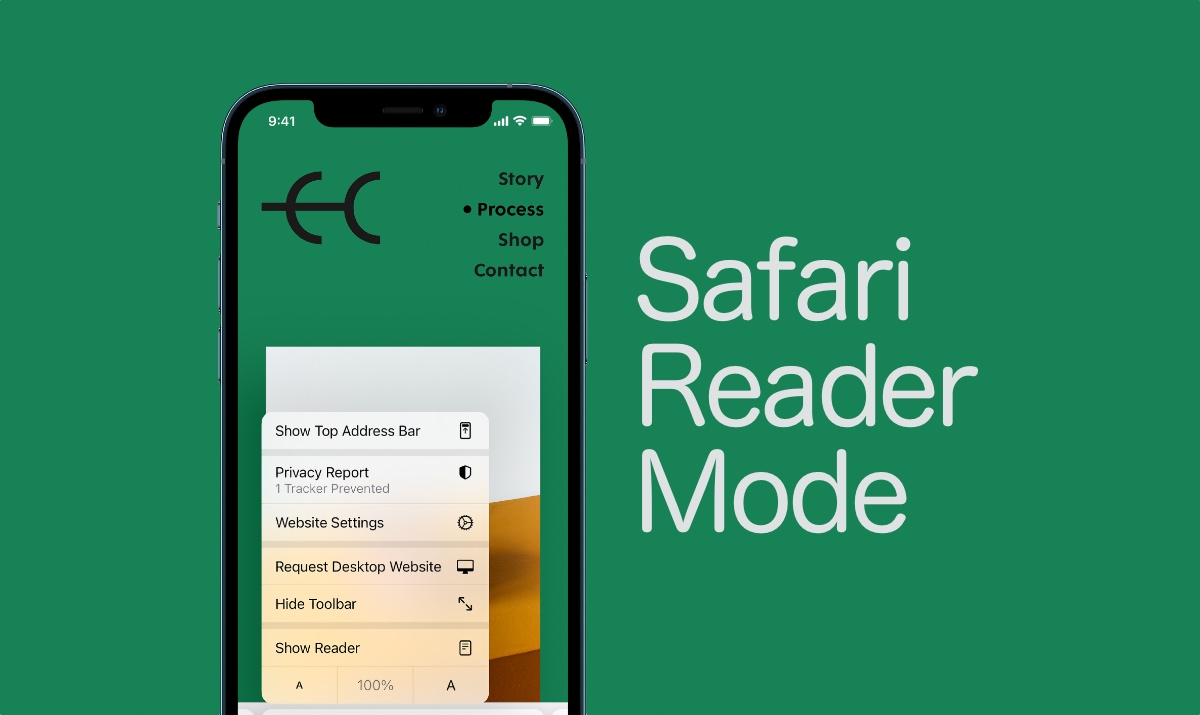
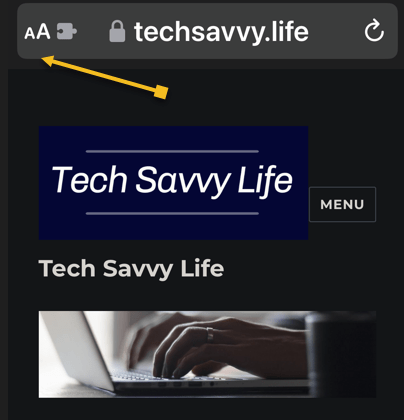
Now, tap the Reader Mode icon (the aA icon) in the upper left corner.
Note! For whatever reason. not all websites support the Reader view. Most likely because they do not want you to miss their advertisements.
See the following image:
Selecting the Reader Mode icon
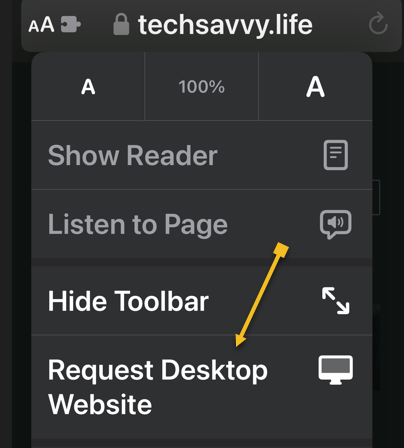
Next, tap the Request Desktop Website option. Refer to the below image:
Selecting the Request Desktop Website option
You can now browse the desktop version of the website, taking advantage of any features that do not exist on the mobile site.
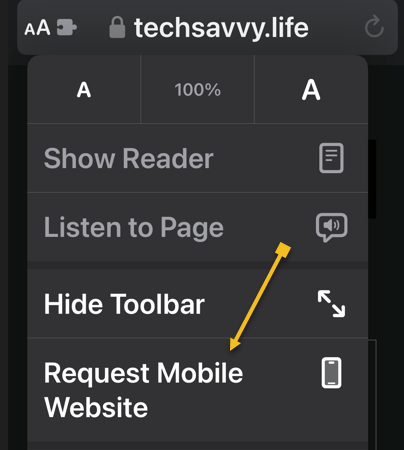
Now, if you want to switch back to the mobile site, with the webpage open, tap the Request Mobile Website option. See the below page:
Selecting the Request Mobile Website option
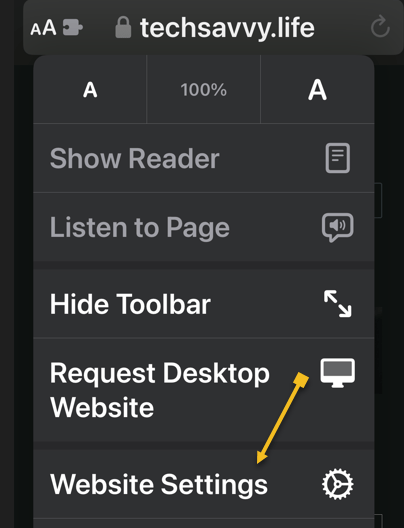
Next, you may want to view the webpage automatically in Reader Mode. If so, while viewing the webpage, tap the Website Settings option. See the following image:
Selecting the Website Settings option
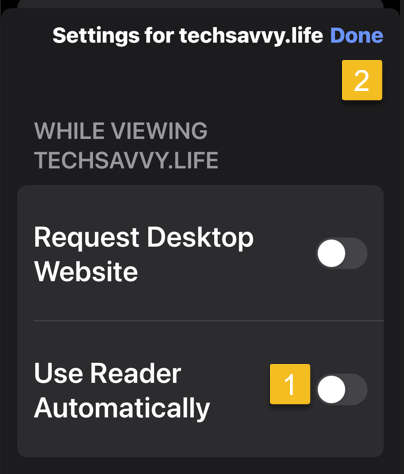
Now, toggle Use Reader Automatically to ON then tap Done, Refer to the below image:
Setting the Use Reader Automatically toggle to ON
Disclaimer
Technology is always changing. Rarely is there static tech for smartphones and desktops. Thus, the contents of this post are only valid at the time of writing. Blog posts older than six months may have directions incompatible with your device or OS. Hopefully, older post content will continue to work as advertised. Thank you for reading TechSavvy.Life for Technology at Work For You.
Quote For the Day
Success is not final, failure is not fatal: it is the courage to continue that counts.
Winston Churchill
Tweet Info
You are finished. Please feel free to share this post! One way to share is via Twitter.
Just click the Tweet icon below. This will launch Twitter where you click its icon to post the Tweet.
Checkout TechSavvy.Life for blog posts on smartphones, PCs, and Macs! You may email us at contact@techsavvy.life for comments or questions.
Please feel free to leave a comment. I would love to hear from you. Do you have a computer or smart device tech question? I will do my best to answer your inquiry. Just send an email to contact@techsavvy.life. Please mention the device, app, and version you are using. To help us out, you can send screenshots of your data related to your question.
Author’s E-Book
You can access the E-book from a Kindle device, or the Kindle App for a desktop or smartphone. The apps are free.
The author’s Vietnam eBook on the Battle for Tra Bong Vietnam: Events and Aftermath