Quick Guide: Change Wi-Fi on iPhone Easily

The post explains how to efficiently connect to Wi-Fi on iPhones and iPads using the Control Center, offering a quicker alternative to the Settings app. It details the steps for connecting, changing, and disconnecting from Wi-Fi networks. The content emphasizes the importance of an up-to-date iOS for compatibility.

RAYMOND OGLESBY @RaymondOglesby2
April 21, 2026 – 3 minutes read time

Do you know how to connect to Wi-Fi, change the network you are using, and how to turn off Wi-Fi directly from your iPhone or iPad’s Control Center? This method is much quicker than sorting through the Settings app to find available networks.

Connecting to nearby Wi-Fi networks on iPhone is relatively simple. You can do it from the Settings app, or if you have the setting enabled, a pop-up will sometimes appear, asking if you would like to connect to a nearby network. But the quickest way to get Wi-Fi is from your iPhone’s Control Center: Let’s explore how this is done.

  • Quickly open your iPad and iPhone Wi-Fi Settings to turn on or turn off Wi-Fi.
  • Easily access the Wi-Fi network when you arrive at a friend’s house to turn on Wi-Fi on your iPhone or iPad.

This tip was performed on an iPhone 17 Pro running iOS 26.4.

Click here to learn how to update your iPhone to the latest iOS version.

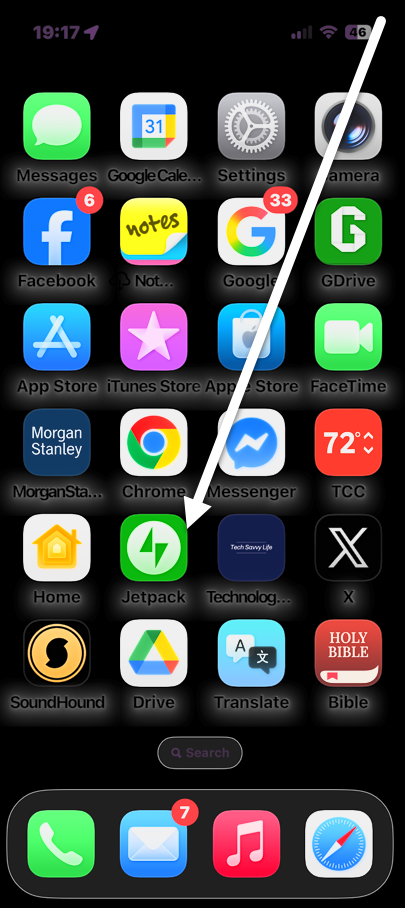
First, swipe down from the upper-right corner to open the Control Center. Refer to the image below:
WiFi 1
Accessing the Control Center

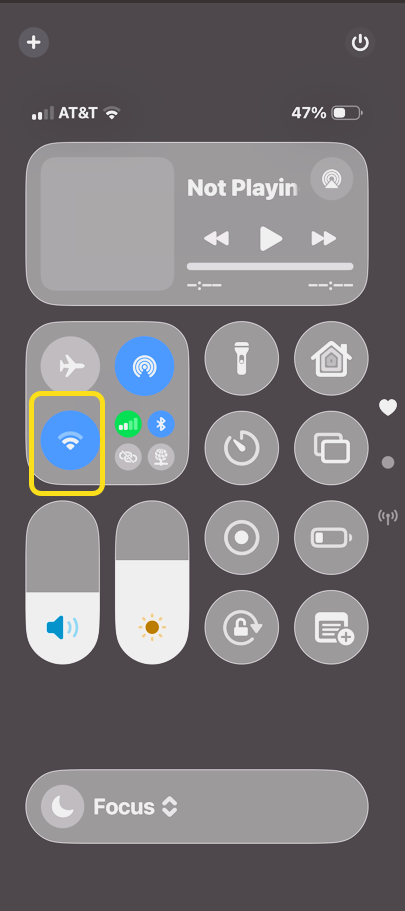
Next, tap and hold the Wi-Fi icon. See the image below:
WiFi 2
Selecting the Wi-Fi icon

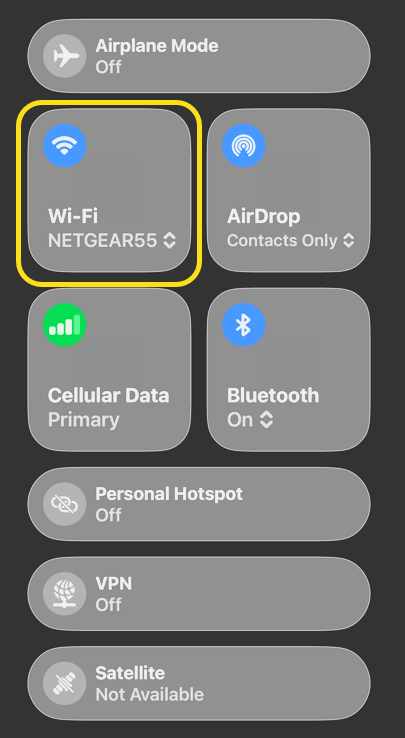
Now, tap the Wi-Fi option. See the following image:
WiFi 3
Selecting the Wi-Fi option

Next, select your Wi-Fi network. Refer to the image below:
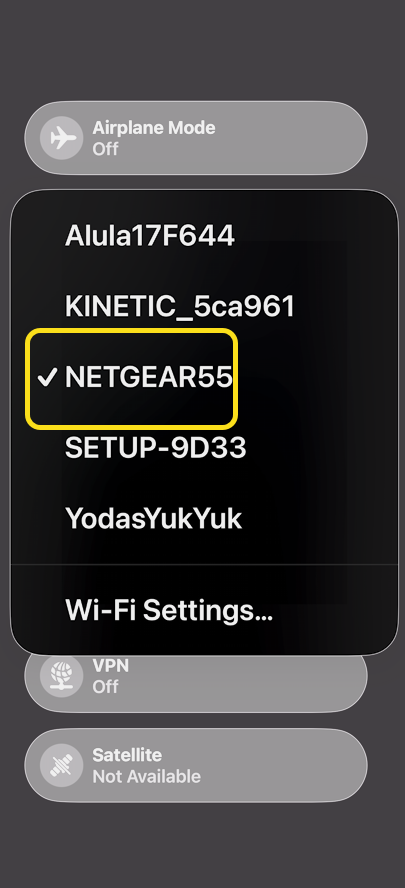
WiFi 4
Selecting a Wi-Fi network.

Now you know how to connect to the internet using a Wi-Fi network. You might need to enter a password before you can connect your iPhone to Wi-Fi, but your device will remember the username and password once you’ve joined a network, so all you will need to do next time is tap the name in the Wi-Fi menu to join. Any time you’d like to change the Wi-Fi network you are using, follow the same steps, and tap a different option on the Wi-Fi network list. You can also use these steps to disconnect your iPhone or iPad from a Wi-Fi network.

Now you know how to quickly get a Wi-Fi connection on your iPhone or iPad.

Technology is constantly evolving, and smartphone and desktop tech rarely remains static. Therefore, the information in this post is only accurate as of the date it was written. Blog posts that are older than six months may contain instructions that are no longer compatible with your device or operating system. We hope that the content from previous posts continues to function as intended. Thank you for reading TechSavvy.Life, where technology works for you.

Technology… the knack of so arranging the world that we don’t have to experience it.

– Max Frisch

That’s it. Please feel free to share this post! One way to share is via Twitter.

Just click the Tweet icon below. This will launch Twitter where you click its icon to post the Tweet.

Checkout TechSavvy.Life for blog posts on smartphones, PCs, and Macs! You may email us at contact@techsavvy.life for comments or questions.

We value your feedback! Was this post helpful? Please share your comments with us. If you have a tech question related to your computer or smart device, feel free to reach out. Just send an email to contact@techsavvy.life, and be sure to include the device, app, and version you are using. To assist us further, you can also attach screenshots related to your inquiry.

Author’s eBook

The author’s Vietnam eBook, “Battle for Tra Bong Vietnam: Events and Aftermath,” is available on Kindle devices and the Kindle App for desktop, laptop, and smartphone. The apps are free.

The author’s Vietnam eBook on the Battle for Tra Bong Vietnam: Events and Aftermath

Maximize Your iPhone Control Center Layout in iOS 18

The Control Center on iOS 18 and iPadOS 18 simplifies access to frequently used features by allowing customization and multiple screens. Users can manage Wi-Fi, Bluetooth, volume, and more, enhancing organization. By arranging controls and adding shortcuts, users can optimize their experience, making navigation more efficient and personalized.

RAYMOND OGLESBY @RaymondOglesby2
December 3, 2024 – 6 minutes read time

For quick access to frequently used apps and settings, Control Center is just a swipe or click away. And with iOS 18 and iPadOS 18, it’s even easier to customize and use.

Navigating the settings on your iPhone, iPad, and Mac can be difficult. That’s where the Control Center comes in, providing quick access to a variety of features that might otherwise be hidden within the device’s menus. From the Control Center, you can easily adjust settings for Wi-Fi, Bluetooth, and AirDrop, as well as control brightness and volume. It also allows you to manage Focus mode, access music controls, switch to dark mode, and enable screen mirroring. Additionally, you can customize the Control Center by adding or removing features as needed.

For many years, the Control Center on your iPhone and iPad was restricted to a single screen. If you wanted to change the controls, you had to navigate into the settings of your device. However, with the introduction of iOS 18 and iPadOS 18, you can now set up multiple screens and customize them directly within the Control Center. Let’s explore how to personalize the updated Control Center.

  • Organize the Control Center so that your most frequently used controls are easily accessible at the front.
  • Maintain a tidy and organized Control Center..

This tip is for iPhones running iOS 18 or later. The screenshots are from iPhone 14 Pro running iOS 18+.

Click here to learn how to update your iPhone to the latest iOS version.

First, swipe down from the upper right edge to open the Control Center. Refer to the below image:

CC 1
Swiping down to access Control Center

Next, rap and hold in an empty area. See the below image:

CC 2
Taping any empty area

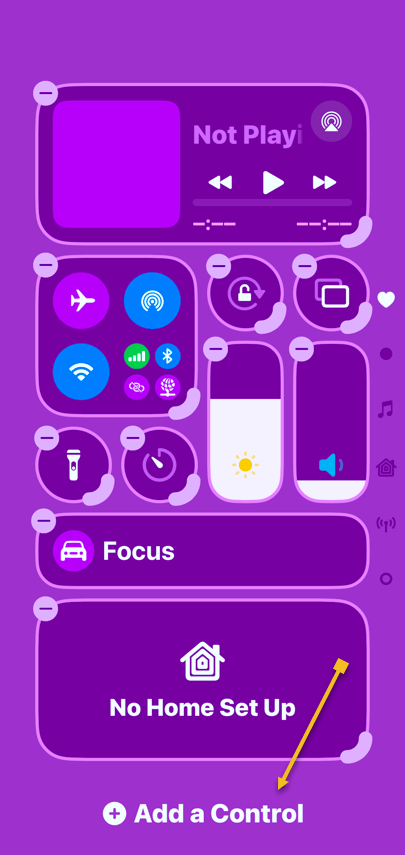
Now, the controls will have minus symbols next to them, indicating that you are in Edit mode. Tap Add a Control to get started. See the following image:

CC 3
Selecting Add a Control button

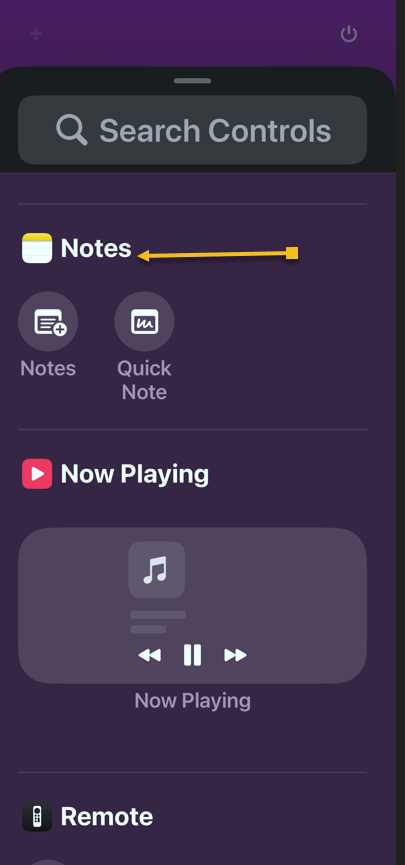
Next, find a control you want easy access to and tap on it to add it to the Control Center. Refer to the below image:

CC 5
Selecting to add the Notes app

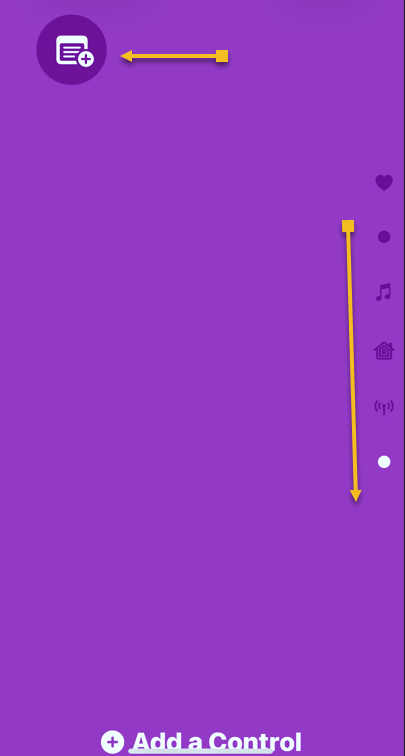
Now, if your first page becomes too full, a second page will be automatically created. You can swipe up and down to navigate between the Control Center pages. Each page is indicated by a dot on the far right side of the screen. Please note that we have a total of six pages. See the image below:

CC 5
Notes app has been added

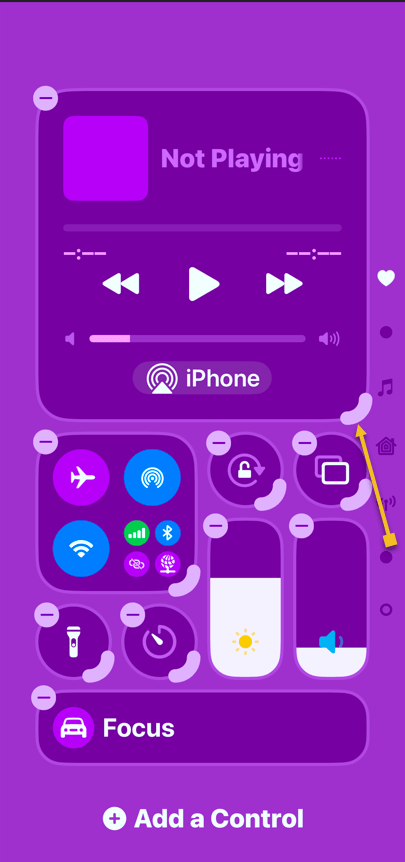
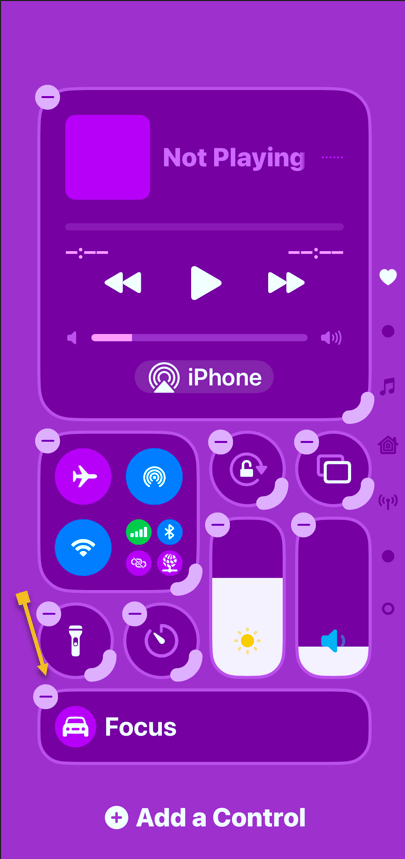
Next, to change the size of a control, tap and drag the corner. Keep in mind that some controls only have one size. See the following image:

CC 6
Selecting Playback control to resize

Now, view your resized Playback control. Refer to the below image:

CC 7
Playback control has been resized

Next, to remove a control, simply tap the minus symbol next to it. See the below image:

CC 8
Selecting to remove the Focus control

Now, you can place controls anywhere without worrying about order. Our Control Center has been rearranged from six pages to only three pages, as indicated by the dots on the right side. See the following image:

CC 9
Final Control Center

FAQ

  • Why does my iPhone say SOS in the top right corner?

If your iPhone cannot connect to a cellular network or Wi-Fi, it may display ‘SOS’ in the top right corner. This indicates that your device can only make emergency calls.

  • What does 5GUC mean?

5GUC stands for 5G Ultra Capacity. This is T-Mobile’s higher frequency 5G network. Other cellular providers have similar higher frequency networks with different names.

  • What are the icons on the top right of iPhone?

At the top of your iPhone screen, you will typically see the strength of your cellular network represented by bars. To the right of this, there will be an indicator showing 4G, LTE, 5G, or a similar symbol if you are connected to a cellular network. If you are connected to Wi-Fi, you will see a Wi-Fi symbol instead. Finally, you will also find the battery indicator for your iPhone.

  • What do the iPhone signal symbols mean?

The signal symbols indicate whether you are using cellular data or Wi-Fi, as well as the strength of the wireless connection.

That’s how to customize the Control Center on your iPhone. We recommend placing your most-used controls on the first page.

Technology is constantly evolving, and smartphone and desktop tech rarely remains static. Therefore, the information in this post is only accurate as of the date it was written. Blog posts that are older than six months may contain instructions that are no longer compatible with your device or operating system. We hope that the content from previous posts continues to function as intended. Thank you for reading TechSavvy.Life, where technology works for you.

 “The march of science and technology does not imply growing intellectual complexity in the lives of most people. It often means the opposite.”

– Thomas Sowell

You are finished with a revised Control Center. Please feel free to share this post! One way to share is via Twitter.

Just click the Tweet icon below. This will launch Twitter where you click its icon to post the Tweet.

Checkout TechSavvy.Life for blog posts on smartphones, PCs, and Macs! You may email us at contact@techsavvy.life for comments or questions.

We value your feedback! Was this post helpful? Please share your comments with us. If you have a tech question related to your computer or smart device, feel free to reach out. Just send an email to contact@techsavvy.life, and be sure to include the device, app, and version you are using. To assist us further, you can also attach screenshots related to your inquiry.

Author’s eBook

The author’s Vietnam eBook on the “Battle for Tra Bong Vietnam: Events and Aftermath” can be accessed from a Kindle device or the Kindle App for a desktop or smartphone. The apps are free.
The author’s Vietnam eBook on the Battle for Tra Bong Vietnam: Events and Aftermath