Set Up Emergency Info on Your iPhone Now

IRAYMOND OGLESBY @RaymondOglesby2
August 5, 2025 –7 minutes read time

NOTICE:

This is the most relevant and important blog post we have published to date. If you are an iPhone user, please setup this feature. For Android users, the steps are similar.

This post is a MUST READ to implement emergency access for yourself or others!!!

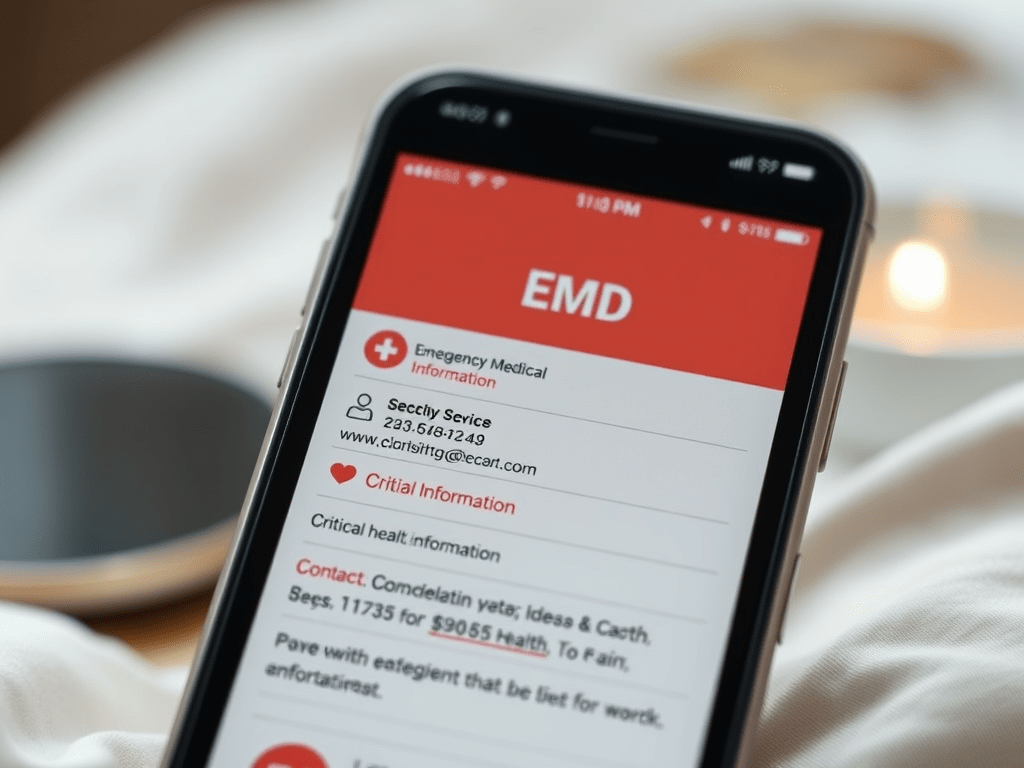
This simple tip could save your life: Make your emergency medical information and contact numbers visible on your locked phone so you are prepared if the worst happens.

What would happen if you were out in public and needed urgent care but could not communicate with first responders? Do you have an ID on you? Is there any way for them to know your drug allergies? Are you wearing a medical bracelet that indicates any major health issues? How will they call your emergency contacts? Your phone, even when it’s locked, could be your lifeline. 

There’s a way to put emergency information on your phone and make it accessible from the lock screen. It’s extremely important to do it, and everyone should know how to find this information in case someone near you has an emergency. Let’s explore how this is done

  • Help save your life in case of an emergency.
  • Make sure someone helping you in an emergency can access your critical health information and get in touch with your emergency contact(s).

System Requirements

This tip was performed on iPhone 14 Pro running iOS 18.5

Click here to learn how to update your iPhone to the latest iOS version.

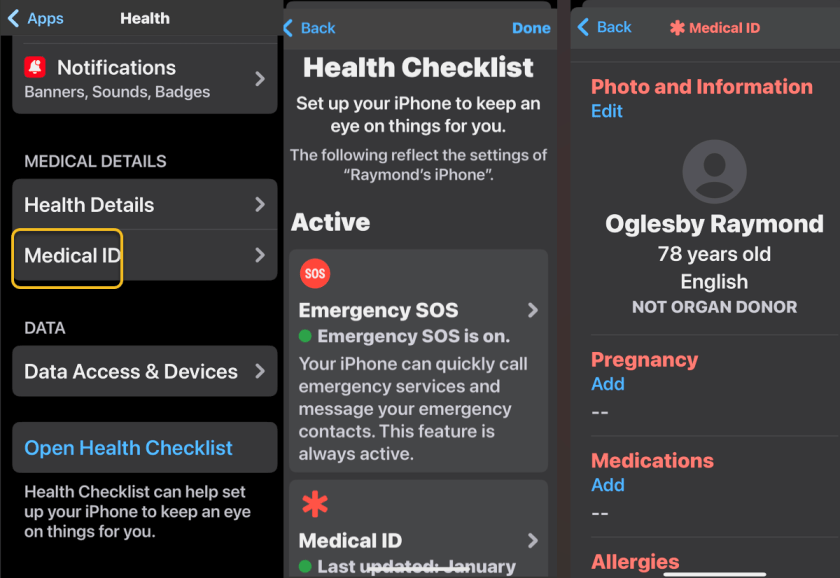
First, open Medical ID. There are three ways to get there:

  1. Long-press the Apple Health app and choose Medical ID
  2. Open the Health app, tap your profile image, and select Medical ID. If you have not opened the Health app in a while, it may prompt you to complete a Health Checklist, which will also take you to the Medical ID screen.
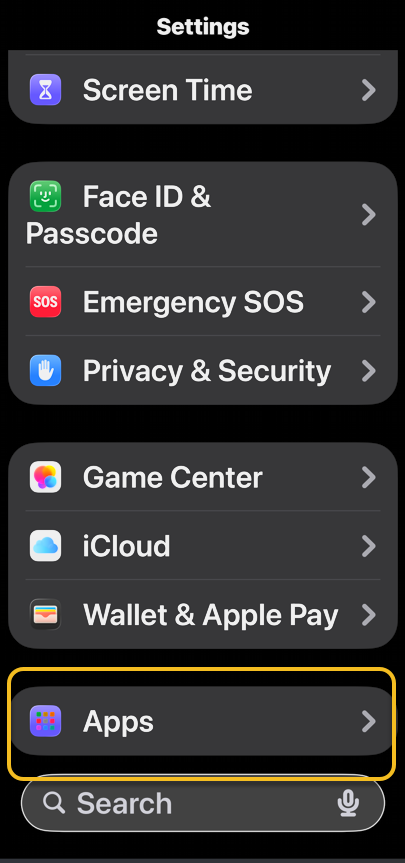
  3. Go to:Settings > Apps > Health > Medical ID.

Next, from the Medical ID screen, tap “Edit”or “Add“. Please provide as much information as you wish. If you are not taking medications and have no known allergies, you should write “None” or “None known” so medical professionals know you did not simply skip those questions. For Emergency Contact, you can only select a name and phone number from your Contacts app. So, make sure whoever you want to list is in your Contacts. If you have yet to do this, Click here on how to set up your Emergency Contact(s).

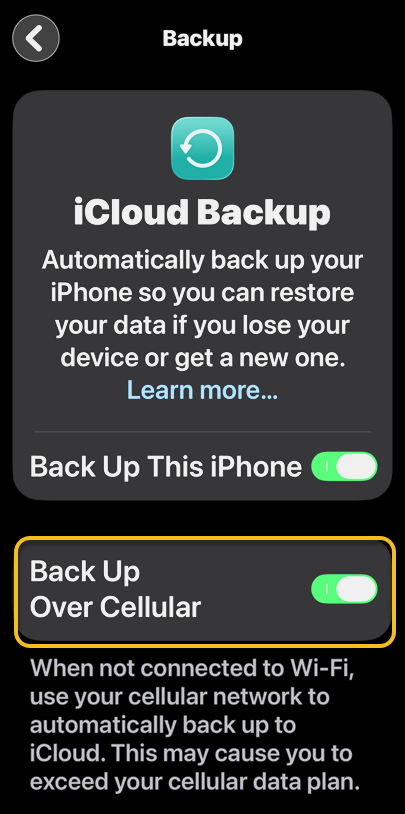
Now, under Emergency Access, toggle on Show When Locked and Share During Emergency Call. There’s a spot for a profile photo at the very top of the page. Put in a recent picture of your face (I have yet to do this). It could help emergency responders recognize that they are viewing your information and not someone else’s. When you are finished, press Done at the top right. Refer to the image below:

Emergency 1
Setting up your Emergency Info

Now that you have your emergency info set, you need to know how to find it from the Lock screen. Go ahead and practice with your own phone. That way, you know how it works if you ever have to help someone else. This is a good skill to teach kids, too.

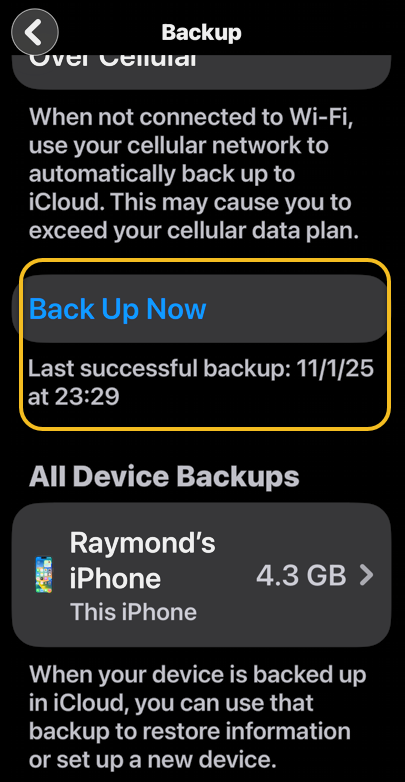
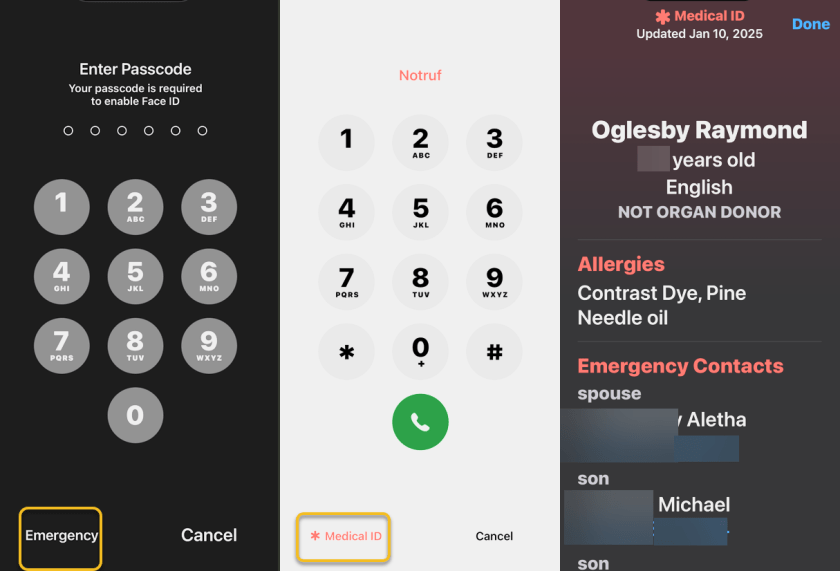
First, from the Lock screen (when the phone asks for a passcode), tap Emergency in the lower left corner to make a dial pad appear. Tap Medical ID at the bottom left to make the emergency information visible.

Next, scroll down, and you can call anyone listed as an emergency contact by tapping on their phone number. See the image below:

Emergency 2
Using Emergency Contact

There’s another way to make an emergency call and send your phone’s location to all your emergency contacts. Apple calls it SOS (not to be confused with Emergency SOS via satellite for placing calls in dead zones). SOS is designed so you can use it quickly and immediately, even if you need to hide the fact that you are using it. The only bad part about SOS is the instructions are different for iPhone 7 and earlier, though as those older devices are phased out, it’s less of a concern.

For iPhone 8 and later:

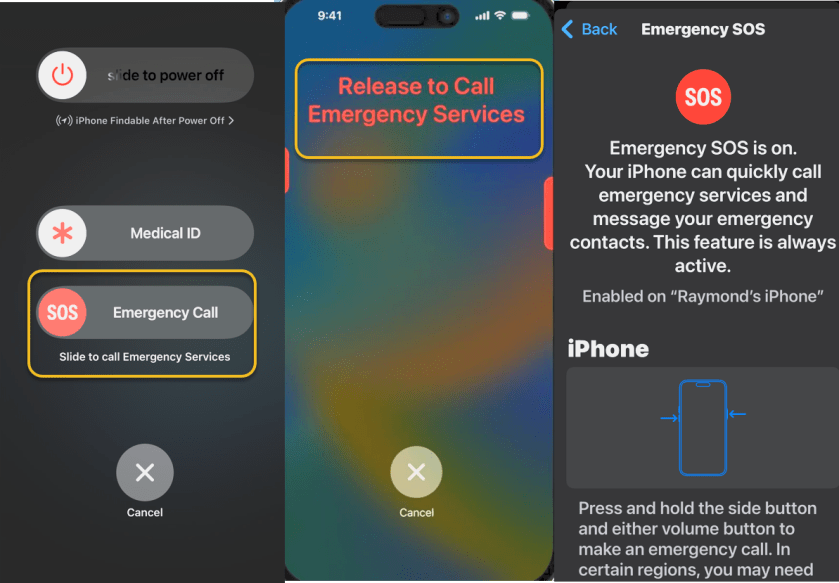
Press and hold the side button and either volume button until an “SOS Emergency Call” slider appears on the screen. Slide your finger on it to call local emergency services. If you need to hide the phone or can not operate the screen, hold down the buttons. A countdown begins, and an alert sounds. If you release the buttons after the countdown, your phone automatically dials emergency services.

For iPhone 7 and earlier:

Press the side or top button quickly five times. An SOS slider appears on the screen. (In India, you only have to press rapidly three times, and then a call goes out automatically.) Slide your finger on Emergency Call to call emergency services.

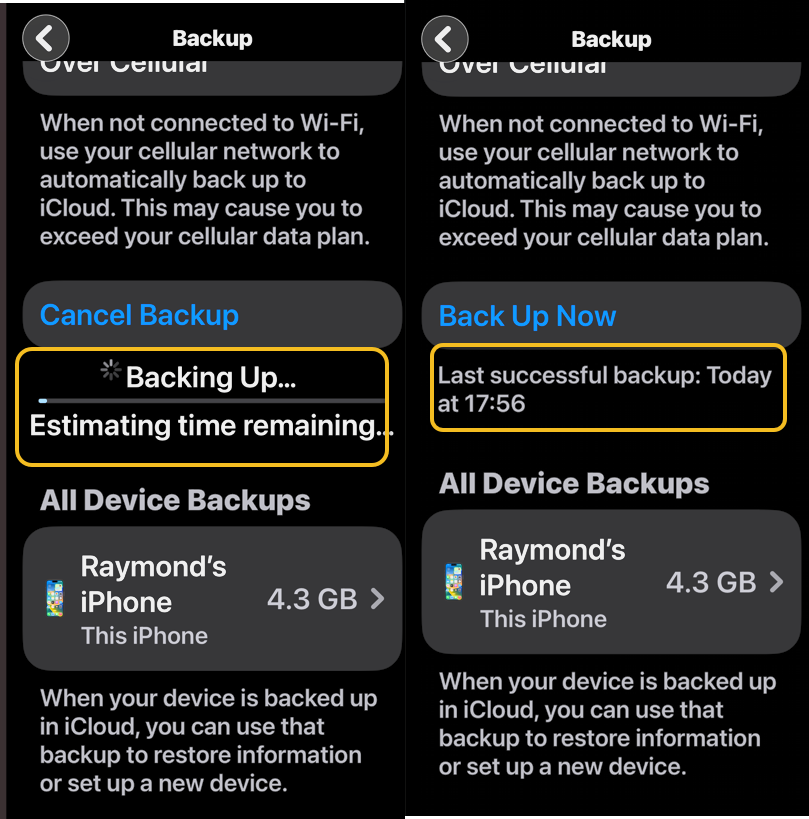
After the call ends, the phone automatically sends a text message to all emergency contacts listed in the Health app, unless you choose to cancel it. This message contains the phone’s current location, even if Location Services is off; the phone automatically turns it on temporarily when you use the SOS feature. If the phone’s location changes, the contacts receive an update via text. See the following image:

Emergency 3
Using SOS

If your phone does not have a way to access emergency information when locked, there’s a hack that easily bypasses this limitation. All you need to do is add all the relevant info into a note-taking app, take a screenshot, and then set it as the wallpaper on your Lock screen. Take a look at your lock screen and make sure the information is legible. You may need to adjust it if the clock or other functional information is obstructing it.

Source: Apple Support, Asurion, PCMag

Disclaimer

Technology is constantly evolving, and smartphone and desktop tech rarely remains static. Therefore, the information in this post is only accurate as of the date it was written. Blog posts that are older than six months may contain instructions that are no longer compatible with your device or operating system. We hope that the content from previous posts continues to function as intended. Thank you for reading TechSavvy.Life, where technology works for you.

“Computing is not about computers anymore. It is about living.”

– Nicholas Negroponte, Founder of MIT Media Lab

That’s it. Please feel free to share this post! One way to share is via Twitter.

Just click the Tweet icon below. This will launch Twitter where you click its icon to post the Tweet.

Checkout TechSavvy.Life for blog posts on smartphones, PCs, and Macs! You may email us at contact@techsavvy.life for comments or questions.

We value your feedback! Was this post helpful? Please share your comments with us. If you have a tech question related to your computer or smart device, feel free to reach out. Just send an email to contact@techsavvy.life, and be sure to include the device, app, and version you are using. To assist us further, you can also attach screenshots related to your inquiry.

Author’s eBook

The author’s Vietnam eBook on the “Battle for Tra Bong Vietnam: Events and Aftermath” can be accessed from a Kindle device or the Kindle App for a desktop or smartphone. The apps are free.

The author’s Vietnam eBook on the Battle for Tra Bong Vietnam: Events and Aftermath

Enhance Your iPhone Photos with Simple Captions

The Photos app on iPhone allows users to add captions to photos without needing extra apps. These captions sync with iCloud and are searchable, enhancing photo organization and retrieval. The process involves selecting a photo, swiping up, and entering a caption. This functionality aids in remembering details of captured moments.

RAYMOND OGLESBY @RaymondOglesby2
July 29, 2025 – 4 minutes read time

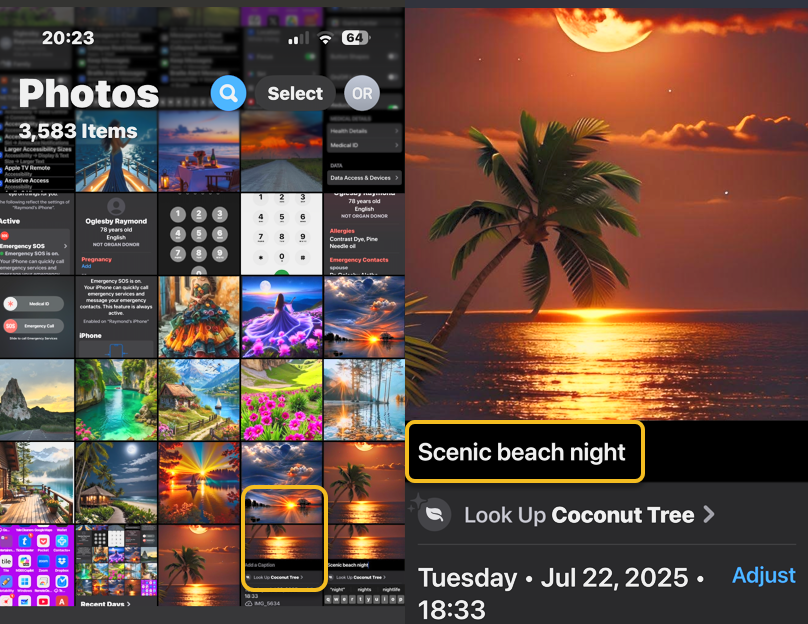
Did you know that your Photos app comes with a built-in feature that allows you to add captions to photos on your iPhone? You do not need to download an extra app to add captions. Any captions added to photos on your iPhone will sync to the cloud if iCloud Photo Library is enabled.

Picture captions are handy for searching your iPhone’s Photo Library and reminding you of specific details when you come across the photo later. For these reasons, it’s best to keep the captions practical yet straightforward—we recommend including notes about a holiday or occasion, if applicable, and any other relevant keywords you may think of later when searching for that photo. Here’s how to name pictures on iPhone and iPad. 

  • Captions added to photos on iPhone or iPad help keep track of picture details.
  • Photo captions are searchable and appear in search results, making important photos easy to find.
  • Photo captions are automatically applied to your synced iCloud photos.

This tip works on most iPhones, but the screenshots below were captured on an iPhone 14 Pro running iOS 18.5.

Click here to learn how to update your iPhone to the latest iOS version.

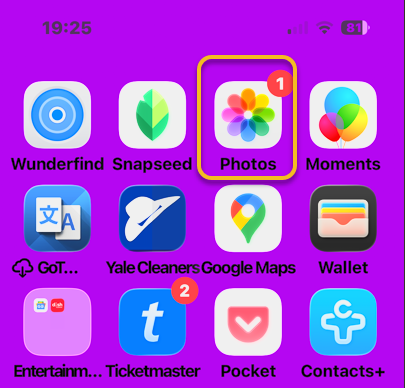
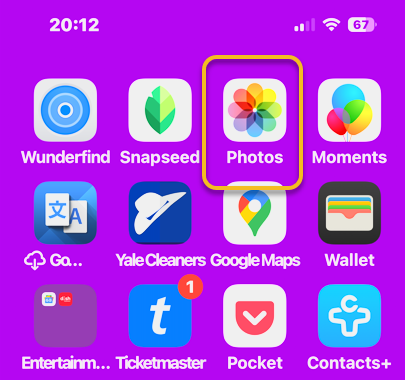
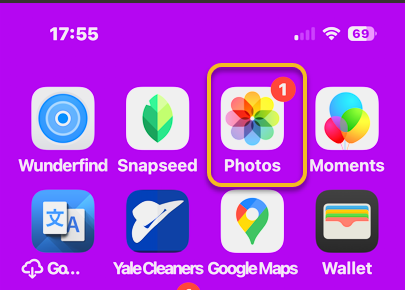
First, open the Photos app. Refer to the image below:

Caption 1
Selecting the Photos app

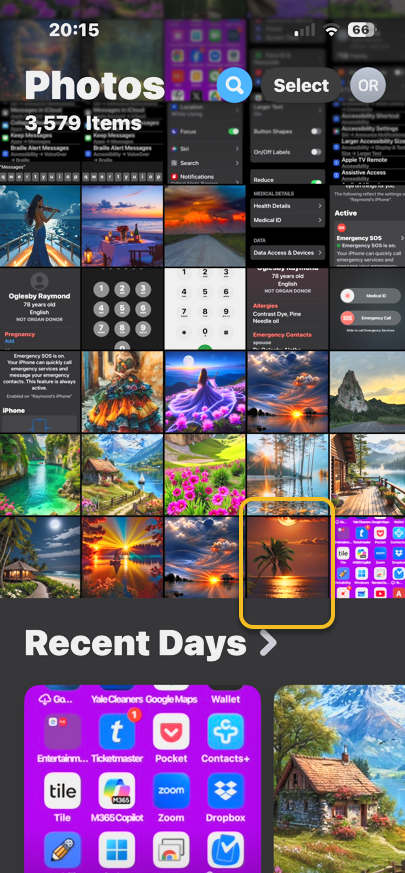
Next, tap on a photo you’d like to add a caption to. See the image below:

Caption 2
Selecting a photo

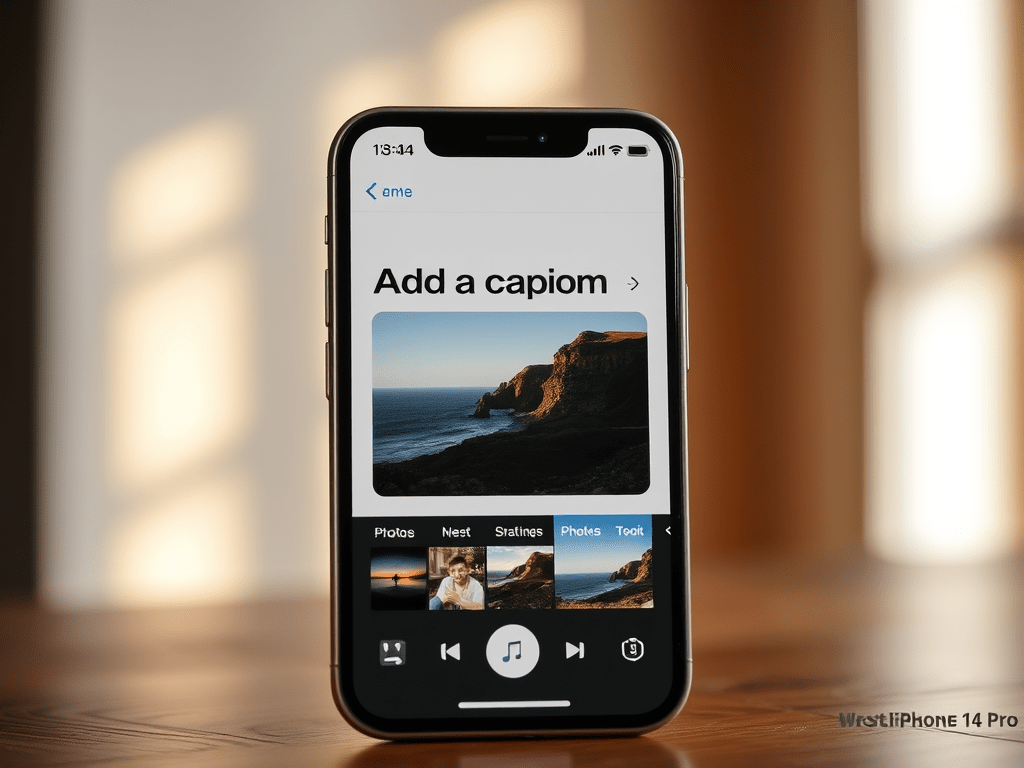
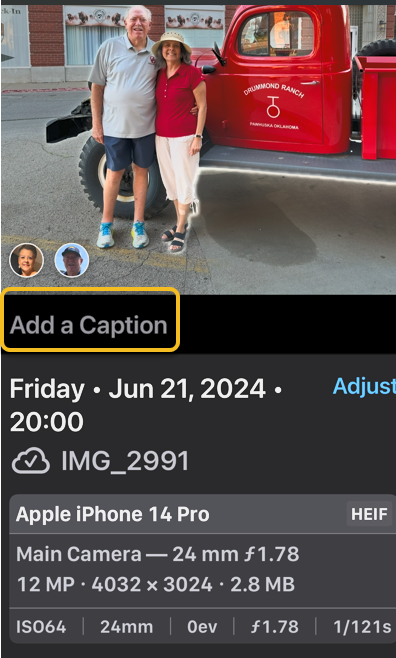
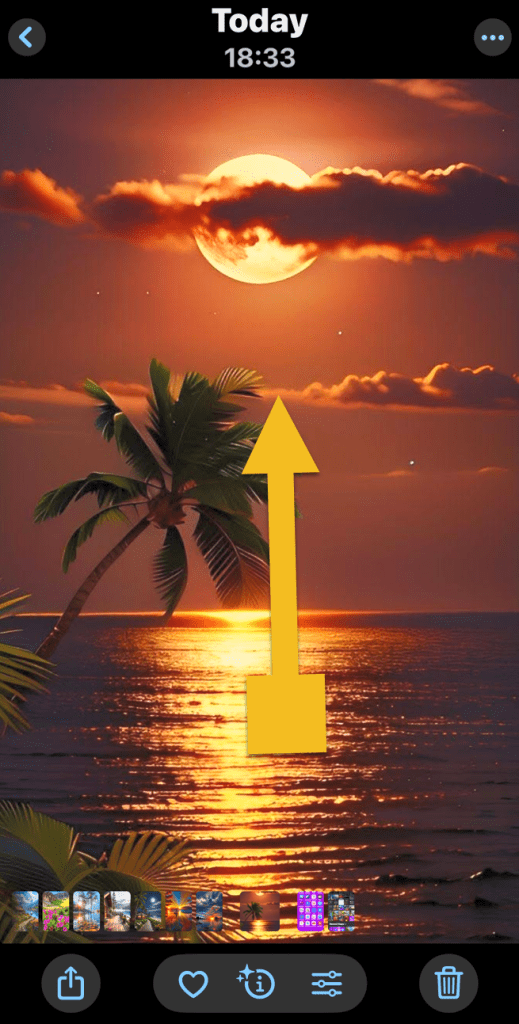
Now, when the photo opens, swipe up on the photo to reveal the Add a Caption area. 

Tip: Make sure to place your finger on the photo itself before you swipe up, otherwise, you might accidentally start scrolling through recent photos instead of pulling up the photo information card.

See the following image:

Caption 3
Swiping up to reveal hidden menu

Next, tap Add a Caption. Refer to the image below:

Caption 4
Selecting Add a Caption box

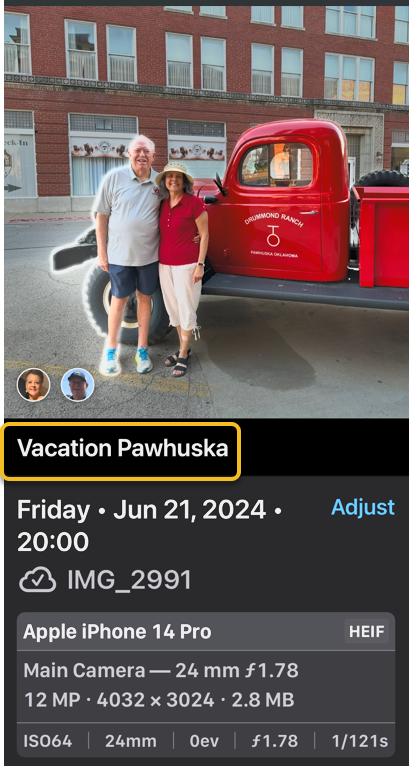
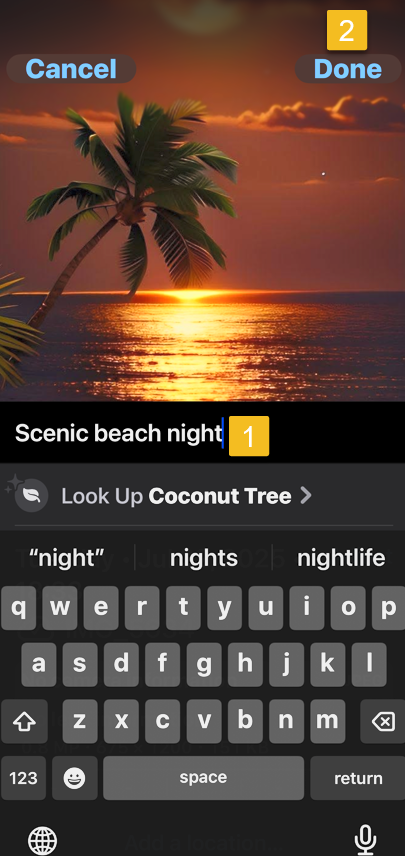
Now, type in your photo caption using the keyboard that appears, then tap Done to save it. See the image below:

Caption 5
Adding and Saving your caption

Next, if you want to verify that your caption was added, tap on the original photo and swipe up to reveal the caption. See the following imag:

Caption 6
Your Caption added to the original photo

And that’s how you add a caption to an iPhone photo. We especially love being able to access these photo captions across our devices.

Disclaimer

Technology is constantly evolving, and smartphone and desktop tech rarely remains static. Therefore, the information in this post is only accurate as of the date it was written. Blog posts that are older than six months may contain instructions that are no longer compatible with your device or operating system. We hope that the content from previous posts continues to function as intended. Thank you for reading TechSavvy.Life, where technology works for you.

“Every once in a while, a new technology, an old problem, and a big idea turn into an innovation.”

– Dean Kamen, Inventor of the Segway

That’s it. Please feel free to share this post! One way to share is via Twitter.

Just click the Tweet icon below. This will launch Twitter where you click its icon to post the Tweet.

Checkout TechSavvy.Life for blog posts on smartphones, PCs, and Macs! You may email us at contact@techsavvy.life for comments or questions.

We value your feedback! Was this post helpful? Please share your comments with us. If you have a tech question related to your computer or smart device, feel free to reach out. Just send an email to contact@techsavvy.life, and be sure to include the device, app, and version you are using. To assist us further, you can also attach screenshots related to your inquiry.

Author’s eBook

The author’s Vietnam eBook on the “Battle for Tra Bong Vietnam: Events and Aftermath” can be accessed from a Kindle device or the Kindle App for a desktop or smartphone. The apps are free.

The author’s Vietnam eBook on the Battle for Tra Bong Vietnam: Events and Aftermath

How to Rearrange Albums in iPhone Photos

This post provides a guide on rearranging albums in Apple’s Photos app on iPhone and iPad. Users can sort albums by Date Modified, Name, or Custom Order, and utilize the drag-and-drop method for moving albums. The instructions are applicable for iOS 18.5 and emphasize a precise drag method for successful rearrangement.

IRAYMOND OGLESBY @RaymondOglesby2
July 15, 2025 – 3 minutes read time

Want to learn how to rearrange albums on an iPhone or iPad in Apple’s Photos app? When you make a photo album on your iPhone, the Photos app automatically sorts in the Albums tab when it was created.

You can rearrange albums on iPhone in two different ways. Let’s explore how to rearrange your albums in the Photos app.

  • Learn how to rearrange albums in Photos on your iPhone or iPad using the drag and drop method.
  • Learn how to sort albums on iPhone by Date Modified, Name, or Custom Order. 
  • Learn how to move albums around on iPhone so you can find your albums quickly and easily. 

This tip was performed in iPhone 14 Pro running iOS 18.5.

Click here to learn how to update your iPhone to the latest iOS version.

First, ipen the Photos app. Refer to the image below:

Photos 1
Selecting the Photos app

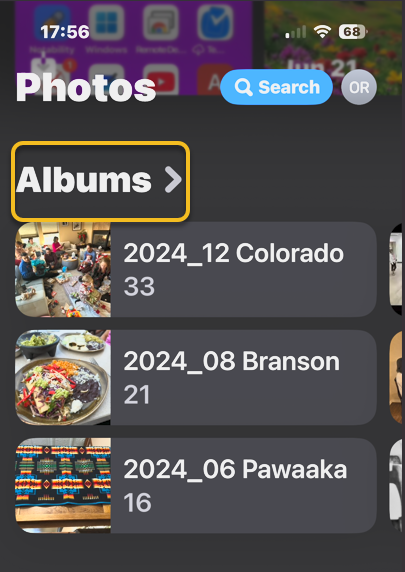
Next, scroll down and tap Albums. See the image below:

Photos 2
Selecting Albums

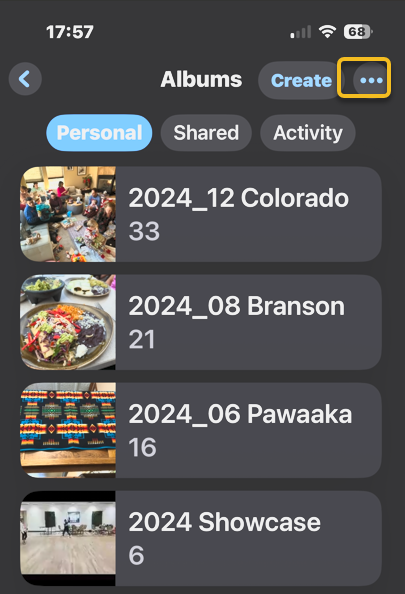
Now, tap the More icon. See the following image:

Photos 3
Selecting the More icon

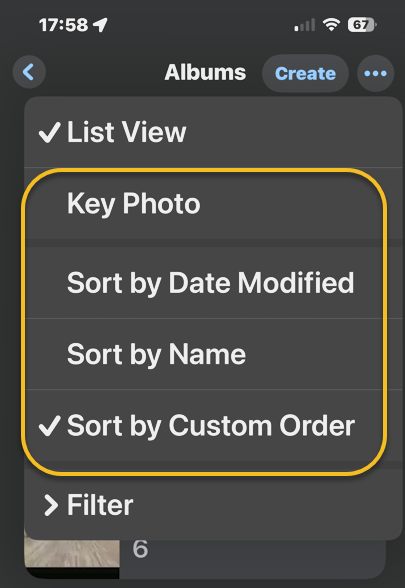
Next, tap a photo album sorting option. Refer to the image below:

Photos 4
Accessing the sort options

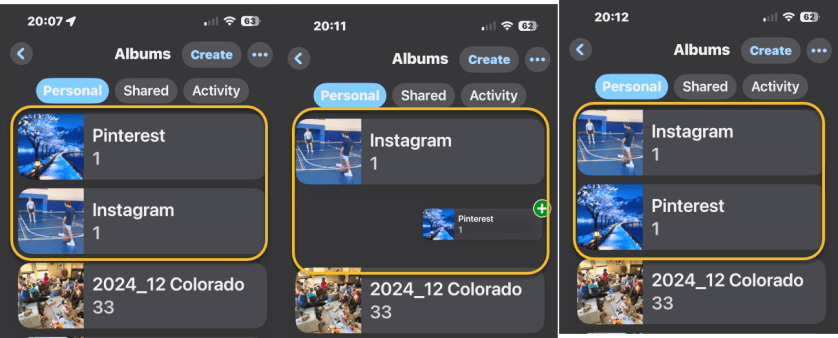
Now, back in Albums, you can also touch and hold the center of a photo album you want to move, then drag it to a new place. Release your finger to drop the album in its new location.

Note! Make sure you drag down or up and to the right. Dragging the album straight up or down will not work. In our example, we are moving the Pinterest album below the Instagram album. See the image below:

Photos 5
Moving the Pinterest album below the Instagram album

When you are done, close the Photos app, and you are finished rearranging albums on your iPhone or iPad.

Now you know how to reorder albums on iPhone and iPad!

Disclaimer

Technology is constantly evolving, and smartphone and desktop tech rarely remains static. Therefore, the information in this post is only accurate as of the date it was written. Blog posts that are older than six months may contain instructions that are no longer compatible with your device or operating system. We hope that the content from previous posts continues to function as intended. Thank you for reading TechSavvy.Life, where technology works for you.

“If you think technology can solve your security problems, then you don’t understand the problems and you don’t understand the technology.”

– Bruce Schneier, Security Technologist

That’s it. Please feel free to share this post! One way to share is via Twitter.

Just click the Tweet icon below. This will launch Twitter where you click its icon to post the Tweet.

Checkout TechSavvy.Life for blog posts on smartphones, PCs, and Macs! You may email us at contact@techsavvy.life for comments or questions.

We value your feedback! Was this post helpful? Please share your comments with us. If you have a tech question related to your computer or smart device, feel free to reach out. Just send an email to contact@techsavvy.life, and be sure to include the device, app, and version you are using. To assist us further, you can also attach screenshots related to your inquiry.

Author’s eBook

The author’s Vietnam eBook on the “Battle for Tra Bong Vietnam: Events and Aftermath” can be accessed from a Kindle device or the Kindle App for a desktop or smartphone. The apps are free.

The author’s Vietnam eBook on the Battle for Tra Bong Vietnam: Events and Aftermath

How to Access Your iPhone or iPad App Privacy Report

Apple prioritizes user privacy on iPhones and iPads, featuring an App Privacy Report that details how apps utilize personal data and device features. Users can easily access this report through the Settings app to monitor data access, app interactions, and website visits, enhancing understanding of app behavior and privacy.

RAYMOND OGLESBY @RaymondOglesby2
July 1, 2025 – 4 minutes read time

Apple takes privacy very seriously when it comes to its products. The iPhone and iPad are no exception, and both include an App Privacy Report. The iOS App Privacy Report shows you how certain apps have been using your data and accessing certain device features.

Accessing the App Privacy Report on an iPhone or iPad is surprisingly easy. The amount of data it reveals is outstanding. Let’s explore this feature.

  • Check your app privacy report to see what type of data your apps have been accessing.
  • Use your app privacy report to see which apps or websites are the most intrusive.

This tip was performed on an iPhone 14 Pro running iOS 18.5.

Click here to learn how to update your iPhone to the latest iOS version.

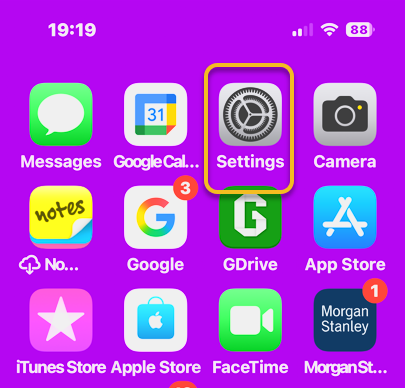
First, open the Settings app. Refer to the image below:
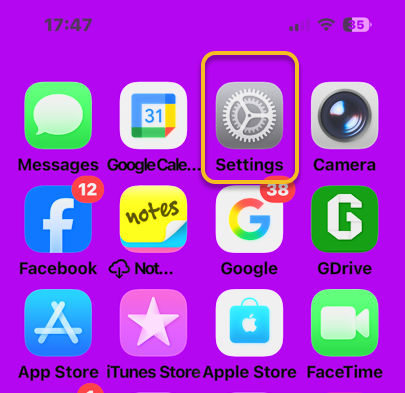
Privacy 1
Selecting the Settings app

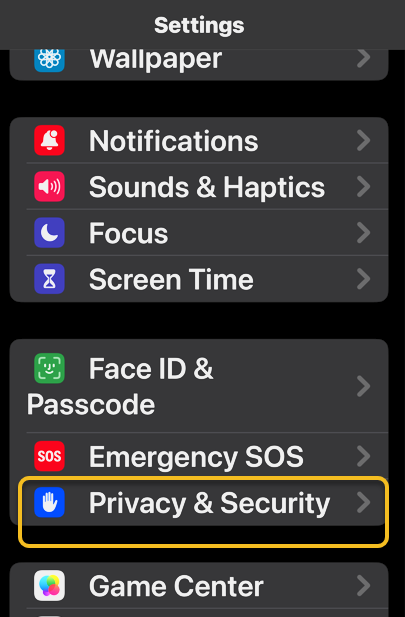
Next, tap Privacy & Security.option.See the image below:

Privacy 2
Selecting the Privacy & Security option

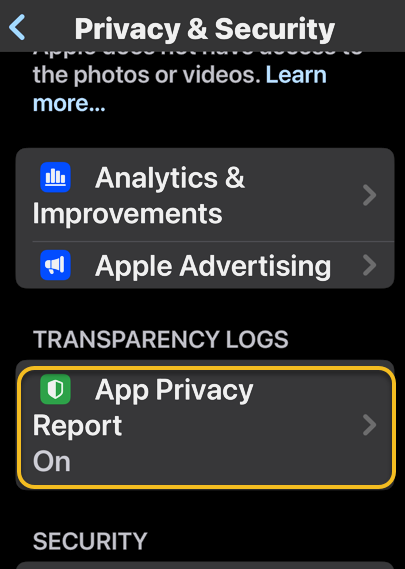
Now, scroll down and tap App Privacy Report. See the following image:

Privacy 3
Selecting the App Privacy Report option

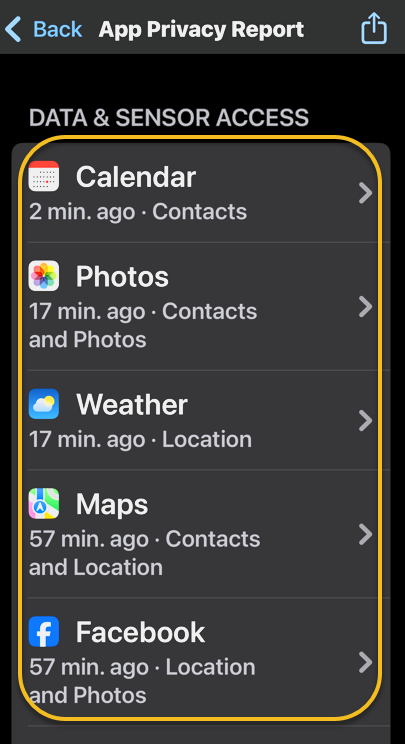
Next, if this is the first time you have accessed this screen, you might see an option to turn on App Privacy Report. If you already have this feature turned on, you will see a list of apps that have accessed your data or sensors in the past week. Refer to the image below:

Privacy 4
Your Data & Sensor Access

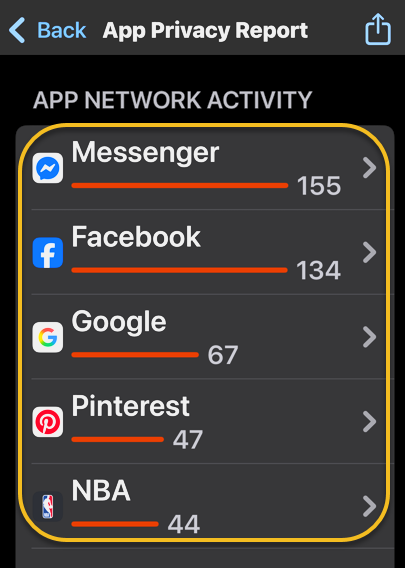
Now, under that section, there is App Network Activity. These are apps that have contacted domains in the last week. See the image below:

Privacy 5
Your App Network Activity

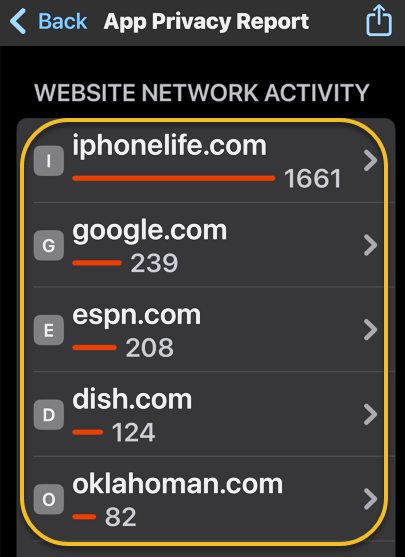
Next is Website Network Activity. These are websites that you have visited in the last week, including your most contacted domains. See the following image:

Privacy 6
Your Website Network Activity

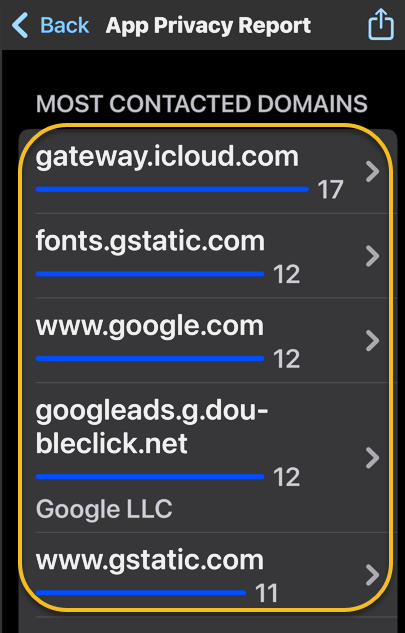
Next is Most Contacted Domains, all of which were contacted by one or more apps or websites in the past seven days. Refer to the image below:

Privacy 7
Your Most Contacted Domains

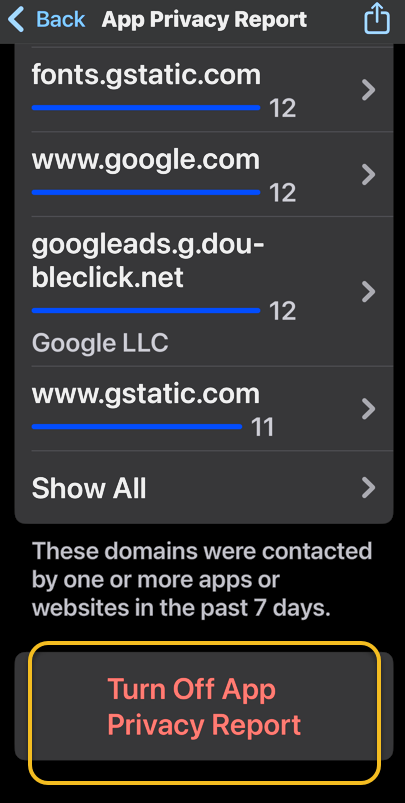
Now, at the bottom is an option to Turn Off App Privacy Report. See the image below:

Privacy 8
Selecting the Turn Off App Privacy Report option

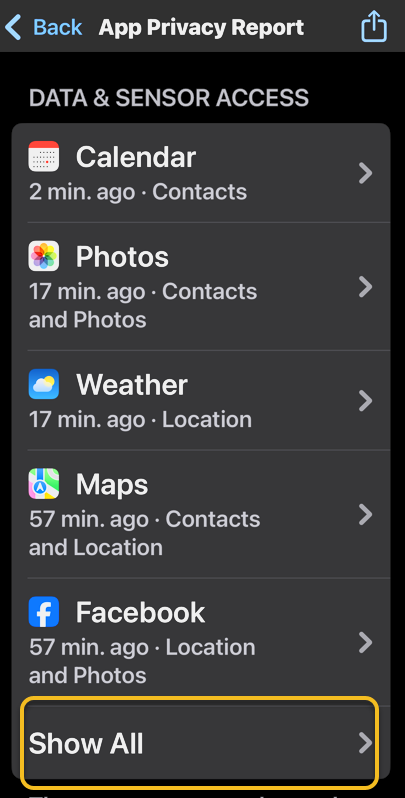
Next, under any section, you can tap Show All to see more apps, websites, domains, etc. See the following image:

Privacy 9
Selecting to Show All

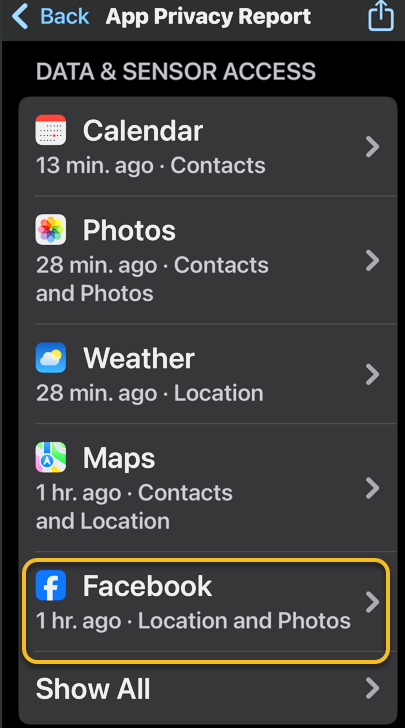
Now, you can also tap any app or domain in any section to see additional information about it. For example, we selected Facebook. Refer to the image below:

Privacy 10
Selecting Facebook access

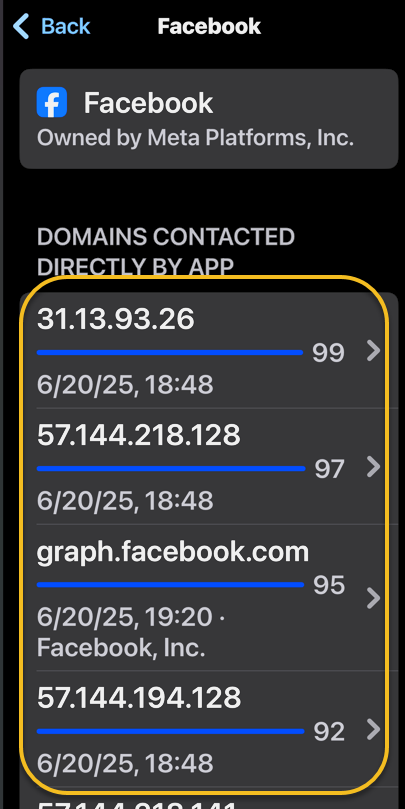
Next, you will see a list of the domains this app has contacted. If you were to tap a domain rather than an app in the previous step, you would see a list of apps that have contacted that domain. See the image below:

Privacy 11
Your Domains contacted by Facebook

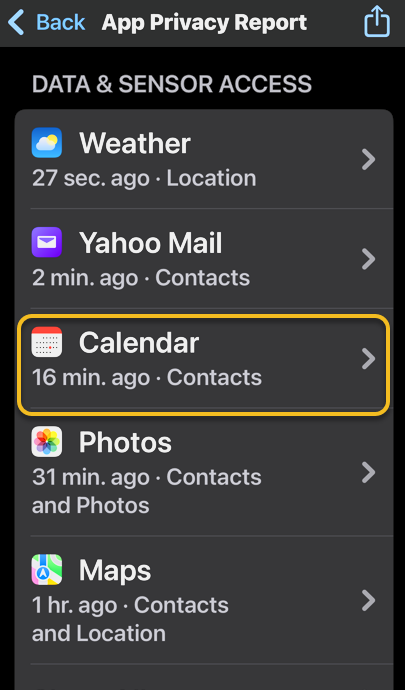
Now, if you tap an app under Data & Sensor Access list, you can see exactly what kind of data that app is collecting. See the following image:

Privacy 12
Selecting the Calendar app

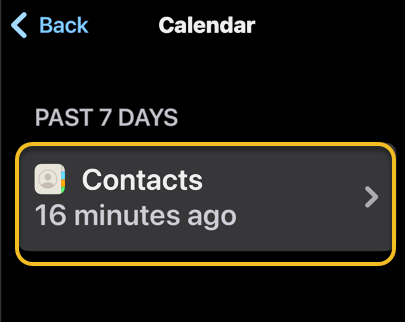
For example, we can see that the Calendar app accessed my contacts 16 minutes ago. Refer to the image below:

Privacy 13
Your Contacts last accessed

That’s the iPadOS and iOS App Privacy Report. You can access this report on your iPhone or iPad at any time and get the most up-to-date data.

Disclaimer

Technology is constantly evolving, and smartphone and desktop tech rarely remains static. Therefore, the information in this post is only accurate as of the date it was written. Blog posts that are older than six months may contain instructions that are no longer compatible with your device or operating system. We hope that the content from previous posts continues to function as intended. Thank you for reading TechSavvy.Life, where technology works for you.

“The rise of powerful AI will be either the best or the worst thing ever to happen to humanity.”

– Stephen Hawking, Theoretical Physicist

That’s it. Please feel free to share this post! One way to share is via Twitter.

Just click the Tweet icon below. This will launch Twitter where you click its icon to post the Tweet.

Checkout TechSavvy.Life for blog posts on smartphones, PCs, and Macs! You may email us at contact@techsavvy.life for comments or questions.

We value your feedback! Was this post helpful? Please share your comments with us. If you have a tech question related to your computer or smart device, feel free to reach out. Just send an email to contact@techsavvy.life, and be sure to include the device, app, and version you are using. To assist us further, you can also attach screenshots related to your inquiry.

Author’s eBook

The author’s Vietnam eBook on the “Battle for Tra Bong Vietnam: Events and Aftermath” can be accessed from a Kindle device or the Kindle App for a desktop or smartphone. The apps are free.
The author’s Vietnam eBook on the Battle for Tra Bong Vietnam: Events and Aftermath

How to Alphabetize Notes on iPhone and iPad

The Notes app on Apple devices sorts notes by default based on the most recent update. However, users can change settings to organize notes alphabetically by title or first line. This enhances note accessibility and organization. The guide also addresses setting defaults for new notes.

RAYMOND OGLESBY @RaymondOglesby2
June 3, 2025– 3 minutes read time

Can you alphabetize in Notes? Yes! By default, the Notes app sorts your notes by most recently updated. Even if you created a note years ago, if you edit that note, it will appear at the top of the list afterward.

But you can easily sort your notes alphabetically by changing your Settings. Your notes will then be sorted according to either the title or first line (if the note does not have a title). Let explore how to sort Apple Notes alphabetically on iPhone or iPad.

  • Alphabetize notes by note titles or the beginning of your note, instead of by date created or last edited.
  • Alphabetize notes on iPhone and iPad to make your notes more organized and easier to find.

This tip was performed on an iPhone 14 Pro running iOS 18.5.

Click here to learn how to update your iPhone to the latest iOS version.

First, open the Settings app. Refer to below image:

Notes 1
Selecting Settings

Next, scroll down and tap Apps. See the image below:

Notes 2
Selecting Apps

Now, rap Notes. See the following image:

Notes 3
Selecting Notes

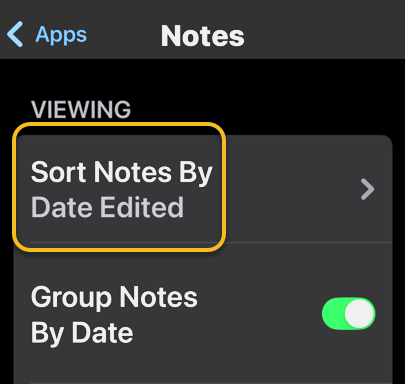
Next, tap Sort Notes By: Refer to image below:

Notes 4
Selecting the Sort Notes By option

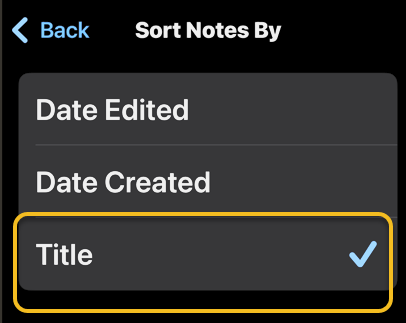
Now, tap Title. See the image below:

Notes 5
Selecting the Title option

Choosing Title will sort your Notes alphabetically. You can also select Date Created if you would rather have all your notes sorted by the day each was started.

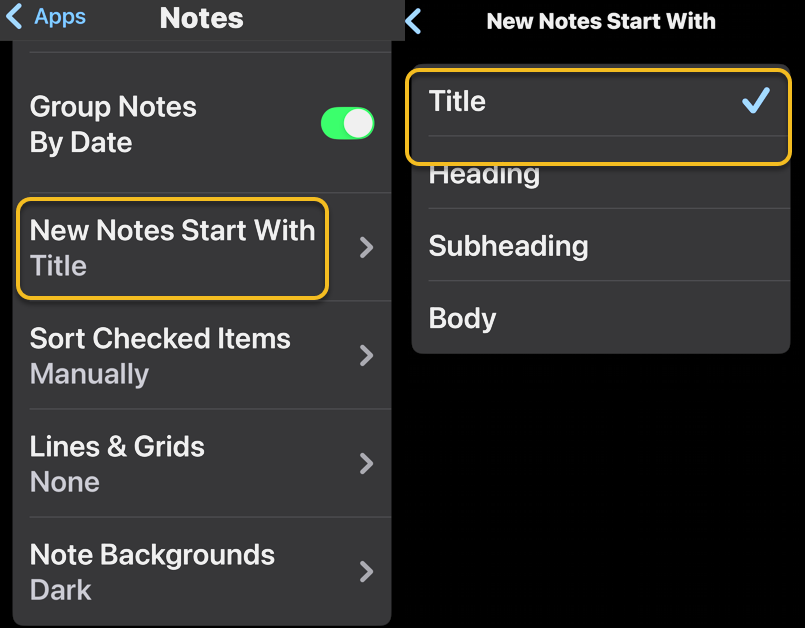
You may want to set a couple of defaults. One is to set the Title as the default heading for a New Note. See the following image:

Notes 6
Selecting the New Notes Start With Title option

If you prefer a New Note with lines or grids, you can choose from various styles. Refer to the image below:

Notes 7
Selecting a Style for a New Note

Disclaimer

Technology is constantly evolving, and smartphone and desktop tech rarely remains static. Therefore, the information in this post is only accurate as of the date it was written. Blog posts that are older than six months may contain instructions that are no longer compatible with your device or operating system. We hope that the content from previous posts continues to function as intended. Thank you for reading TechSavvy.Life, where technology works for you.

“Technology is not just a tool. It can give learners a voice that they may not have had before.”

― George Couros

You are finished. Please feel free to share this post! One way to share is via Twitter.

Just click the Tweet icon below. This will launch Twitter where you click its icon to post the Tweet.

Checkout TechSavvy.Life for blog posts on smartphones, PCs, and Macs! You may email us at contact@techsavvy.life for comments or questions.

We value your feedback! Was this post helpful? Please share your comments with us. If you have a tech question related to your computer or smart device, feel free to reach out. Just send an email to contact@techsavvy.life, and be sure to include the device, app, and version you are using. To assist us further, you can also attach screenshots related to your inquiry.

Author’s eBook

The author’s Vietnam eBook on the “Battle for Tra Bong Vietnam: Events and Aftermath” can be accessed from a Kindle device or the Kindle App for a desktop or smartphone. The apps are free.
The author’s Vietnam eBook on the Battle for Tra Bong Vietnam: Events and Aftermath

Enable Advanced Data Protection for Your Apple Devices

Apple has disabled Advanced Data Protection (ADP) for iCloud in the UK due to government demands for law enforcement access. This compromises data security, as backdoor access could be exploited. In contrast, ADP offers end-to-end encryption unavailable to Apple, ensuring only users can access their data. Users outside the UK retain this protection.

Insert dRAYMOND OGLESBY @RaymondOglesby2
April 1, 2025 – 6 minutes read time

Recently. Apple took the unusual step of turning off its highest level of iCloud encryption, Advanced Data Protection (ADP) for customers in the UK. The British government has reportedly demanded that Apple provide a method for law enforcement to access encrypted data as part of criminal investigations. But that creates a serious security problem, because this type of backdoor access can also be exploited by criminals or untrustworthy governments.

  • Have the best encryption for your Apple devices.
  • Prevent hackers from accessing and viewing your data.

See below for the Apple software versions. These screenshots were captured using iOS 18.3.2 on iPhone 14 Pro.

Click here to learn how to update your iPhone to the latest iOS version.

For people in the UK, ADP can no longer be enabled. If you are currently using ADP, you will need to turn off the feature at a future date.

If you are outside the UK and concerned about who can see your data, ADP adds an extra layer of security by making it unreadable even by Apple. If ADP is disabled, your data could be at risk because it can still be unlocked by Apple, a legal request or a data breach. 

Let’s explore how to turn Advanced Data Protection on, and how it differs from the default iCloud encryption methods.

The key difference between ADP and how Apple encrypts data by default is how accessible your information is when stored on Apple’s servers.

In what Apple calls standard data protection, information sent between points, such as files stored on iCloud Drive and iCloud backups of your devices, is encrypted and transmitted securely. If someone intercepts that data between the two points, they will see only gibberish.

That data remains encrypted when it’s stored on Apple’s servers, so you can access it from other devices, for instance. However, Apple can still access the encryption keys to unscramble and read the data; and provide it to law enforcement following a legal request.

By contrast, when you enable Advanced Data Protection for iCloud, the data is end-to-end encrypted, meaning only your trusted devices possess the encryption keys to read it. The information remains encrypted on the servers, and not even Apple can access its contents. (Not all iCloud data can be end-to-end encrypted. Apple breaks out-which types of information, such as iCloud Mail messages, that remain covered by standard data protection even when ADP is turned on.)

The UK’s Investigatory Powers Act, the “Snooperd’s Charter”, makes that inaccessibility illegal, which is why Apple is turning the feature off for UK customers.

Some services are end-to-end encrypted regardless due to the sensitivity of the data, such as passwords, information stored in the Health app and payment information.

Note! Setting up ADP applies to all devices in your Apple account.

To set up ADP on your account, first make sure you have met all the prerequisites for the feature:

  • Your Apple Account must use two-factor authentication.
  • You must have a recovery method set up in case you lose access to your account. That can be a 28-character Recovery Key or a person you have designated as a Trusted Contact.
  • Every device connected with your Apple Account must be able to run at least
  • iOS 16.2, iPadOS 16.2, MacOS 13.1
  • WatchOS 9.2
  • TVOS 16.2
  • HomePod 16.0
  • For Windows computers, make sure iCloud for Windows is at version 14.1 or later.
  • If any of your devices do not qualify, you will be warned during the ADP setup process. If any of those are too old or you no longer have access to them, head to:
  • Settings > Remove Devices and delete them from your list.

Refer to the below image:

adp 1_2
Update your Devices

To turn on ADP on an iPhone, iPad or Mac do the following:

1. Go to Settings > [Your Name] > iCloud. On a Mac, open System Settings > [Your Name] > iCloud.

2. Scroll down to Advanced Data Protection, which likely says Off, and tap that to enable. This will take some time, and the screen will appear to be unresponsive; Just be patient. Later, if you want to disable ADP, repeat the above steps and select the Turn Off button.

See the below image:

adp 3_4
Turn on ADP

3, If there are any of the aforementioned impediments to setting up ADP, such as needing to update other devices on your account, you will review them on the next screen.

4. In the following screen, tap Review Recovery Options. You need to have a Recovery Key, Recovery Contact or both to ensure that you can get your data if you lose access to your iCloud account.

5. Enter your device’s passcode to finish.

See the following image:

adp 5_6
ADP is Enables

Activating ADP on one device means it’s on for all of your devices using the same Apple account, so you only need to set it up once.

Disclaimer

Technology is constantly evolving, and smartphone and desktop tech rarely remains static. Therefore, the information in this post is only accurate as of the date it was written. Blog posts that are older than six months may contain instructions that are no longer compatible with your device or operating system. We hope that the content from previous posts continues to function as intended. Thank you for reading TechSavvy.Life, where technology works for you.

. “Imagination is more important than knowledge. For knowledge is limited, whereas imagination embraces the entire world, stimulating progress, giving birth to evolution.”

-Albert Einstein

That’s it. Please feel free to share this post! One way to share is via Twitter.

Just click the Tweet icon below. This will launch Twitter where you click its icon to post the Tweet.

Checkout TechSavvy.Life for blog posts on smartphones, PCs, and Macs! You may email us at contact@techsavvy.life for comments or questions.

We value your feedback! Was this post helpful? Please share your comments with us. If you have a tech question related to your computer or smart device, feel free to reach out. Just send an email to contact@techsavvy.life, and be sure to include the device, app, and version you are using. To assist us further, you can also attach screenshots related to your inquiry.

Author’s eBook

The author’s Vietnam eBook on the “Battle for Tra Bong Vietnam: Events and Aftermath” can be accessed from a Kindle device or the Kindle App for a desktop or smartphone. The apps are free.
The author’s Vietnam eBook on the Battle for Tra Bong Vietnam: Events and Aftermath

Setup Time to Leave Notifications on iPad and iPhone

Apple has introduced the Time to Leave feature for iOS 18, which alerts users when it’s time to depart for calendar events. By enabling Location Services and adjusting settings in the Calendar app, users receive timely notifications that include traffic conditions, ensuring they arrive on time to their destinations.

RAYMOND OGLESBY @RaymondOglesby2
February 11, 2025 – 3 minutes read time

Have you ever wished your iPad or iPhone would not only remind you of calendar events but also give a calendar alert when it’s time to depart? Well, now you can. Apple has just introduced the new Time to Leave feature, which automatically calculates when you need to leave your current location so you can arrive at your destination on time. Let’s explore how to use the Time to Leave feature.

  • Get notified when it’s time to get in your car and head to your appointment or meet-up.
  • With built-in drive time reminders, you need never be late again!

The steps below will only work on an iPhone updated to iOS 18. The screenshots are from iPhone 14 Pro running iOS 18.3.

Click here to learn how to update your iPhone to the latest iOS version.

You will also need to be sure Location Services is enabled. Head to:

Settings > Privacy & Security > Location Services

and turn the toggle to the ON position.

First, navigate to:

Settings > Apps > Calendar

Refer to the below image:

Time to Leave 1
Open the Calendar app

Next, tap the Default Alert Times option. See the below image:

Time to Leave 2
Select the Default Alert Times option

Now, toggle Time to Leave to the ON position.

Note! the Event must be set to None for this feature to work!

See the following image:

Time to Leave 3
Enable Time to Leave toggle

Next, open the Calendar app. Refer to the below image:

Time to Leve 4
Open the Calendar app

Now, create a calendar event as you normally would, then tap the Add icon. You will see that your Time to Leave alert has been automatically added to the event. See the below image:

Time to Leave 5
Create a calendar event

Next, open your Calendar and find your event. Tap the event to see its details. Notice the Time to Leave alert. See the following image:

Time to Leave 6
Time to Leave details

At the designated time, you will receive a Notification about the event that includes traffic conditions and travel time to reach your destination. Refer to the below image:

Time to Leave 7
Your Time to Leave notification

Now you know how to enable and use Time to Leave alerts in your iPad and iPhone Calendar settings

Technology is always changing. Rarely is there static tech for smartphones and desktops. Thus, the contents of this post are only valid at the time of writing. Blog posts older than six months may have directions incompatible with your device or OS. Hopefully, older post content will continue to work as advertised. Thank you for reading TechSavvy.Life for Technology at Work For You.

The great myth of our times is that technology is communication.

Libby Larsen

That’s it. Please feel free to share this post! One way to share is via Twitter.

Just click the Tweet icon below. This will launch Twitter where you click its icon to post the Tweet.

Checkout TechSavvy.Life for blog posts on smartphones, PCs, and Macs! You may email us at contact@techsavvy.life for comments or questions.

Was this post helpful? We would love to hear your comments. Do you have a computer or smart device tech question? I will do my best to answer your inquiry. Just send an email to contact@techsavvy.life. Please mention the device, app, and version you are using. To help us, you can send screenshots of the data related to your question.

Author’s eBook

The author’s Vietnam eBook on the “Battle for Tra Bong Vietnam: Events and Aftermath” can be accessed from a Kindle device or the Kindle App for a desktop or smartphone. The apps are free.
The author’s Vietnam eBook on the Battle for Tra Bong Vietnam: Events and Aftermath

Maximize Your iPhone Control Center Layout in iOS 18

The Control Center on iOS 18 and iPadOS 18 simplifies access to frequently used features by allowing customization and multiple screens. Users can manage Wi-Fi, Bluetooth, volume, and more, enhancing organization. By arranging controls and adding shortcuts, users can optimize their experience, making navigation more efficient and personalized.

RAYMOND OGLESBY @RaymondOglesby2
December 3, 2024 – 6 minutes read time

For quick access to frequently used apps and settings, Control Center is just a swipe or click away. And with iOS 18 and iPadOS 18, it’s even easier to customize and use.

Navigating the settings on your iPhone, iPad, and Mac can be difficult. That’s where the Control Center comes in, providing quick access to a variety of features that might otherwise be hidden within the device’s menus. From the Control Center, you can easily adjust settings for Wi-Fi, Bluetooth, and AirDrop, as well as control brightness and volume. It also allows you to manage Focus mode, access music controls, switch to dark mode, and enable screen mirroring. Additionally, you can customize the Control Center by adding or removing features as needed.

For many years, the Control Center on your iPhone and iPad was restricted to a single screen. If you wanted to change the controls, you had to navigate into the settings of your device. However, with the introduction of iOS 18 and iPadOS 18, you can now set up multiple screens and customize them directly within the Control Center. Let’s explore how to personalize the updated Control Center.

  • Organize the Control Center so that your most frequently used controls are easily accessible at the front.
  • Maintain a tidy and organized Control Center..

This tip is for iPhones running iOS 18 or later. The screenshots are from iPhone 14 Pro running iOS 18+.

Click here to learn how to update your iPhone to the latest iOS version.

First, swipe down from the upper right edge to open the Control Center. Refer to the below image:

CC 1
Swiping down to access Control Center

Next, rap and hold in an empty area. See the below image:

CC 2
Taping any empty area

Now, the controls will have minus symbols next to them, indicating that you are in Edit mode. Tap Add a Control to get started. See the following image:

CC 3
Selecting Add a Control button

Next, find a control you want easy access to and tap on it to add it to the Control Center. Refer to the below image:

CC 5
Selecting to add the Notes app

Now, if your first page becomes too full, a second page will be automatically created. You can swipe up and down to navigate between the Control Center pages. Each page is indicated by a dot on the far right side of the screen. Please note that we have a total of six pages. See the image below:

CC 5
Notes app has been added

Next, to change the size of a control, tap and drag the corner. Keep in mind that some controls only have one size. See the following image:

CC 6
Selecting Playback control to resize

Now, view your resized Playback control. Refer to the below image:

CC 7
Playback control has been resized

Next, to remove a control, simply tap the minus symbol next to it. See the below image:

CC 8
Selecting to remove the Focus control

Now, you can place controls anywhere without worrying about order. Our Control Center has been rearranged from six pages to only three pages, as indicated by the dots on the right side. See the following image:

CC 9
Final Control Center

FAQ

  • Why does my iPhone say SOS in the top right corner?

If your iPhone cannot connect to a cellular network or Wi-Fi, it may display ‘SOS’ in the top right corner. This indicates that your device can only make emergency calls.

  • What does 5GUC mean?

5GUC stands for 5G Ultra Capacity. This is T-Mobile’s higher frequency 5G network. Other cellular providers have similar higher frequency networks with different names.

  • What are the icons on the top right of iPhone?

At the top of your iPhone screen, you will typically see the strength of your cellular network represented by bars. To the right of this, there will be an indicator showing 4G, LTE, 5G, or a similar symbol if you are connected to a cellular network. If you are connected to Wi-Fi, you will see a Wi-Fi symbol instead. Finally, you will also find the battery indicator for your iPhone.

  • What do the iPhone signal symbols mean?

The signal symbols indicate whether you are using cellular data or Wi-Fi, as well as the strength of the wireless connection.

That’s how to customize the Control Center on your iPhone. We recommend placing your most-used controls on the first page.

Technology is constantly evolving, and smartphone and desktop tech rarely remains static. Therefore, the information in this post is only accurate as of the date it was written. Blog posts that are older than six months may contain instructions that are no longer compatible with your device or operating system. We hope that the content from previous posts continues to function as intended. Thank you for reading TechSavvy.Life, where technology works for you.

 “The march of science and technology does not imply growing intellectual complexity in the lives of most people. It often means the opposite.”

– Thomas Sowell

You are finished with a revised Control Center. Please feel free to share this post! One way to share is via Twitter.

Just click the Tweet icon below. This will launch Twitter where you click its icon to post the Tweet.

Checkout TechSavvy.Life for blog posts on smartphones, PCs, and Macs! You may email us at contact@techsavvy.life for comments or questions.

We value your feedback! Was this post helpful? Please share your comments with us. If you have a tech question related to your computer or smart device, feel free to reach out. Just send an email to contact@techsavvy.life, and be sure to include the device, app, and version you are using. To assist us further, you can also attach screenshots related to your inquiry.

Author’s eBook

The author’s Vietnam eBook on the “Battle for Tra Bong Vietnam: Events and Aftermath” can be accessed from a Kindle device or the Kindle App for a desktop or smartphone. The apps are free.
The author’s Vietnam eBook on the Battle for Tra Bong Vietnam: Events and Aftermath

Enable iPhone Text-to-Speech for Easy Listening

The post explains how to enable the text-to-speech feature on iPhones or iPads, allowing users to listen to content like web pages or ebooks while multitasking. It details the setup process through the Accessibility settings and provides tips on adjusting voice options and speaking rates for an enhanced listening experience.

If you find it more convenient to listen to some text on your iPhone or iPad rather than read it, you can easily enable that capability. You might, for example, want your device to read a web page, ebook, or another document while you perform household chores.

RAYMOND OGLESBY @RaymondOglesby2
November 19, 2024 – 5 minutes read time

Apple ensured that the iPhone came with a broad array of built-in accessibility features so anyone can use it. Text-to-speech is just one of these accessibility options. Let’s explore how to set up and use text-to-speech.

  • Listen to web articles or books when you are busy with other tasks.
  • Have your iPhone or iPad read to you if you have difficulty seeing the screen well.

This tip works on iPhones running iOS 16 or newer. Screenshots are from iPhone 14 Pri running iOS 18+

Click here to learn how to update your iPhone to the latest iOS version.

First, open the Settings app, and tap Accessibility. Refer to the below image:

Read 1
Selecting the Accessibility option

Next, tap Spoken Content. See the below image:

Read 2
Selecting the Spoken Content option

Now, tap the toggle next to Speak Selection to enable or disable it. See the following image:

Read 3
Enabling the Speak Selection toggle

Tap the Highlight Content option to highlight each word as it is spoken (this is optional). Refer to the below image:

Read 4
Selecting the Highlight Content option

Next, you can tap Voices to choose a different computer-generated voice. See the below image:

Read 5
Selecting a Voice and its options

Now, you can also select your Default Language. (Ours is set to Current Locale which is English). See the following image:

Read 6
Selecting the Default Language

If you change your Default Language, you can turn the toggle next to Detect Languages to Off. This will let your iPhone read in other languages instead of translating in your default language. Refer to the below image:

Read 7
Enabling the Detect Languages toggle

The Speaking Rate slider allows you to adjust how fast or slow the text-to-speech voice reads. See the below image:

Read 8
Setting the Speaking Rate slider

Next, you can add Pronunciations, if the text-to-speech voice is not pronouncing something correctly. See the following image:

Read 9
Adding Pronunciations

To use text-to-speech, tap and hold some text to highlight it or use the Select or Select All option. Refer to the below image:

Read 10
Highlighting text to read aloud

Now, tap the Speak option, and your iPhone will read the text aloud. See the below image:

Read 11
Selecting the Speak option to read the highlighted text

Next, to stop your iPhone from reading the text, tap the highlighted text, then tap the Pause option. See the following image:

Read 12
Selecting Pause option

You can use text-to-speech to have your iPhone or iPad read aloud to you if you have trouble reading everything on your screen, or while doing chores, cooking, or going for a walk.

Disclaimer

Technology is always changing. Rarely is there static tech for smartphones and desktops. Thus, the contents of this post are only valid at the time of writing. Blog posts older than six months may have directions incompatible with your device or OS. Hopefully, older post content will continue to work as advertised. Thank you for reading TechSavvy.Life for Technology at Work For You.

 “Proverbs are all very fine when there’s nothing to worry you, but when you’re in real trouble, they’re not a bit of help.”

L.M. Montegomery

Congratulations, you are finished. Please feel free to share this post! One way to share is via Twitter.

Just click the Tweet icon below. This will launch Twitter where you click its icon to post the Tweet.

Checkout TechSavvy.Life for blog posts on smartphones, PCs, and Macs! You may email us at contact@techsavvy.life for comments or questions.

Was this post helpful? We would love to hear your comments. Do you have a computer or smart device tech question? I will do my best to answer your inquiry. Just send an email to contact@techsavvy.life. Please mention the device, app, and version you are using. To help us, you can send screenshots of the data related to your question.

Author’s E-Book

The author’s Vietnam eBook on the “Battle for Tra Bong Vietnam: Events and Aftermath” can be accessed from a Kindle device or the Kindle App for a desktop or smartphone. The apps are free.
The author’s Vietnam eBook on the Battle for Tra Bong Vietnam: Events and Aftermath

How to Disable AI Overviews in Google Search

This post provides tips for handling AI-generated summaries in Google search results. It explains how to disable these overviews using specific search modifiers.

RAYMOND OGLESBY @RaymondOglesby2
July 23, 2024 – 3 minutes read time

This is for devices running Google or Bing. Screenshots are from Windows 10 desktop

Open Google, click the 3-dot menu icon (upper right corner), then click the Settings option. If Google is outdated, it will automatically update.

  • View your Google or Bing search results without an AI-generated summary.
  • Narrow your search results to what you just want to preview.

We rely on Google every day to provide us information. But what happens when our source of knowledge becomes messy and unreliable? AI Overviews utilize Google’s Gemini AI to provide an answer to your query right on the search page; no need to click.

Still in its infancy, this feature occasionally surfaces incorrect information, so some web surfers look to disable it entirely. There are a few ways to make an AI Overview go away, but no method is as simple as tricking Google itself into getting rid of it. Google uses search modifiers, named operators, which help narrow search results. Here are a few examples:

  • Use quotations (” “) to search for the exact phrase
  • Add site: to search a single website
  • Search for a certain type of file with filetype:
  • Exclude terms with a minus (-) symbol. The minus symbol stands for NOT.

If we ask “who owns Facebook” an AI-generated summary will be displayed. Refer to the below image:

Google Tip 1
With AI-generated summary

And if you add the term -AI at the end of the query, an overview is not generated. It’s a very simple solution to the AI Overview problem that can be quickly repeated on subsequent queries without needing multiple steps. See the below image:

Google Tip 2
Without AI-generated summary

However, it’s worth noting that this does not work because of the -AI modifier. On subsequent tests, we found that putting pretty much anything in there (Ex: -isports, -farm) also did the same thing.

So, no, Google did not add a secret AI kill switch to its search engine. Instead, AI Overviews are likely only available under certain conditions, and by using a search modifier, you circumvent those parameters. Still, it’s an easy way to game the system until we get an easier way to disable these overlays.

Technology is always changing. Rarely is there static tech for smartphones and desktops. Thus, the contents of this post are only valid at the time of writing. Blog posts older than six months may have directions incompatible with your device or OS. Hopefully, older post content will continue to work as advertised. Thank you for reading TechSavvy.Life for Technology at Work For You.

“Real gs move in silence like lasagna.”

Lil Wayne

That was easy. Please feel free to share this post! One way to share is via Twitter.

Just click the Tweet icon below. This will launch Twitter where you click its icon to post the Tweet.

Checkout TechSavvy.Life for blog posts on smartphones, PCs, and Macs! You may email us at contact@techsavvy.life for comments or questions.

Was this post helpful? We would love to hear your comments. Do you have a computer or smart device tech question? I will do my best to answer your inquiry. Just send an email to contact@techsavvy.life. Please mention the device, app, and version you are using. To help us, you can send screenshots of the data related to your question.

The author’s Vietnam eBook on the “Battle for Tra Bong Vietnam: Events and Aftermath” can be accessed from a Kindle device or the Kindle App for a desktop or smartphone. The apps are free.
The author’s Vietnam eBook on the Battle for Tra Bong Vietnam: Events and Aftermath