OneNote is one of the most underrated apps in the Microsoft 365 suite, especially if you have a tablet with a stylus. Now, it’s easier than ever to erase stuff you wrote.
This is for devices using Microsoft 365 OneNote on Windows 11
OneNote is one of the most underrated apps in the Microsoft 365 suite, especially if you have a tablet with a stylus. Now, it’s easier than ever to erase stuff you wrote.
OneNote for Windows has just introduced a brand new gesture to quickly erase things you wrote. In many handwriting apps, you need to reach for the eraser tool if you want to get rid of something you wrote. Now, though, it’s much easier. Just scratch it out, draw a scribble on top of the ink content you want to erase, and watch it disappear. It’s basically like striking through handwriting in real life, except this motion actually makes content disappear. Click on the below Microsoft video to watch Scribble in action:
OneNote Scribble in Action for Quick Deletion
If you frequently make mistakes in notes, constantly reaching for the eraser and switching back can be an annoying experience, which is why this is a huge improvement in usability. If you do not like it for whatever reason, you can also disable it by going to:
File > Options > Advanced > Pen
The new erase gesture is only available to people in the Beta Channel of OneNote for Windows, but if testing goes well, it will likely roll out to everyone within the next few weeks or months. It’s not coming to the “OneNote for Windows 10” app, since Microsoft is working on replacing that app entirely with the regular Windows version.
Source: Microsoft
Disclaimer
Technology is always changing and rarely is there static tech for smartphones and desktops. Thus, the contents of this post are only valid at the time of writing. Blog posts older than six months may have directions incompatible with your device or OS. Hopefully, older post content will continue to work as advertised. Thank you for reading TechSavvy.Life for Technology at Work For You.
Quote For the Day
The real problem is not whether machines think but whether men do.
B.F. Skinner
Tweet Info
That’s it. Please feel free to share this post! One way to share is via Twitter.
Just click the Tweet icon below. This will launch Twitter where you click its icon to post the Tweet.
Checkout TechSavvy.Life for blog posts on smartphones, PCs, and Macs! You may email us at contact@techsavvy.life for comments or questions.
Please feel free to leave a comment. I would love to hear from you. Do you have a computer or smart device tech question? I will do my best to answer your inquiry. Just send an email to contact@techsavvy.life. Please mention the device, app, and version you are using. To help us out, you can send screenshots of your data related to your question.
Author’s E-Book
You can access the e-book from a Kindle device, the Kindle App for the desktop or smartphone, which is a free app.
The author’s Vietnam eBook on the Battle for Tra Bong Vietnam: Events and Aftermath
Want to clear your browser history quickly? There’s a keyboard shortcut for that. It works in any browser, including Google Chrome, Apple Safari, Microsoft Edge, and Mozilla Firefox (on both Windows PCs and Macs.)
Depending on your web browser of choice, you can speed things up in the future by activating the Clear button with a few keystrokes. You may have to tab through the interface to select the Clear button before hitting Enter.
Here’s how it works on a few popular browsers on a Windows 10 or Windows 11 PC:
Google Chrome: Press Ctrl+Shift+Delete and press Enter.
Mozilla Firefox: Press Ctrl+Shift+Delete and press Enter.
Microsoft Edge: Press Ctrl+Shift+Delete and press Enter.
You can now configure exactly what you want to delete. Your browser will remember the settings you pick here, so you will only have to set this up once.
You can pick a time range, or history from a time period like the last hour, last 24 hours, last week, or from all time. You can also pick the types of data: browsing history, download history, cookies, cached files, and more.
When you are done, click the Clear data or Clear now button. Refer to the below image for Chrome:
Selecting to Clear data in Chrome
Incognito Mode
In the future, you can eliminate the need to clear your browser history by browsing in a private-browsing mode, like Incognito Mode in Chrome. You will just have to close the private-browsing window, and your browser will immediately forget the history associated with your private browsing.
You can use keyboard shortcuts to open and close a private-browsing mode window, too.
Google Chrome: Press Ctrl+Shift+N
Mozilla Firefox: Press Ctrl+Shift+P
Safari or Chrome on a Mac: Press Command instead of Ctrl; for example, press Shift+Command+N.
When you are done, press Ctrl+W to close a single tab or Ctrl+Shift+W to close an entire window. (On a Mac, press Command instead of Ctrl.)
Just remember that Incognito Mode does not offer complete privacy online. It only prevents your web browser from storing your browsing history locally. You may want to combine it with a VPN to boost your online privacy.
Disclaimer
Technology is always changing and rarely is there static tech for smartphones and desktops. Thus, the contents of this post are only valid at the time of writing. Blog posts older than six months may have directions incompatible with your device or OS. Hopefully, older post content will continue to work as advertised. Thank you for reading TechSavvy.Life for Technology at Work For You.
Quote For the Day
Knowledge is of no value unless you put it into practice.
Anton Chekhov
Tweet Info
That was easy. Please feel free to share this post! One way to share is via Twitter.
Just click the Tweet icon below. This will launch Twitter where you click its icon to post the Tweet.
Checkout TechSavvy.Life for blog posts on smartphones, PCs, and Macs! You may email us at contact@techsavvy.life for comments or questions.
Please feel free to leave a comment. I would love to hear from you. Do you have a computer or smart device tech question? I will do my best to answer your inquiry. Just send an email to contact@techsavvy.life. Please mention the device, app, and version you are using. To help us out, you can send screenshots of your data related to your question.
Author’s E-Book
You can access the e-book from a Kindle device, the Kindle App for the desktop or smartphone, which is a free app.
The author’s Vietnam eBook on the Battle for Tra Bong Vietnam: Events and Aftermath
For troubleshooting, testing, or other similar purposes, you may need to turn off your Windows 11 or Windows 10’s firewall. It’s easy to disable this feature on your PC.
For troubleshooting, testing, or other similar purposes, you may need to turn off your Windows 11 or Windows 10’s firewall. It’s easy to disable this feature on your PC. Let’s explore this feature.
This is for Windows 11/10. Screenshots are from Windows 10
Note! The Dilbert comic will be suspended until further notice. Due to racists remarks by the creater of Dilbert, Scott Adams on a talk show, Dilbert has been removed from the Internet and newspapers. We have been following Dilbert for three decades and we thought the comic titted in with the theme of these posts.
Disable Your Firewall Only If You Have To
Turning off Windows’ firewall allows unauthorized network access on your PC. So unless you have a strong reason to disable the feature, you must keep the firewall turned on at all times.
The only times you may need to disable your firewall are when you are troubleshooting an issue, testing an app, or using a third-party firewall on your computer. Even then, if you are disabling the firewall to let an app through your network, add that app to the Firewall Exception list instead of turning the entire feature off.
When you are finished with your task, remember to turn the firewall back on to stay secure.
Turn Off Firewall
On both Windows 11 and 10, you will use the built-in Windows Security app to disable and enable the firewall.
First, launch Windows Security on your PC. Do this by opening the Start menu, searching for Windows Security, then click the app in the search results. Refer to the below image:
Launch Windows Security
Next, in the window that opens, click Firewall & network protection. See the below image:
Launch Firewall & Network Protection option
Now, on the Firewall & network protection page, select your network profile. To disable the firewall for your current profile, you will see Active next to that profile, so click that option. See the following image:
Launch the Private Network (Active) option
Next, in the Microsoft Defender Firewall section, toggle OFF the option. Later, to re-enable the firewall, toggle ON the option. Refer to the below image:
Disable Firewall
Now, select Yes in the User Account Control prompt, and your Windows firewall is now disabled. You may now continue your troubleshooting, testing, or other similar tasks.
Remember to turn the firewall back on when you are finished.
Disclaimer
Technology is always changing and rarely is static for smartphones and desktops. Thus, the contents of this post are only valid at the time of writing. Blog posts older than six months may have directions incompatible with your device or OS. Hopefully, older post content will continue to work as advertised. Thank you for reading TechSavvy.Life for Technology at Work For You.
Quote For the Day
Communication tools don’t get socially interesting until they get technologically boring.
Clay Shirky
Tweet Info
That’s it. Please feel free to share this post! One way to share is via Twitter.
Just click the Tweet icon below. This will launch Twitter where you click its icon to post the Tweet.
Checkout TechSavvy.Life for blog posts on smartphones, PCs, and Macs! You may email us at contact@techsavvy.life for comments or questions.
Please feel free to leave a comment. I would love to hear from you. Do you have a computer or smart device tech question? I will do my best to answer your inquiry. Just send an email to contact@techsavvy.life. Please mention the device, app, and version you are using. To help us out, you can send screenshots of your data related to your question.
Author’s E-Book
You can access the e-book from a Kindle device, the Kindle App for the desktop or smartphone, which is a free app.
The author’s Vietnam eBook on the Battle for Tra Bong Vietnam: Events and Aftermath
Microsoft continues to double down on its most annoying feature by keeping advertisements inside Windows 10 (and adding even more to Windows 11). Let’s explore how to remove
Microsoft continues to double down on its most annoying feature by keeping advertisements inside Windows 10 (and adding even more to Windows 11). Let’s explore how to remove these ads.
Thankfully, most of these ads have a Settings menu. (The same goes for the ads in Windows 11).
This is for devices running Windows 10. Screenshots are from Windows 10
Copyright Scott Adams, Inc./Distributed by Universal Uclick for UFS
You may have to check Settings from time to time to ensure everything is still how you want it as Windows updates add more ads. The steps below may not remove everything but should tone things down to some extent.
Remove Ads from Start Menu
First, you can turn these ads off if you head to the:
Settings > Personalization > Start
and toggle OFF the Show suggestions occasionally in the Start option. Refer to the below image:
Remove Start Menu ads
Next, if you have a problem with any of the Live Tiles on your Start screen, some of which are pre-installed junk or trials, you can right-click on the one that’s bugging you, Just hover over the More option, and choose turn Live Tile to OFF. That way, it will merely act as a shortcut to the app. Or you can right-click on it to choose Uninstall to remove the app entirely.
Block Tips and suggestions From Lock Screen
First, to remove these tips and suggestions, head to
Settings > Personalization > Lock Screen
and set your background to Picture or Slideshow. Here, you can then toggle OFF for Get fun facts, tips, and more… See the below image:
Remove Tips and Suggestions ads
Remove Ads From Taskbar and Action Center
First, you can get rid of these ads by going to
Settings > System > Notifications & Actions
and unchecking Get tips, tricks, and suggestions as you use Windows.
Next, you may also want to untick the Show me the Windows welcome experience… option here, which shows those annoying tours after you update Windows, as well as the Suggest ways I can finish setting up my device…
Now, toggle OFF any manufacturer-installed apps that may be sending them, such as Lenovo Vantage on Lenovo ThinkPads. (You could also uninstall them entirely; just make sure they do not provide some useful features you want, (like updating certain drivers.) See the following image:
Remove Taskbar and Action Center ads
Remove Ads From File Explorer
First, you can get rid of these space-wasting suggestions by clicking
View> Options in File Explorer, then click the View tab in the window that appears.
Next, scroll. down to Show sync provider notifications and uncheck that box. That should prevent ads from showing up in File Explorer again. Refer to the below image:
Remove File Explorer ads
Remove Targeted Advertising
Windows gives you an Advertising ID that it uses to track your interests and serve you more relevant ads within apps. While you are turning OFF all of Windows’ built-in ads, you may want to turn this setting OFF as well.
First, head to
Settings > Privacy > General
and toggle OFF the Let apps use advertising ID…, if you would rather have non-targeted ads. See the below image:
Remove Targeted ads
Disclaimer
Technology is always changing and rarely is static for smartphones and desktops. Thus, the contents of this post are only valid at the time of writing. Blog posts older than six months may have directions incompatible with your device or OS. Hopefully, older post content will continue to work as advertised. Thank you for reading TechSavvy.Life for Technology at Work For You.
Quote For the Day
People who are really serious about software should make their own hardware.
Alan Kay
Tweet Info
That’s it. Please feel free to share this post! One way to share is via Twitter.
Just click the Tweet icon below. This will launch Twitter where you click its icon to post the Tweet.
Checkout TechSavvy.Life for blog posts on smartphones, PCs, and Macs! You may email us at contact@techsavvy.life for comments or questions.
Please feel free to leave a comment. I would love to hear from you. Do you have a computer or smart device tech question? I will do my best to answer your inquiry. Just send an email to contact@techsavvy.life. Please mention the device, app, and version you are using. To help us out, you can send screenshots of your data related to your question.
Author’s E-Book
You can access the e-book from a Kindle device, the Kindle App for the desktop or smartphone, which is a free app.
The author’s Vietnam eBook on the Battle for Tra Bong Vietnam: Events and Aftermath
System Restore lets you restore key Windows system files and Registry settings to a known-good state. Windows automatically creates them in certain situations, but you may want to manually create them before installing hardware drivers or making other major system changes. Let’s explore how to create a System Restore Point.
This is for devices running Windows 11 or 10. Screenshots are from Windows 10
Copyright Scott Adams, Inc./Distributed by Universal Uclick for UFS
System Restore Point Explained
Windows 11 and 10 include a utility app called System Restore that can repair malfunctioning Windows installations by reverting certain system files and Windows Registry settings to a prior state. It does this by using restore points, which are snapshots of system files and the registry made either automatically or manually before problems arise.
Restore points are stored in a hidden folder called System Volume Information which is located at the root of each drive. Creating a restore point does not make any changes to your system, but restoring it later does. The instructions are the same in each Windows version.
Note: Windows will automatically create System Restore points in certain situations, so you may be able to restore to a previous system state even if you have never manually created one. However, you may want to manually create System Restore points before making major changes to your computer’s settings, installing drives, or installing large applications.
Manually Create a System Restore Point
First, open the Start Menu and type “Restore Point”. In the results that appear, select Create a Restore Point. Refer to the below image:
Accessing the option to Create a Restore Point
Next, the System Properties window will open with the System Protection tab selected. This is the main interface for managing restore points within Windows. Click the Create button toward the bottom of the window. See the below image:
Selecting to Create a Restore Point
Now, type in the name of the restore point. A good rule of thumb is to use a name that identifies why you are making the restore point, such as before a major installation or upgrade. For example “Before Drivers Update”, or “Before OneDrive Installation.”. When you are ready, click Create. See the following image:
Naming your Restore Point
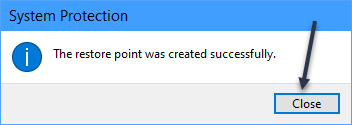
Next, you will see a progress bar, then if all goes well, a message that says The restore point was created successfully. Just click Close. Refer to the below image:
Close the window
After that, you are finished creating the restore point.
Automatically Create a System Restore Point
First, use the same System Protection tab in System Properties. Select the drive you would like to protect, then click Configure. In the window that opens, select Turn on System Protection, then click OK. See the below image:
Enabling Create a Restore Point
When you are done, click OK or close the System Properties window.
Restore a System Restore Point
To restore a System Restore point in Windows 111/10, we will use the same System Protection tab in the instructions above. First, open the Start Menu and type “Restore Point”, then click Create a Restore Point in the results. See the following image:
Accessing the option to Create a Restore Point
Now, in the System Restore window that opens, click Next when you see the introductory information. On the following screen, you will see a list of system restore points available on your PC. Select the one you want to restore and click Next. Refer to the below image:
Note: On this same screen, you can select a restore point and click “Scan For Affected Programs” to see a list of installed apps that will be affected by the restore process. This might help you make a decision about which restore point to choose.
Selecting a Restore Point to restore
Next, you will see a summary screen. Click Finish. See the below image:
Finish creating a Restore Point
Warning: By clicking “Yes” in the next step, you are about to make a permanent change to your system that could make your apps not work properly. System restore replaces your system files with older versions, and that can potentially break things. Only use it if you are recovering from a serious error. Also, you will not be able to use your PC while the system restore process is taking place.
If you are ready to begin the system restore, click Yes on the final warning screen. See the following image:
Confirm the restore
Your system will restart and the restore process will begin. After it’s complete, if everything went well, you will be able to log into Windows and use your PC as normal.
Disclaimer
Technology is always changing and rarely is static for smartphones and desktops. Thus, the contents of this post are only valid at the time of writing. Blog posts older than six months may have directions incompatible with your device or OS. Hopefully, older post content will continue to work as advertised. Thank you for reading TechSavvy.Life for Technology at Work For You.
Quote For the Day
Communication tools don’t get socially interesting until they get technologically boring.
Clay Shirky
Tweet Info
You are finished. Please feel free to share this post! One way to share is via Twitter.
Just click the Tweet icon below. This will launch Twitter where you click its icon to post the Tweet.
Checkout TechSavvy.Life for blog posts on smartphones, PCs, and Macs! You may email us at contact@techsavvy.life for comments or questions.
Please feel free to leave a comment. I would love to hear from you. Do you have a computer or smart device tech question? I will do my best to answer your inquiry. Just send an email to contact@techsavvy.life. Please mention the device, app, and version you are using. To help us out, you can send screenshots of your data related to your question.
Author’s E-Book
You can access the e-book from a Kindle device, the Kindle App for the desktop or smartphone, which is a free app.
The author’s Vietnam eBook on the Battle for Tra Bong Vietnam: Events and Aftermath
Google’s Image Search results are sometimes so impressive that you want to save some of those images to your device. If you have found yourself in this situation, let’s explore how to download those images from your search results.
This is for mobile and desktop devices. Screenshots are from Windows 10 and iPhone 14 Pro running iOS 16+
Copyright Scott Adams, Inc./Distributed by Universal Uclick for UFS
Save Images On Desktop
To download an image on a desktop, you just pick your image, click an option, and your image is saved to your computer.
First, launch your favorite web browser on your computer and open Google Image Search. There, find the image you want to save to your machine. Refer to the below image:
Search Google Images
Next, on the search results page, access the image that you want to download. See the below image:
Find an image
Now, right-click your image, and from the menu that opens, choose to Save image as. See the following image:
Check the option to save your image
Next, your browser will open your computer’s standard Save As window. Here, select a folder to save your image in, type your image name in the File Name field, then click Save. Refer to the below image:
Save your image
Now, you have successfully downloaded your favorite image from your Image Search results. If you are not sure exactly where the image file went, check your Downloads folder from File Explorer.
If your downloaded file is of low resolution, then try downloading that image directly from the source site. To do that, on the Image Search results page, click the link, beneath the image, and not the image, to be taken to the image site. There, right-click the image and choose Save image as.
Download Images On Mobile
On your mobile phone, you can download images from Google’s Image Search results using Google Chrome, Apple Safari, or Microsoft Edge. Mozilla Firefox does not offer the option to save images.
To start, first, open your web browser (we are using Safari) and launch Google Image Search or type into the search box “images.google.com”. Find the image you would like to save to your phone.
Next, on the search results page, tap the image to download. See the below image:
Tap an image you want to download
Now, on your image full-screen page, tap and hold the image. See the following image:
Press and hold your image
Next, on iPhone or iPad, from the menu that opens in Safari, tap Save to Photos. Refer to the below image:
Select the option to save your image
Your iPhone will download and save the image on your local storage or in our example using Safari, your Photos app. See the below image:
Your saved image
Disclaimer
Technology is always changing and rarely is static for smartphones and desktops. Thus, the contents of this post are only valid at the time of writing. Blog posts older than six months may have directions incompatible with your device or OS. Hopefully, older post content will continue to work as advertised. Thank you for reading TechSavvy.Life for Technology at Work For You.
Quote For the Day
The technology you use impresses no one. The experience you create with it is everything.
Sean Cerety
Tweet Info
You are finished. Please feel free to share this post! One way to share is via Twitter.
Just click the Tweet icon below. This will launch Twitter where you click its icon to post the Tweet.
Checkout TechSavvy.Life for blog posts on smartphones, PCs, and Macs! You may email us at contact@techsavvy.life for comments or questions.
Please feel free to leave a comment. I would love to hear from you. Do you have a computer or smart device tech question? I will do my best to answer your inquiry. Just send an email to contact@techsavvy.life. Please mention the device, app, and version you are using. To help us out, you can send screenshots of your data related to your question.
Author’s E-Book
You can access the e-book from a Kindle device, the Kindle App for the desktop or smartphone, which is a free app.
The author’s Vietnam eBook on the Battle for Tra Bong Vietnam: Events and Aftermath
Google Chrome has had a built-in dark theme like Mozilla Firefox and Microsoft Edge since Chrome 74. You can even apply a dark theme to every web page you visit using third-party themes or an extension.
Google Chrome has had a built-in dark theme like Mozilla Firefox and Microsoft Edge since Chrome 74. You can even apply a dark theme to every web page you visit using third-party themes or an extension. Let’s explore this dark mode feature.
This is for devices running Windows 11 or 10. Screenshots are from Windows 10
Copyright Scott Adams, Inc./Distributed by Universal Uclick for UFS
Chrome offers a built-in dark mode on Windows 11 and Windows 10. It even makes all of Chrome’s context menus dark, too.
Dark Mode for Windows 11
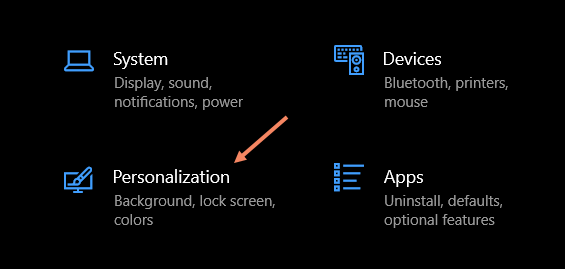
First, open the Settings app and navigate to:
Personalization > Color
Next, click the drop-down menu to the right of Choose Your Mode and select Dark. Refer to the below image:
Setting Dark Mode for Windows 11
Next, close out the Settings app and launch Google Chrome. Unless you have manually set Chrome’s theme, it will match your system.
Dark Mode for Windows 10
First, head to:
Settings > Personalization > Colors
and select Dark under Choose your default app mode. See the below image:
Setting Dark Mode for Windows 10
Apply a Dark Theme
Chrome supports user-created themes, which you can download from the Chrome Web Store. To give Chrome a dark interface, all you have to do is install a dark theme. Google even provides a helpful collection of editor-selected dark themes. This will give your Chrome browser a dark mode on Windows 7, Linux, Chrome OS, and any operating system without a native dark theme.
Note! Google now offers some official Chrome browser themes, including a “Just Black” dark mode theme. You may want to give that a try.
We recommend Morpheon Dark, which is the most popular dark theme in the Store. Unlike some other dark themes, it provides a decent amount of contrast between your active tab, which is a bit lighter, and your inactive tabs, which are darker.
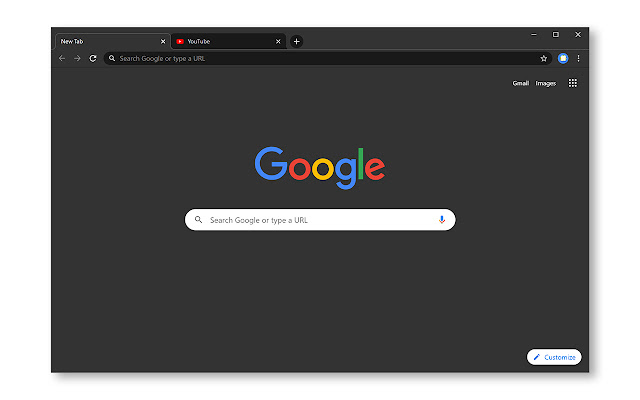
This theme turns darkens the Tab Bar, Title Bar, Toolbar, and New Tab page. That’s all you can theme in Chrome. You can not make Chrome’sContext Menus or Settings page dark, for example. See the following image:
Apply Morpheon Dark Mode
If you ever want to switch back to Chrome’s default theme you can. Head to:
Menu > Settings
Look for the Themes option under Appearance and then click Reset to Default. Refer to the below image:
Reset to the default theme
Disclaimer
Technology is always changing, and rarely is their static tech for smartphones and desktops. Thus, the contents of this post are only valid at the time of writing. Blog posts older than six months may have directions incompatible with your device or OS. Hopefully, older post content will continue to work as advertised. Thank you for reading TechSavvy.Life for Technology at Work For You.
Quote For the Day
Even the technology that promises to unite us, divides us. Each of us is now electronically connected to the globe, and yet we feel utterly alone.
Dan Brown
Tweet Info
You are finished. Please feel free to share this post! One way to share is via Twitter.
Just click the Tweet icon below. This will launch Twitter where you click its icon to post the Tweet.
Checkout TechSavvy.Life for blog posts on smartphones, PCs, and Macs! You may email us at contact@techsavvy.life for comments or questions.
Please feel free to leave a comment. I would love to hear from you. Do you have a computer or smart device tech question? I will do my best to answer your inquiry. Just send an email to contact@techsavvy.life. Please mention the device, app, and version you are using. To help us out, you can send screenshots of your data related to your question.
Author’s E-Book
You can access the e-book from a Kindle device, the Kindle App for the desktop or smartphone, which is a free app.
The author’s Vietnam eBook on the Battle for Tra Bong Vietnam: Events and Aftermath
You can insert special symbols on Windows by pressing its Alt Code on a numeric keypad. Or, press Windows+. to use the emoji keyboard.
The symbols are a hint to others that something is protected by law. Windows keyboards do not have a dedicated key to quickly insert the symbol. But there’s a keyboard shortcut for the Windows operating system.
This is for Windows. Screenshots are from Windows 10
Copyright Scott Adams, Inc./Distributed by Universal Uclick for UFS
Using a Numeric Keyboard
The quickest way to insert a copyright, trademark, or registered symbol in your document is to use its Alt Code.
Note: You can only use this shortcut if your keyboard has a numeric keypad, which is usually to the right of the keyboard. You can not use this shortcut with the numbers at the top of the keyboard.
First, place the cursor where you would like to insert the symbol.
If your Windows PC does not have a numeric keypad, you can use the emoji keyboard instead. Press Windows+. to open the emoji keyboard.
First, tap the symbol icon at top of the emoji keyboard. Then tap the appropriate emoji to insert it. Refer to the below image:
Selecting a symbol from the emoji keyboard
You can also insert many other symbols via the keyboard shortcut or the emoji keyboard.
Disclaimer
Technology is always changing and rarely is static for smartphones and desktops. Thus, the contents of this post are only valid at the time of writing. Blog posts older than six months may have directions that are incompatible with your device or OS. Hopefully, older post content will continue to work as advertised. Thank you for reading TechSavvy.Life for Technology at Work For You.
Quote For the Day
Man is a slow, sloppy, and brilliant thinker; computers are fast, accurate, and stupid.
John Pfeiffer
Tweet Info
That’s it. Please feel free to share this post! One way to share is via Twitter.
Just click the Tweet icon below. This will launch Twitter where you click its icon to post the Tweet.
Checkout TechSavvy.Life for blog posts on smartphones, PCs, and Macs! You may email us at contact@techsavvy.life for comments or questions.
Please feel free to leave a comment. I would love to hear from you. Do you have a computer or smart device tech question? I will do my best to answer your inquiry. Just send an email to contact@techsavvy.life. Please mention the device, app, and version you are using. To help us out, you can send screenshots of your data related to your question.
Author’s E-Book
You can access the e-book from a Kindle device, the Kindle App for the desktop or smartphone, which is a free app.
The author’s Vietnam eBook on the Battle for Tra Bong Vietnam: Events and Aftermath
While radio is not particularly hard to access; you just need a device capable of tuning into radio frequencies; listening to the radio outside of your area can be difficult. This app, however, lets you listen to any radio station in any country worldwide, complete with a colorful interface.
While radio is not particularly hard to access; you just need a device capable of tuning into radio frequencies. Listening to the radio outside of your area can be difficult. This app, however, lets you listen to any radio station in any country worldwide, complete with a colorful interface. Let’s check this out.
This is for computers and mobiles running a web browser. Screenshots are from Windows 10 PC
Copyright Scott Adams, Inc./Distributed by Universal Uclick for UFS
Radio Garden is available as a web version, and it also has mobile apps for Android and iOS. Its whole premise is that you can listen to several radio stations in many different countries and cities. You will see a bunch of small green dots all across the globe, and those are radio stations that you can tune into immediately. You do not need a login or any kind of subscription. All you need is a device that can access the internet, like your computer or smartphone. Refer to the below image:
South Carolina
You can zoom in or out, move the round circle to any part of the world, or tap a green dot to listen to a station. Check out the Settings menu for options. We suggest you ignore the ads, they take you where you may not want to go; just close them. You can purchase the app for $2.99 (under Settings) to remove the virtual ads.
It’s a lot of fun to play around with the app and learn something new.
Disclaimer
Technology is always changing and rarely is there static for smartphones and desktops. Thus, the contents of this post are only valid at the time of writing. Blog posts older than six months may have directions incompatible with your device or OS. Hopefully, older post content will continue to work as advertised. Thank you for reading TechSavvy.Life for Technology at Work For You.
Quote For the Day
Good, bad or indifferent, if you are not investing in new technology, you are going to be left behind.
Philip Green
Tweet Info
That’s it. Please feel free to share this post! One way to share is via Twitter.
Just click the Tweet icon below. This will launch Twitter where you click its icon to post the Tweet.
Checkout TechSavvy.Life for blog posts on smartphones, PCs, and Macs! You may email us at contact@techsavvy.life for comments or questions.
Please feel free to leave a comment. I would love to hear from you. Do you have a computer or smart device tech question? I will do my best to answer your inquiry. Just send an email to contact@techsavvy.life. Please mention the device, app, and version you are using. To help us out, you can send screenshots of your data related to your question.
Author’s E-Book
You can access the e-book from a Kindle device, the Kindle App for the desktop or smartphone, which is a free app.
The author’s Vietnam eBook on the Battle for Tra Bong Vietnam: Events and Aftermath
The SendTo menu in Windows has been a useful feature for a long time. It may be buried in the right-click context menu in File Explorer, but you can use it to send files to a specific location, copy photos to a new device, or print your work in moments. It also comes with default entries you may never use and lack certain features you may want.
The SendTo menu in Windows has been a useful feature for a long time. It may be buried in the right-click context menu in File Explorer, but you can use it to send files to a specific location, copy photos to a new device, or print your work in moments. It also comes with default entries you may never use and lack certain features you may want. Let’s explore tweaking what appears in the SendTo menu.
This is for Windows 11, 10, and 8.1. Screenshots are from Windows 10
Copyright Scott Adams, Inc./Distributed by Universal Uclick for UFS
Open the SendTo Menu
The SendTo function works the same in Windows 11, 10, and 8.1. First, open File Explorer and right-click on a file, such as a word processing document, spreadsheet, text file, or image file. From the pop-up menu, move your mouse to the SendTo command. menu.
The SendTo menu opens, revealing various locations and applications to which you can send the file. First, click a specific entry, such as a Bluetooth device, a compressed zip file, a Mail recipient, or your Documents folder. The file you selected is then sent to the chosen destination. Refer to the below image:
Your SendTo menu
Remove Entries
Next, press the Windows Key + R to trigger the Run window. At the Open field in the window, type shell:SendTo and then click OK. See the below image:
Accessing SendTo via Run command
Now, the File Explorer opens to the SendTo folder for your user account. From here, you can delete any entries you would never use by right-clicking on them and selecting Delete from the pop-up menu. See the following image:
Delete a SendTo option
Add Entries
When adding new entries to the menu, you need to know the path of the executable file for the app you want to add. Let’s say you wish to play songs from Windows Media Player and want to add them to the SendTo menu. First, you would create a SendTo entry for it in the SendTo folder. To do so, open File Explorer, then right-click on any empty area of the folder.
Next, select New > Shortcut. In the window that opens to create the shortcut. Refer to the below image:
Create a shortcut
Now, browse to or type the following path: C:\Program Files\Windows Media Player\wmplayer.exe, then click Next. See the below image:
Location of the shortcut
Next, you would then change the name for the shortcut to Windows Media Player and click Finish. See the following image:
Name the shortcut
Now you can send any type of audio file to Windows Media Player if you right-click on it and open the SendTo menu. Refer to the below image:
Send a file to your new entry
Quote For the Day
To err is human, but to really foul things up you need a computer.
Paul Ehrlich
Tweet Info
That’s it. Please feel free to share this post! One way to share is via Twitter.
Just click the Tweet icon below. This will launch Twitter where you click its icon to post the Tweet.
Checkout TechSavvy.Life for blog posts on smartphones, PCs, and Macs! You may email us at contact@techsavvy.life for comments or questions.
Please feel free to leave a comment. I would love to hear from you. Do you have a computer or smart device tech question? I will do my best to answer your inquiry. Just send an email to contact@techsavvy.life. Please mention the device, app, and version you are using. To help us out, you can send screenshots of your data related to your question.
Author’s E-Book
You can access the e-book from a Kindle device, the Kindle App for the desktop or smartphone, which is a free app.
The author’s Vietnam eBook on the Battle for Tra Bong Vietnam: Events and Aftermath